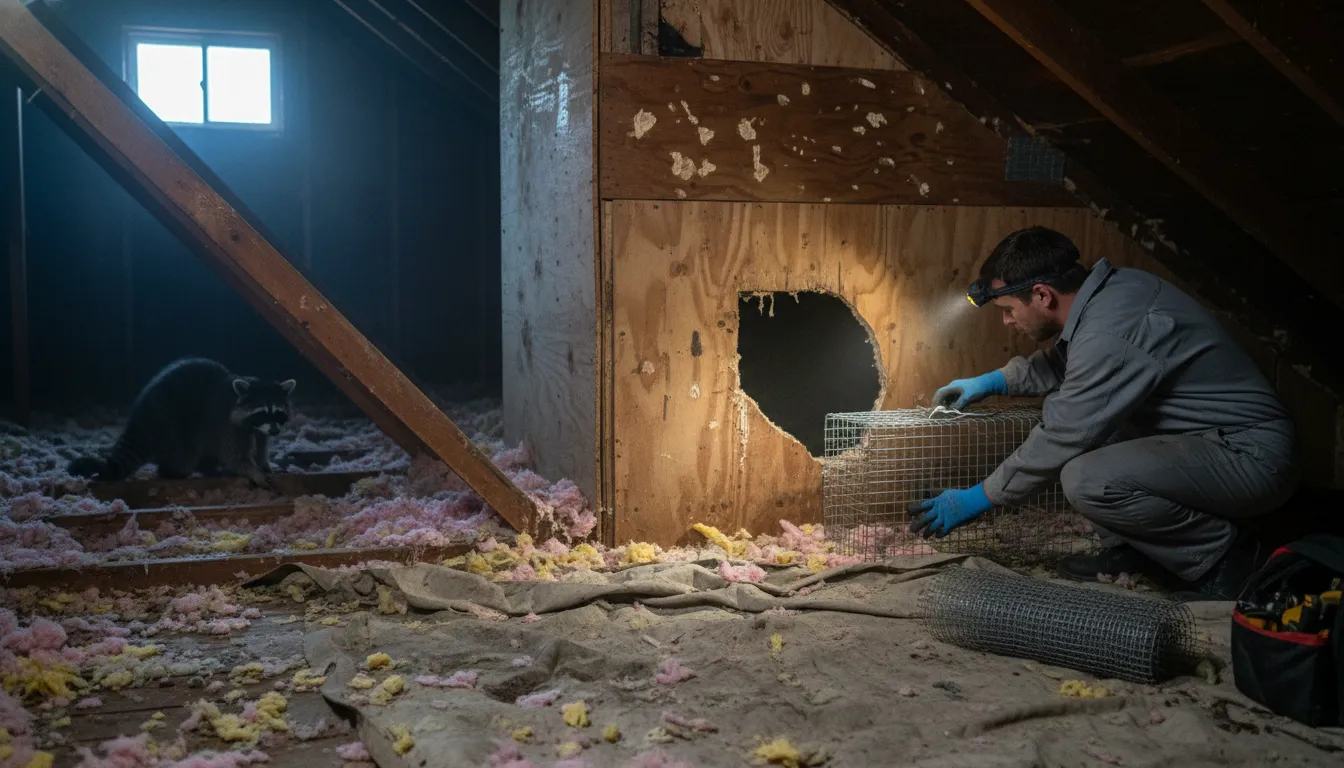
Find the Best Wildlife Removal Companies for Your Business
No obligation • Fast responses • Nationwide coverage

Why you can trust Pest Crews
Pest Crews is a leading U.S. resource for finding and evaluating residential and commercial pest control services. Our team researches providers, reviews treatment approaches, and organizes unbiased information to help you make informed decisions. Companies cannot pay to change our editorial content or influence how they appear.
Search providers near you
Top Wildlife Removal Companies in Pomona, California Ranked
Living in Pomona means sharing your environment with a diverse array of native wildlife. While this can be a wonderful part of Southern California living, it can become a serious problem when animals like raccoons, squirrels, or skunks decide to move into your attic, garage, or under your deck. Professional wildlife removal is the safe, humane, and legally compliant process of evicting these unwanted guests and securing your property against future invasions. This guide explains why specialized animal control is often necessary, outlines the local rules you must follow, and helps you understand your options for resolving conflicts with nuisance wildlife in Pomona.
Go-Pher The Kill Pest Control Riverside
9880 Indiana Ave STE 23, Riverside, CA 92503
Go-Pher The Kill Pest Control Riverside offers pest and wildlife removal services in Riverside, CA. The company specializes in gopher control but also handles ants, roaches, spiders, rodents, and other pests for residential, commercial, and agricultural properties. They provide thorough pest inspections and ongoing protection to keep properties pest-free. Known for their expertise in gopher trapping and removal, Go-Pher The Kill has been serving the Riverside area for over seven years. Their licensed and insured team is committed to customer satisfaction with a guarantee to re-treat or refund if problems persist.
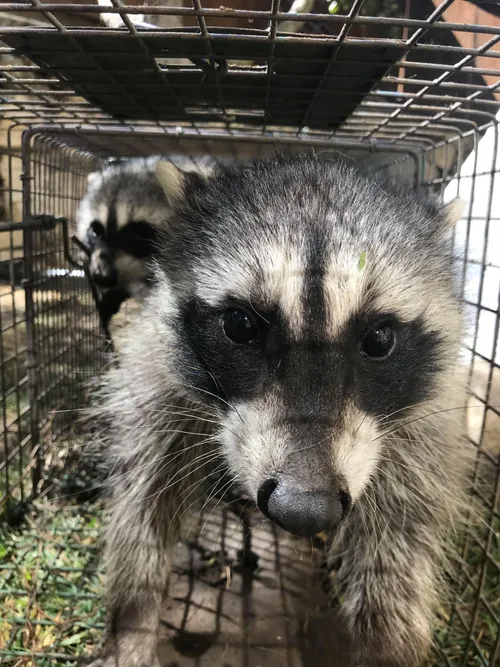
Orchard Inc.
Los Angeles, CA
Orchard Inc. is a pest control company based in Los Angeles, CA, specializing in rodent, bird, and wildlife removal services for both residential and commercial properties. They use humane methods and combine modern techniques with proven approaches to manage infestations while respecting natural ecosystems. Orchard Inc. also offers wildlife fencing as a preventative measure to keep animals off properties. The company serves Los Angeles County and Orange County, handling a wide range of pest control needs with a focus on bird and rodent solutions.
Aesthetic Wildlife Control
Los Angeles, CA
Aesthetic Wildlife Control provides humane and poison-free wildlife and rodent removal services in Los Angeles, CA. Their certified team offers a wide range of pest control solutions including rat, possum, bat, raccoon, skunk, snake, and dead animal removal, along with attic decontamination and bird proofing for solar panels. They use eco-friendly, non-toxic methods and provide thorough inspections with photo and video documentation to ensure effective exclusion and sanitation. The company is licensed by the California Department of Fish and Wildlife and offers 24/7 emergency animal removal services across Los Angeles and Orange County.
Gopher Stop
1660 Country Club Dr, Riverside, CA 92506
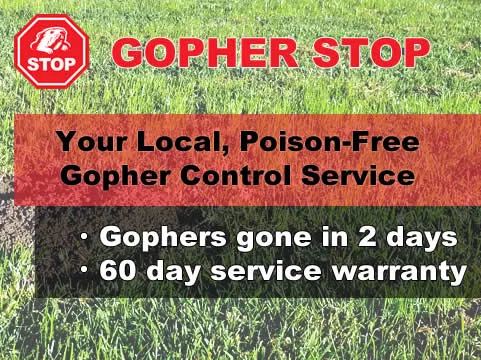
Gopher Stop is a wildlife removal and pest control company based in Riverside, CA, specializing in gopher removal. They focus on identifying and managing gopher infestations that damage lawns, plants, irrigation systems, and concrete structures. Their primary method involves trapping gophers within their tunnels, offering a poison-free approach that is both effective and environmentally conscious. Gopher Stop serves Riverside and nearby areas, providing professional gopher control with a reputation supported by customer reviews.
Compass Pest Management
5925 Rickenbacker Ave, Riverside, CA 92504
Compass Pest Management is a family-owned pest control company serving Los Angeles, CA, and surrounding areas since 1997. They provide a wide range of pest management services including bed bug treatment, termite inspections and fumigation, rodent exclusion, mosquito reduction, and bee and wasp removal. Their team also handles wildlife removal and commercial pest control, using proven methods and premium pesticides. With over 25 years of experience, Compass Pest Management offers ongoing pest prevention and exclusion services, focusing on practical solutions for homes and businesses. They operate Monday through Saturday and hold multiple licenses and certifications in pest control.
Understanding Nuisance Wildlife in Pomona
Pomona's proximity to the foothills and urban green spaces creates a perfect habitat for many species to thrive. When these animals seek food, water, or shelter, your home can become an attractive target. It's important to recognize that while these creatures are simply following their instincts, their presence can lead to significant property damage, health hazards from droppings, and stressful encounters.
The most common problem species for Pomona homeowners include:
- Raccoons: Intelligent and dexterous, they are notorious for tearing into attic vents, ripping up insulation, and raiding trash cans.
- Squirrels (Tree & Ground): These rodents can chew through wood, electrical wiring (a fire hazard), and roofing materials to create nesting sites.
- Opossums & Skunks: Often found under porches or decks, they can create odors and may defend themselves if startled.
- Rodents (Rats & Mice): While often considered general pests, their removal frequently falls under wildlife control due to their wild nature and the exclusion techniques required.
- Bats & Birds (Pigeons, Starlings): These animals can roost in attics or vents, leading to large accumulations of hazardous guano (droppings) that require specialized cleanup.
California and Local Regulations You Must Know
Attempting to handle a wildlife issue on your own can inadvertently lead to legal trouble. California has strict laws designed to protect both animals and residents, and they are actively enforced in Los Angeles County.
The most critical rule is the prohibition on relocation. The California Department of Fish and Wildlife (CDFW) generally does not permit the trapping and relocation of wild animals to a new area 1. This law exists to prevent the spread of disease, reduce stress on relocated animals (who often don't survive in unfamiliar territory), and protect ecosystems. When an animal is trapped, it typically must be released on the property where it was caught or humanely euthanized.
Additional key regulations include:
- No Feeding: It is unlawful to feed non-domesticated rodents (like ground squirrels) or mammalian predators such as raccoons, coyotes, and opossums.
- Licensing Requirements: The trapping of many species, especially those considered furbearers or protected, requires a specific license from the CDFW. Unlicensed trapping can result in fines.
- Humane Standards: All trapping and handling must meet state-mandated humane standards to prevent unnecessary suffering.
These complex regulations are a primary reason why hiring a licensed professional is strongly recommended for any trapping scenario.
DIY Prevention vs. When to Call a Professional
There are several effective steps you can take as a homeowner to make your property less inviting and prevent conflicts from starting.
Effective Do-It-Yourself Prevention:
- Secure Food Sources: Use locking lids on trash cans, avoid leaving pet food outdoors, and harvest ripe fruit from trees.
- Seal Entry Points (Exclusion): Carefully inspect your home's exterior for gaps, loose vents, or holes. Use sturdy materials like steel mesh, hardware cloth, or sheet metal to seal potential entry points, especially along the roofline and foundation.
- Modify Habitat: Trim tree branches that hang within 6-10 feet of your roof to limit access for squirrels and raccoons. Keep woodpiles and dense shrubbery away from the house.
The Limits of DIY and Legal Trapping: While you may legally trap certain animals like squirrels or raccoons on your property, you assume full responsibility for complying with the laws mentioned above. This includes checking traps frequently (at least once a day) and dealing with the captured animal immediately, either through on-site release or humane dispatch. For most residents, the legal risk and the challenge of handling a scared, potentially aggressive wild animal make this an unwise choice 2.
Find the perfect wildlife removal companies for your needs
Get personalized recommendations and expert advice
Animal Control vs. Private Wildlife Removal Services
Knowing which agency or company to call is crucial for a swift resolution. Their roles are distinct.
LA County Animal Care & Control is a public agency you should contact in specific situations:
- You encounter a sick, injured, or obviously orphaned wild animal.
- A wild animal is posing an immediate public safety threat in a public space.
- You need guidance or have concerns about a neighbor who may be illegally feeding wildlife 3. While they are an essential resource, their primary focus is on domestic animals. They may not provide trapping services for nuisance wildlife inside a home or perform exclusion work.
Private Wildlife Removal and Control Companies are specialized businesses that handle the majority of human-wildlife conflicts on private property. They are the recommended call for:
- Active Infestations: Animals living in your attic, walls, chimney, or under structures.
- Trapping & Removal: Humane, legal trapping and handling of problem animals.
- Exclusion & Repair: The most critical service-permanently sealing entry points and making repairs to prevent re-entry.
- Cleanup & Decontamination: Safely removing hazardous droppings (guano), urine, and nesting materials, and replacing contaminated insulation.
- Dead Animal Removal from within walls or crawl spaces 4.
These professionals have the species-specific knowledge, proper licensing, and insurance to resolve your issue effectively and in full compliance with California law.
Understanding Costs for Wildlife Control
The cost of wildlife removal in Pomona varies significantly based on the species, the extent of the infestation, and the services required. Prices are typically higher than for general insect pest control due to the labor, specialized equipment, and legal considerations involved.
Here is a general overview of potential cost ranges based on common scenarios 5 6 7 8 9:
- Basic Removal & Trapping: For a single opossum under a deck or a squirrel in the garage, you might expect costs ranging from $200 to $400+. This often includes setting and monitoring traps and removing the animal.
- Attic Infestation (Raccoons or Squirrels): A more involved job involving the removal of a mother and young, followed by basic exclusion (sealing the main entry point) and a preliminary cleanup, can range from $400 to $800+.
- Complex Remediation: Severe infestations of bats or rodents, jobs requiring extensive attic decontamination, removal/replacement of soiled insulation, and comprehensive home sealing can cost $600 to $1,500 or more. The final price depends on the square footage affected and the materials needed.
Always seek detailed, written estimates that clearly break down the costs for inspection, removal, exclusion/repairs, and cleanup. A reputable company will prioritize permanent exclusion over simply trapping animals, as trapping alone leaves your home vulnerable to the next intruder.
The Importance of Humane Exclusion and Cleanup
True resolution of a wildlife problem is a two-part process: removal and prevention. Exclusion is the professional practice of permanently sealing every potential entry point on a structure. A skilled technician will perform a thorough inspection to identify not just the main hole, but all other vulnerabilities, and secure them with durable, animal-proof materials. This is the key to a long-term solution.
After animals are removed, cleanup and decontamination are often necessary for health and safety. Wildlife droppings and urine can harbor pathogens, parasites, and fungi (like Histoplasma from bat guano). Professional cleanup involves using proper personal protective equipment (PPE), specialized vacuum systems (HEPA filters), and enzymatic cleaners to sanitize the area. In severe cases, removing and replacing insulation is required to eliminate odors and health risks 10.
Frequently asked questions
Sources
Footnotes
-
Living with Wildlife - https://wildlife.ca.gov/Living-with-Wildlife ↩
-
Animal trapping and control - Lacounty - https://file.lacounty.gov/SDSInter/acwm/235835_Trappingrequirementspaper.pdf ↩
-
Living With Wildlife - LA County Animal Care & Control - https://animalcare.lacounty.gov/living-with-wildlife/ ↩
-
Animal Capture Wildlife Control: Los Angeles Wildlife Removal - https://www.animalcapturewildlifecontrol.com/ ↩
-
Pomona Wildlife Animal Control - Removal and Trapping - http://www.wildlifeanimalcontrol.com/Pomona.html ↩
-
Pomona Wildlife Control / California Animal Removal - http://www.aaanimalcontrol.com/professional-trapper/city/CA-Pomona.htm ↩
-
Prices for Pomona Wildlife Pest Control Animal Trapping - http://www.aaanimalcontrol.com/Professional-Trapper/prices/CA-Pomona-prices.htm ↩
-
California Wildlife Removal Company Directory - Pro Animal Control - https://pro-animal-control.com/california-wildlife-removal-company/ ↩
-
Pomona Wildlife Removal, Pest Animal Control CA - http://www.wildlife-removal.com/city/CA-Pomona.htm ↩
-
Pomona Wildlife Removal, California Bird, Animal, Possum, Squirrel, ... - http://wildliferemovalusa.com/Pomona-CA.html ↩