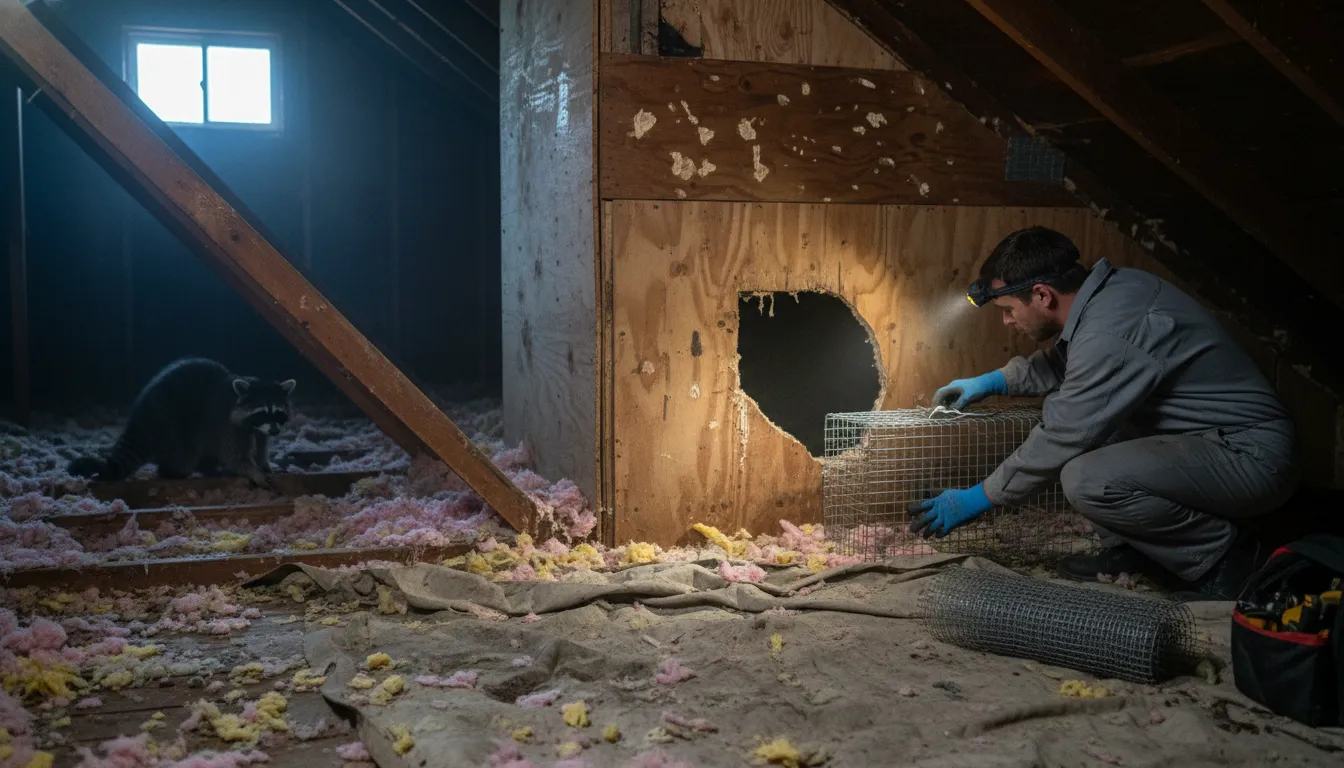
Find the Best Wildlife Removal Companies for Your Business
No obligation • Fast responses • Nationwide coverage

Why you can trust Pest Crews
Pest Crews is a leading U.S. resource for finding and evaluating residential and commercial pest control services. Our team researches providers, reviews treatment approaches, and organizes unbiased information to help you make informed decisions. Companies cannot pay to change our editorial content or influence how they appear.
Search providers near you
Top Wildlife Removal Companies in Boynton Beach, Florida Ranked
Living in Boynton Beach means sharing our beautiful coastal environment with a diverse array of native animals. While this wildlife is a vital part of Florida's ecosystem, it can become a significant nuisance when raccoons raid your trash, squirrels nest in your attic, or bats colonize your eaves. Professional wildlife removal and animal control services are essential for resolving these conflicts safely, humanely, and in compliance with strict Florida regulations. This guide will help you understand the common wildlife issues in our area, what you can do yourself, when to call an expert, and how to navigate the process of reclaiming your home from unwanted animal guests.
In Touch Pest Control
3489 NW 24th St, Lauderdale Lakes, FL 33311
In Touch Pest Control is a locally owned and family-operated pest control company serving Fort Lauderdale, FL, and surrounding South Florida communities. Established in 2005, they offer a range of pest management services including termite treatment, ant and rodent control, wildlife removal, and lawn pest services. Their certified team uses eco-conscious and family-safe methods to address common pests such as termites, ants, roaches, rodents, and outdoor invaders. They provide same-day service and specialize in sealing entry points to prevent rodent damage and health risks.
Mitchell Pest Services - A Division of Turner Pest Control
4846 N University Dr #291, Lauderhill, FL 33351
Mitchell Pest Services - A Division of Turner Pest Control is a family-owned pest control company serving Fort Lauderdale, FL, and nearby areas since 2014. They provide residential and commercial pest management solutions including bed bug treatment, termite inspections, rodent control, mosquito control, and wildlife removal. Their approach uses integrated pest management techniques focused on identifying root causes and applying environmentally friendly treatments that are safe for homes and businesses. The company emphasizes local expertise to address Fort Lauderdale's unique pest challenges and offers ongoing maintenance to keep properties protected year-round.
Pest Busterzz
7811 NW 73rd Terrace, Tamarac, FL 33321
Pest Busterzz is a family-owned pest control company serving Fort Lauderdale, FL, and surrounding areas in Broward and Palm Beach counties. They provide residential and commercial pest control services, including ant, bed bug, cockroach, rodent, mosquito, bee, and wildlife removal. The company uses eco-friendly, organic treatments designed to be safe for families and pets. With over 10 years of experience, Pest Busterzz applies proven methods to effectively manage pest issues while focusing on environmental safety.
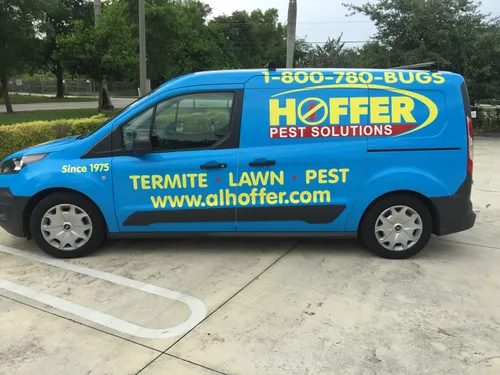
Hoffer Pest Solutions
12329 NW 35th St, Coral Springs, FL 33065
Hoffer Pest Solutions is a pest control company based in Fort Lauderdale, FL, serving Broward County including Coral Springs and nearby areas. They offer comprehensive pest management services for ants, cockroaches, termites, rodents, wildlife, bed bugs, and mosquitoes. Their termite treatments include liquid pesticide applications, perimeter bait stations, and the Sentricon Termite Colony Elimination System. Established in 1975, Hoffer Pest Solutions brings over 40 years of experience to pest and wildlife removal. They provide same-day service when contacted before noon and back their work with satisfaction guarantees.
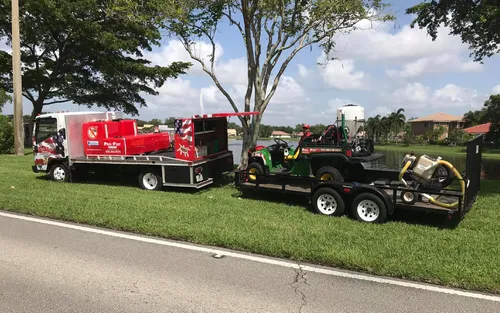
Pro Pest Control, Inc.
1441 Banks Rd, Margate, FL 33063
Pro Pest Control, Inc. is a family-owned pest control company serving Fort Lauderdale, FL, and the surrounding South Florida counties of Broward, Miami-Dade, and Palm Beach. They provide residential and commercial pest management services including ant, termite, rodent, mosquito, and wildlife control. Their offerings include integrated pest management, attic dusting, and specialized treatments like arbor jet and fertilization services tailored to the local environment. With over 25 years of experience, Pro Pest Control, Inc. combines pest control with lawn fertilization to support healthy property maintenance.
Common Nuisance Wildlife in Boynton Beach
Our subtropical climate and mix of urban and natural spaces attract specific animals that frequently come into conflict with homeowners. Knowing which creature you're dealing with is the first step toward an effective solution.
Mammals:
- Raccoons: Intelligent and dexterous, they are notorious for tipping over unsecured trash cans and can tear through roof vents to access attics.
- Opossums: These nocturnal marsupials are often found under decks or in crawl spaces and, while less destructive, can still be a nuisance.
- Squirrels: Both gray and flying squirrels can chew electrical wiring and insulation when they nest in attics, creating fire hazards and costly damage 1.
- Rats & Mice: Rodents seek shelter and food in homes, contaminating surfaces and posing health risks.
- Bats: Small colonies can roost in attics or soffits. Their guano (droppings) can pose health risks and cause property damage 2.
- Armadillos & Feral Hogs: More common in suburban fringe areas, these animals are known for destructive rooting and digging in lawns and gardens.
Birds:
- Pigeons, Starlings, & House Sparrows: These non-native species are not protected and can create messes with their droppings, block vents with nests, and spread parasites.
- Protected Native Birds: It is crucial to remember that most native birds, especially migratory species, are protected by federal law. Harming them or their active nests is illegal.
What Homeowners Can Do: Prevention and Deterrence
Before wildlife becomes an indoor problem, proactive measures can make your property less attractive. These do-it-yourself strategies are the first line of defense in animal control.
Seal Potential Entry Points: Conduct a thorough inspection of your home's exterior. Look for gaps in roof soffits, loose vent covers, and holes where utility lines enter. Seal these openings with durable materials like hardware cloth or steel wool (for rodents), or wire mesh. Remember, a gap as small as a quarter can admit a mouse, and a hole the size of a baseball can admit a rat.
Eliminate Food and Shelter Attractants: Wildlife is always searching for an easy meal and a safe place to den.
- Secure Trash: Use cans with tight-fitting, locking lids or secure them with bungee cords or ropes 3.
- Manage Pet Food: Never leave pet food bowls outside overnight.
- Landscape Maintenance: Keep tree branches trimmed back from the roofline to limit access for squirrels and raccoons. Pick up fallen fruit from trees promptly.
- Reduce Shelter: Clear away dense brush, wood piles, and debris from against your home's foundation.
Use Humane Deterrents: For animals already visiting your yard, non-lethal repellents can encourage them to move on.
- Taste/Smell Repellents: Sprinkling cayenne pepper in garden beds can deter digging. Commercial repellents that use predator scents (like fox or coyote urine) are also available.
- Visual/Sound Deterrents: Motion-activated sprinklers, reflective tape, or decoy predators like fake owls can be temporarily effective, though animals may eventually become accustomed to them 4.
Special Note on Bats: If you suspect bats are roosting in your attic, exclusion is the only permanent solution. This involves installing one-way doors that allow bats to leave but not re-enter. Critically, in Florida, bat exclusion should only be performed from August through the winter to avoid trapping flightless young inside, where they would die and create a severe odor problem. The University of Florida IFAS Extension is an excellent resource for guidance on this process.
When and Why to Call a Professional Wildlife Removal Service
While prevention is key, some situations require the expertise of a licensed professional. Attempting to handle these scenarios yourself can be dangerous, ineffective, or illegal.
You Need Trapping and Relocation: In Florida, trapping and relocating most native mammals requires specific authorization. Generally, you must either be a property owner trapping on your own land or hire a professional who holds the appropriate FWC (Florida Fish and Wildlife Conservation Commission) permit. Professionals understand the legal protocols for humane trapping and the strict rules governing where animals can be released.
There is an Infestation in Your Home: If you hear noises in walls or ceilings, smell odors, or see signs of droppings, you likely have animals living inside your structure. Removing them, cleaning the contaminated area, and repairing damage is a complex job best left to experts in nuisance wildlife removal.
The Animal is a Protected Species: As mentioned, harming protected birds or their nests is a federal offense. Professionals know how to identify species and can often perform exclusions or install deterrents after nesting season concludes legally.
You are Unsure or Uncomfortable: Dealing with wild animals carries risks of bites, scratches, and exposure to diseases like rabies or histoplasmosis (from bat guano). Professional animal control operators have the training, protective equipment, and insurance to manage these risks safely.
Find the perfect wildlife removal companies for your needs
Get personalized recommendations and expert advice
Understanding Florida's Wildlife Regulations
Florida has clear laws designed to balance property rights with wildlife conservation. Ignoring these rules can result in fines.
Trapping Rules: For most nuisance wildlife, live cage traps are commonly used. However, the use of steel leg-hold traps or discharging firearms (especially at night for certain species) often requires an additional permit from the FWC 5 6.
The "Relocation" Reality: Many people hope trapped animals can be released in a nearby park or forest. State rules are strict: live-trapped nuisance wildlife must be released within the same county on a property of at least 40 acres, with the written permission of the landowner, or it must be euthanized humanely within 24 hours 7. This makes true, legal relocation very difficult, which is why professional exclusion and prevention are emphasized.
Poison is Problematic: Using over-the-counter rodenticides or other poisons for wildlife control is strongly discouraged and often illegal for non-rodent species. Poison can cause a slow, painful death and poses severe risks to pets, children, and non-target wildlife that may eat the poisoned animal 8.
Who to Call for What:
- Nuisance Wildlife on Private Property: Contact a licensed, FWC-permitted wildlife removal professional 9.
- Injured Wildlife or Orphaned Babies: Contact a licensed wildlife rehabilitator. The FWC website maintains a list.
- Stray Dogs/Cats or Animal Cruelty: Contact Boynton Beach Police Animal Services 10.
- General Guidance: The UF/IFAS Extension office provides excellent, science-based information on managing human-wildlife conflicts 11.
What to Expect: The Professional Wildlife Removal Process
A reputable wildlife control operator will follow a comprehensive process, not just simple trapping.
- Inspection and Assessment: The professional will inspect your property inside and out to identify the species, locate all entry points, and assess the extent of the damage and contamination. There is often a fee for this inspection.
- Removal/Exclusion: Using the appropriate legal methods, the animals will be removed. This may involve live trapping or, more effectively, installing one-way exclusion devices that allow animals to leave but prevent re-entry.
- Clean-up and Sanitation: This critical step involves removing nesting materials, droppings, and urine-soaked insulation. Professionals use specialized equipment like HEPA vacuums and enzyme cleaners to decontaminate the area and eliminate odors that might attract new wildlife.
- Repair and Exclusion: All entry points are permanently sealed with durable, animal-proof materials to prevent future invasions. This is the most important part of a lasting solution.
- Follow-up: Many companies offer a warranty period during which they will return if the problem recurs, ensuring their repairs are effective.
Cost Considerations for Wildlife Control in Boynton Beach
Costs vary widely based on the animal, the infestation's scope, and the repairs needed. It's wise to get multiple estimates.
- Basic to Medium Jobs: For a single-animal issue like removing squirrels from an attic with straightforward entry points, costs often start around $299 and up 12 13.
- Complex Jobs: Removing a large colony of bats or raccoons, which involves extensive exclusion, major attic clean-up, and significant repairs (like replacing chewed wiring or insulation), can easily run into the thousands of dollars 14.
- Inspection Fees: Most companies charge a separate fee for the initial assessment, which may or may not be applied to the total cost if you hire them.
Investing in a complete service-removal, clean-up, and exclusion-is almost always more cost-effective than repeated, partial fixes.
Frequently asked questions
Sources
Footnotes
-
Boynton Beach Wildlife Animal Control - Wildlife Animal Control - http://www.wildlifeanimalcontrol.com/Boynton-Beach.html ↩
-
Vero Beach Wildlife Removal - https://www.crittercontrol.com/office-finder/florida/treasure-coast/vero-beach-wildlife-removal/ ↩
-
Resources Nuisance Wildlife - Broward County - https://www.broward.org/Animal/Resources/pages/nuisancewildlife.aspx ↩
-
Wildlife Removal in Florida: What Homeowners Need to Know - https://www.drakepest.com/wildlife-removal-in-florida-what-homeowners-need-to-know/ ↩
-
I have a question about nuisance wildlife trapping. Do I need any ... - https://www.fdacs.gov/Business-Services/Pest-Control/Pest-Control-FAQ/I-have-a-question-about-nuisance-wildlife-trapping.-Do-I-need-any-sort-of-state-pest-control-license-to-trap-wild-hogs-raccoons-opossums-etc. ↩
-
FAQs: Nuisance Wildlife | FWC - https://myfwc.com/conservation/you-conserve/wildlife/faqs/ ↩
-
Relocating Wildlife - FWC - https://myfwc.com/conservation/you-conserve/wildlife/relocate/ ↩
-
Overview of How to Stop Damage Caused by Nuisance Wildlife in ... - https://edis.ifas.ufl.edu/publication/UW368 ↩
-
Public Safety - Animal Care Wildlife Issues - https://discover.pbc.gov/publicsafety/animalcare/pages/wildlife.aspx ↩
-
Animal Services - BBPD - https://bbpd.org/police-services/animal-services/ ↩
-
Nuisance Wildlife - Solutions for Your Life - UF/IFAS Extension - https://sfyl.ifas.ufl.edu/natural-resources/nuisance-wildlife/ ↩
-
Prices for Boynton Beach Wildlife Pest Control Animal Trapping - http://www.aaanimalcontrol.com/professional-trapper/prices/FL-Boynton-Beach-prices.htm ↩
-
Wildlife Removal Services from Turner Pest Control Wildlife Experts - https://www.turnerpest.com/pest-control/wildlife-removal/ ↩
-
AAAC Wildlife Removal of the Palm Beaches - https://palm-beaches.aaacwildliferemoval.com/service-area/palm-beach/ ↩