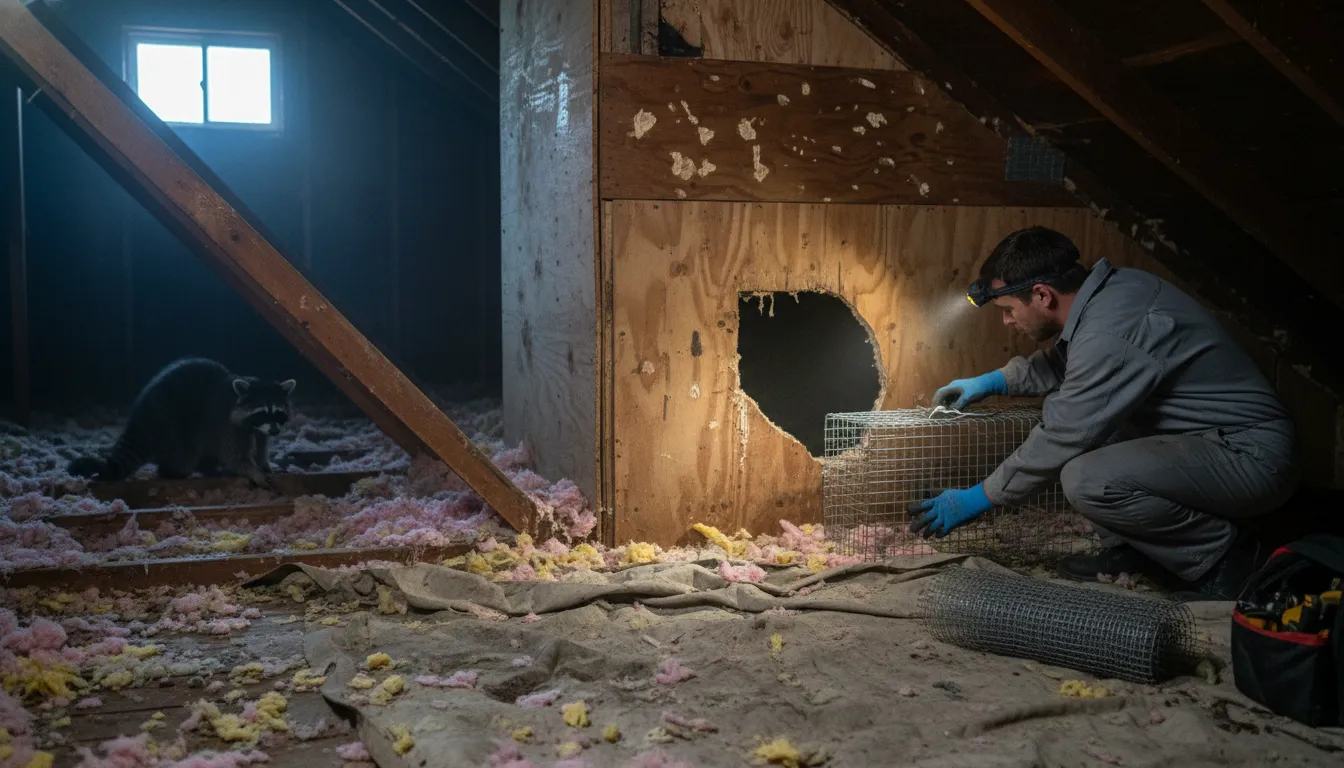
Find the Best Wildlife Removal Companies for Your Business
No obligation • Fast responses • Nationwide coverage

Why you can trust Pest Crews
Pest Crews is a leading U.S. resource for finding and evaluating residential and commercial pest control services. Our team researches providers, reviews treatment approaches, and organizes unbiased information to help you make informed decisions. Companies cannot pay to change our editorial content or influence how they appear.
Search providers near you
Top Wildlife Removal Companies in Jacksonville, Florida Ranked
Living in Jacksonville means sharing our beautiful environment with a diverse array of native wildlife. While this is part of the city's charm, it can become a problem when animals like raccoons, squirrels, or bats decide your attic, walls, or yard is their new home. Professional wildlife removal and animal control services are essential for safely and legally resolving these conflicts. This guide explains the common nuisance species in Jacksonville, outlines Florida's specific regulations, and helps you understand when to handle a situation yourself and when to call in a licensed expert.
Crawford Pest Control
8608 Beach Blvd, Jacksonville, FL 32216
Crawford Pest Control provides comprehensive residential and commercial pest management services in Jacksonville, FL. They offer treatment and prevention for a wide range of pests including termites, rodents, ants, roaches, bed bugs, mosquitoes, and wildlife. Their termite services include treatments for subterranean and drywood termites with transferable warranties. The company uses eco-friendly products and advanced digital reporting to keep clients informed about service status and pest activity. Crawford Pest Control also supports commercial clients with customized service logbooks and trend reports to meet auditing needs.
Coastal Wildlife & Pest Control Services of St Johns County
801 Esquire Ln, St. Augustine, FL 32092
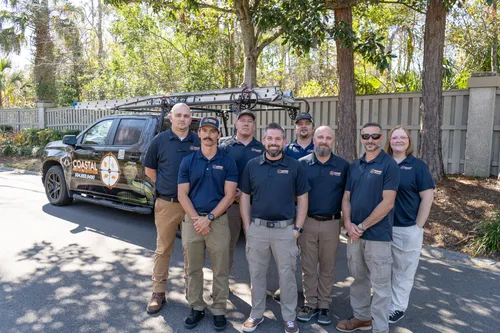
Coastal Wildlife & Pest Control Services of St Johns County provides comprehensive pest and wildlife control solutions in Jacksonville, FL. They specialize in the safe removal and prevention of various pests and wildlife, including raccoons, bats, snakes, rats, armadillos, squirrels, birds, and moles. Their services cover both residential and commercial properties, offering customized plans for pest control, termite protection, mosquito control, and wildlife proofing. The company is certified by multiple industry associations and uses both traditional and advanced technology to ensure effective and humane pest management. They also provide emergency and after-hours services for urgent wildlife removal needs.
WILDLIFE PRO-Tection (LLC).
Jacksonville, FL
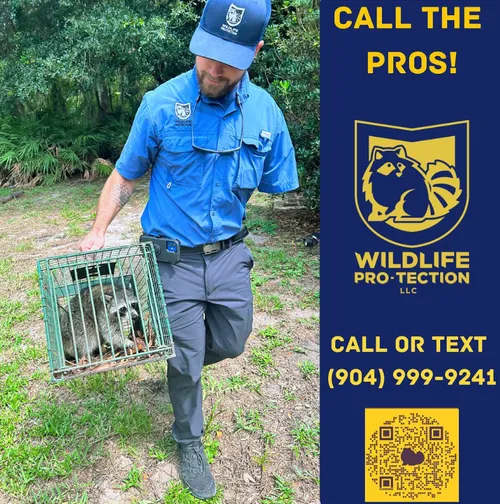
WILDLIFE PRO-Tection (LLC) is a family-owned wildlife removal company based in Jacksonville, FL. They specialize in humane and ethical wildlife removal and prevention, using environmentally friendly methods to safely relocate animals without harm. Their services include humane trapping, relocation, wildlife exclusion, and proofing, offering comprehensive solutions tailored to local wildlife challenges. The company is fully licensed and insured, ensuring compliance with legal and safety standards.
McCall Pest & Wildlife - Jacksonville
2861 College St, Jacksonville, FL 32205
McCall Pest & Wildlife - Jacksonville provides comprehensive pest control services for homes and businesses in Jacksonville, FL. Their offerings include termite inspections and treatments, mosquito control, wildlife removal, and specialized pest management for ants, rodents, bed bugs, and birds. The company employs an on-staff entomologist and trained technicians to develop targeted pest control strategies suited to the local environment. Established in 1928, McCall Pest & Wildlife brings decades of experience to managing pest challenges in the region. They also offer bundled service options to address multiple pest concerns efficiently.
Turner Pest Control
Jacksonville, FL
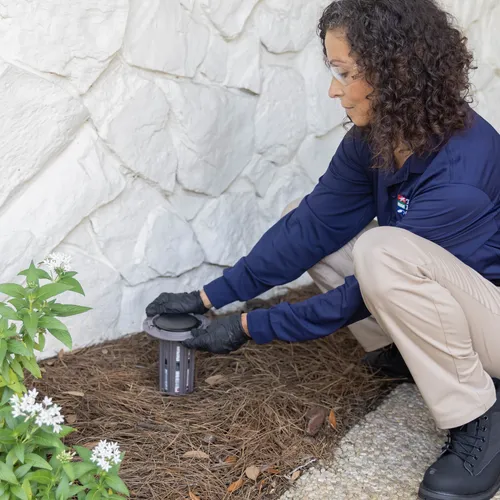
Turner Pest Control offers a wide range of pest management services in Jacksonville, FL. Their services include bed bug treatment, ant and rodent control, termite inspection and treatment, mosquito control, bee and wasp removal, wildlife removal, and lawn and outdoor pest services. They provide comprehensive interior and exterior pest protection, including specialized termite treatment for Formosan termites and mosquito control programs to reduce health risks. Turner Pest Control also uses TAP Pest Control Insulation, which incorporates insecticide into attic insulation to prevent infestations. Their SMART TurnerGuard program offers ongoing pest and termite control with no hidden fees or retreatment charges.
Common Nuisance Wildlife in Jacksonville
Jacksonville's mix of urban neighborhoods, waterways, and wooded areas creates ideal habitats for many species that can become pests. Knowing what you're dealing with is the first step.
Mammals: This is the most frequent category for complaints. Raccoons are notorious for tipping over trash cans and nesting in attics. Squirrels and rats can chew through wiring, creating fire hazards. Opossums, while generally less destructive, can still rummage through garbage. Armadillos dig extensive burrows that damage lawns and foundations. Notably, the population of feral hogs is growing in Florida, and they can cause significant property damage. Bats, which are protected, often roost in attics and require special exclusion techniques 1.
Birds: While many birds are welcome, non-native species like pigeons or invasive populations of certain birds can create nuisances through droppings, noise, and nesting in vents or on structures. Their management sometimes requires specific permits.
Reptiles: Various snake species are common in Florida. While most are non-venomous and beneficial, their presence in a garage or pool area can be alarming and necessitate safe removal.
Florida Laws and Regulations for Wildlife Control
You cannot simply trap and relocate an animal anywhere you choose. The Florida Fish and Wildlife Conservation Commission (FWC) sets strict rules to protect ecosystems and animal welfare.
What Homeowners Can Do: For common species like raccoons, opossums, and squirrels, you are allowed to live-trap and remove them from your property during daylight hours. However, you are legally responsible for the animal once trapped. You must release it on your own property with written permission from the landowner, or humanely euthanize it. You cannot release wildlife on public land or another person's private property without explicit permission 2.
What Requires Permits or is Prohibited: The use of steel leg-hold traps, discharging firearms with the aid of a light at night, and most poisons (except for rats and mice when used by licensed professionals) are generally prohibited or require special permits from the FWC 3. The relocation of trapped animals is heavily restricted to prevent the spread of disease and ecological disruption.
Special Case: Bats: Bats are protected in Florida. It is illegal to kill them. The only legal method for bat removal is exclusion-installing one-way devices that allow bats to leave but not re-enter. This work is highly time-sensitive, as it cannot be performed during the maternity season (typically April 16 through August 14) when flightless young are present 4.
Find the perfect wildlife removal companies for your needs
Get personalized recommendations and expert advice
The Professional Wildlife Removal Process
When you hire a licensed nuisance wildlife operator, they follow a systematic approach to ensure a permanent solution.
- Inspection and Identification: A technician will inspect your property to identify the species, locate all entry points, and assess the extent of the problem, including any damage.
- Humane Removal and Trapping: Using methods compliant with FWC regulations, the professional will remove the animals. This may involve live trapping, exclusion devices, or direct capture.
- Exclusion and Repair: This is the most critical step to prevent recurrence. All identified entry points-in roofs, vents, soffits, and foundations-are sealed with durable materials like steel mesh, hardware cloth, or chimney caps.
- Cleanup and Sanitation: Wildlife leaves behind droppings, urine, nesting materials, and odors. Professionals can safely clean and decontaminate affected areas like attics and crawl spaces, which is important for health and preventing new animals from being attracted by scents.
- Prevention Advice: A reputable service will provide recommendations for making your property less attractive, such as securing trash, removing outdoor pet food, and trimming tree branches away from the roof.
Cost of Wildlife Removal Services in Jacksonville
The price for animal control services varies significantly based on the species, the complexity of the job, and the extent of repairs needed.
- Trap and Removal: For a standard job involving squirrels or raccoons, costs typically range from $200 to $500 or more. This usually includes the assessment, trapping, and removal/relocation of the animal 5.
- Exclusion and Repairs: Services like bat exclusion or sealing a home against rats are more involved. You can expect costs ranging from $300 to over $1,000, depending on the size of the home and number of entry points 6 7.
- Cleanup and Deodorizing: Removing contaminated insulation, sanitizing areas, and odor neutralization are often essential add-on services that incur extra fees.
Investing in professional exclusion and repair is almost always more cost-effective than repeated DIY trapping, which doesn't address the root cause of the intrusion.
When to Call a Professional vs. DIY
You might handle it yourself if: You see a single opossum in the garbage or a non-venomous snake in the garden that you can safely guide away. For simple, daytime live-trapping of a raccoon or squirrel on your property-and you have a safe, legal plan for the animal's immediate disposition-DIY is an option 8.
You should call a licensed professional for:
- Bats in the attic. This requires legal exclusion techniques and timing.
- Suspected feral hogs. They are dangerous and destructive.
- Animals inside walls or hard-to-reach areas.
- Evidence of chewed electrical wires, which is a serious fire hazard.
- If you are unsure of the species or its protected status.
- If you lack the time, tools, or comfort level to handle traps and wild animals safely.
- For permanent exclusion work to seal your home after animals are gone.
Who to Contact in Jacksonville
- For Professional Removal: Contact licensed nuisance wildlife control operators (NWCOs) or pest control companies specializing in wildlife. They have the expertise and insurance to handle the job safely and legally.
- For Regulations and Permits: Contact the Florida Fish and Wildlife Conservation Commission (FWC) at 888-404-3922. They are the authority on wildlife laws and can answer questions about what you can and cannot do 9.
- For Domestic Animals: If the issue involves a stray dog, cat, or an animal cruelty case, contact Jacksonville Animal Care & Protective Services (ACPS) at 904-573-0000 10.
Prevention: Keeping Wildlife Wild
The best strategy is to make your property less inviting. Implement these practices to avoid conflicts:
- Secure trash cans with locking lids or store them in a garage or shed until pickup day 11 12.
- Never leave pet food outdoors overnight.
- Clean barbecue grills promptly after use.
- Seal potential entry points on your home. Check roof lines, vents, soffits, and crawl space doors. Use sturdy materials like ¼-inch hardware cloth or steel wool (for rodents) 13.
- Keep yard areas tidy by picking up fallen fruit and storing firewood away from the house.
Frequently asked questions
Sources
Footnotes
-
Nuisance Wildlife Permits - FWC - https://myfwc.com/license/wildlife/nuisance-wildlife-permits/ ↩
-
Relocating Wildlife - FWC - https://myfwc.com/conservation/you-conserve/wildlife/relocate/ ↩
-
I have a question about nuisance wildlife trapping. Do I need any ... - https://www.fdacs.gov/Business-Services/Pest-Control/Pest-Control-FAQ/I-have-a-question-about-nuisance-wildlife-trapping.-Do-I-need-any-sort-of-state-pest-control-license-to-trap-wild-hogs-raccoons-opossums-etc. ↩
-
Nuisance Wildlife - Solutions for Your Life - UF/IFAS Extension - https://sfyl.ifas.ufl.edu/natural-resources/nuisance-wildlife/ ↩
-
Wildlife Removal & Animal Control CT, MA, RI, NY - https://eliminateem.com/animal-control/ ↩
-
Jacksonville Wildlife Removal, Pest Animal Control FL - http://www.wildlife-removal.com/city/FL-Jacksonville.htm ↩
-
Wildlife Removal Services in Jacksonville - Critter Control - https://www.crittercontrol.com/office-finder/florida/jacksonville/ ↩
-
Nuisance Wildlife Removal - Turner Pest Control - https://www.turnerpest.com/nuisance-wildlife-removal/ ↩
-
FAQs: Nuisance Wildlife | FWC - https://myfwc.com/conservation/you-conserve/wildlife/faqs/ ↩
-
Jacksonville.gov - Animal Ordinance and Enforcement - https://www.jacksonville.gov/departments/neighborhoods/animal-care-protective-services/resources/animal-ordinance-and-enforcement ↩
-
Raccoons and Your Neighborhood PDF - Jacksonville Beach - https://jacksonvillebeach.org/DocumentCenter/View/561/Raccoons-and-Your-Neighborhood-PDF ↩
-
Bylaw - FWC - https://myfwc.com/wildlifehabitats/wildlife/bear/living/community-group/bylaw/ ↩
-
When Should You Call For Professional Wildlife Removal? - FL Pests - https://www.mccallservice.com/blog/when-should-you-call-for-professional-wildlife-removal/ ↩