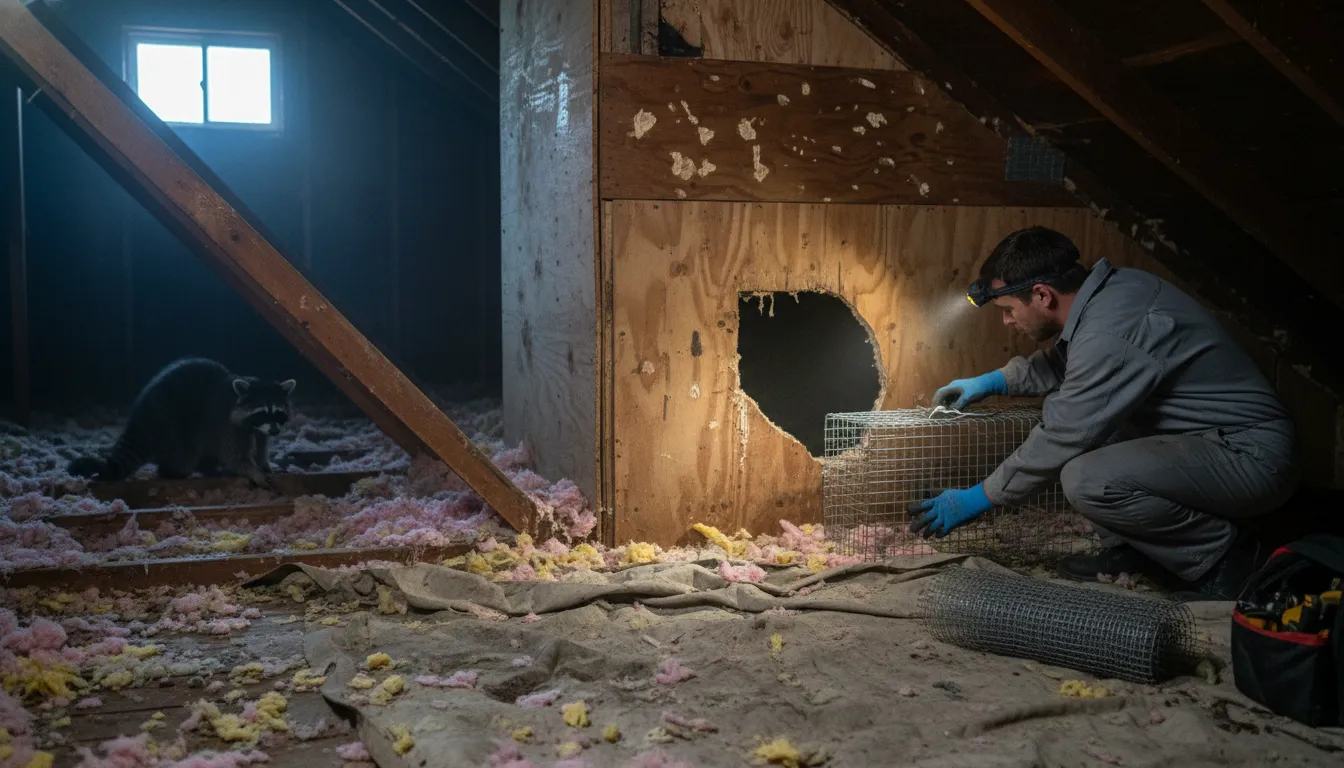
Find the Best Wildlife Removal Companies for Your Business
No obligation • Fast responses • Nationwide coverage

Why you can trust Pest Crews
Pest Crews is a leading U.S. resource for finding and evaluating residential and commercial pest control services. Our team researches providers, reviews treatment approaches, and organizes unbiased information to help you make informed decisions. Companies cannot pay to change our editorial content or influence how they appear.
Search providers near you
Top Wildlife Removal Companies in Lakeland, Florida Ranked
Dealing with unwelcome wild animals on your property can be stressful and potentially hazardous. Wildlife removal is the specialized process of safely and legally addressing nuisance animals that have entered homes, yards, or businesses, causing damage or posing health risks. In Lakeland, this service is crucial due to the area's diverse and active animal population. This guide explains the common local wildlife issues, your legal options, and how to connect with qualified professionals who can resolve your specific problem effectively.
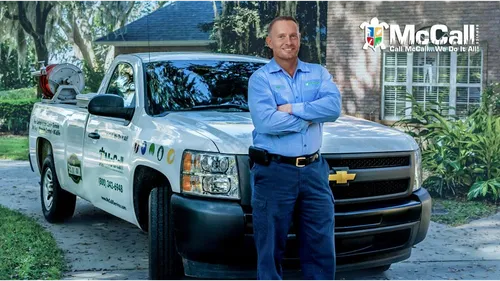
McCall Pest & Wildlife - Tampa
2610 Tampa E Blvd, Tampa, FL 33619
McCall Pest & Wildlife - Tampa provides comprehensive pest and wildlife control services in Tampa, FL. Serving both residential and commercial clients, they address issues with rodents, termites, mosquitoes, birds, and other wildlife. Their expertise includes termite inspections and monthly mosquito treatments designed to reduce outdoor pests. With nearly a century of experience across Florida, McCall Pest & Wildlife focuses on eco-friendly products to protect both customers and the environment. They offer customized commercial pest control solutions for various businesses, including schools and healthcare facilities.
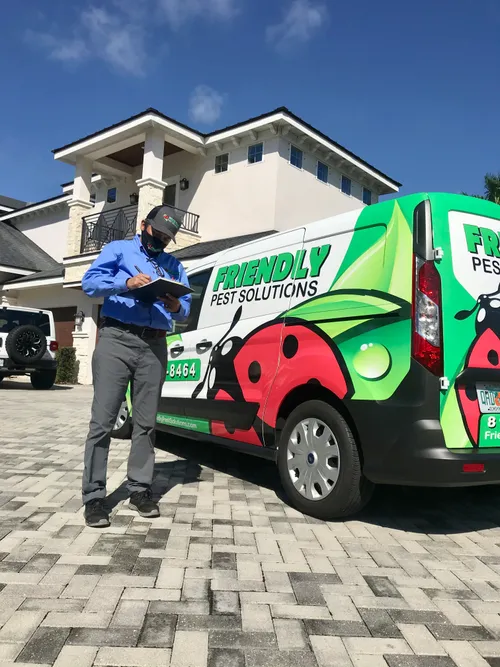
Friendly Pest Solutions, LLC
213 Brentshire Dr, Brandon, FL 33511
Friendly Pest Solutions, LLC is a pest control company serving Tampa, FL, with over 30 years of experience. They offer a wide range of services including insect control, rodent control, termite inspections, wildlife removal, and commercial pest management. Their capabilities include providing required wood-destroying organism (WDO) paperwork for mortgage approvals and fumigation services with warranties. The company also offers emergency pest control services to address urgent needs.

Terminix Commercial
4312 N 56th St, Tampa, FL 33610
Terminix Commercial provides comprehensive pest control services in Tampa, FL, addressing common local pests such as termites, bed bugs, rodents, mosquitoes, and bees. The company offers customized pest management plans including regular inspections and treatments designed to protect both residential and commercial properties. One notable capability is their termite control system, which includes annual inspections and a protection guarantee covering termite damage. Terminix Commercial is supported by a nationwide network and staffed by local technicians familiar with Tampa's pest challenges. They also offer 24-hour service availability to meet urgent pest control needs. The company serves a wide range of communities throughout the Tampa area and surrounding cities.
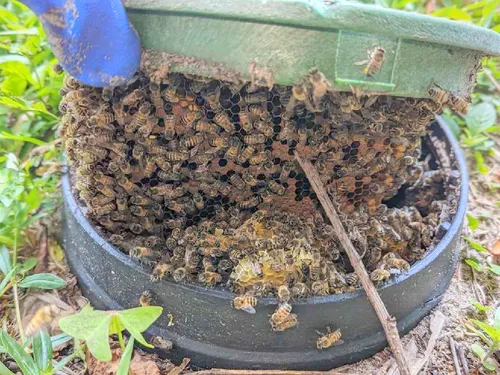
Bee Serious Bee Removal
632 Ave T SE, Winter Haven, FL 33880
Bee Serious Bee Removal is a veteran-owned, family-operated business serving Tampa, FL, and the broader Central Florida area. They specialize in ethical bee and wasp removal, wildlife removal, and commercial pest control. With over a decade of experience, their team focuses on relocating bees safely and managing pest issues for homes, businesses, and municipalities. Bee Serious is known for its professional approach and commitment to treating each property with care. They also offer beekeeping supplies such as five-frame nucleus colonies for new or expanding apiaries.
Orkin
5805 Breckenridge Pkwy suite i, Tampa, FL 33610
Orkin provides residential pest control services in Tampa, FL, specializing in the treatment and removal of common pests such as bed bugs, cockroaches, ants, termites, mosquitoes, rodents, and stinging insects like hornets and wasps. The company offers customized pest control plans and uses science-backed methods including dry foam treatments, liquid barriers, and Sentricon® bait stations for termite control. With over 120 years of experience, Orkin operates 24/7 in Tampa to address pest issues promptly and effectively.
Common Nuisance Wildlife in Lakeland
The Lakeland area is home to a variety of animals that frequently come into conflict with humans. These creatures are typically seeking food, water, or shelter, and residential properties often provide all three. Understanding which animal you're dealing with is the first step toward a solution.
Raccoons
Raccoons are intelligent, dexterous, and common culprits. They are notorious for knocking over trash cans, damaging roof shingles and screens to gain attic access, and can carry diseases like rabies and raccoon roundworm. Their search for a den site often leads them into chimneys, crawl spaces, and attics.
Squirrels
Squirrels, particularly gray squirrels, can cause significant structural damage. They chew on electrical wiring (a serious fire hazard), rip up insulation for nesting material, and tear holes in roof vents and fascia boards. A squirrel family in your attic is not just noisy; it's destructive.
Rodents (Rats and Mice)
Rodents are prolific breeders and can fit through incredibly small gaps. Beyond the health concerns from their droppings and urine, they chew incessantly on wood, drywall, pipes, and stored items, leading to costly repairs 1 2. They are a year-round pest in Florida.
Opossums
These nocturnal scavengers are often drawn to pet food left outside and unsecured garbage. While they eat ticks and generally avoid confrontation, they may take up residence under a deck, porch, or in a low crawlspace, which can lead to foul odors if one dies within the structure.
Armadillos and Burrowing Animals
Armadillos and moles are primarily a nuisance to landscaping and yards. Their extensive digging for insects creates unsightly holes and can damage plant roots, irrigation systems, and even undermine shallow foundations or sidewalks.
Bats
Bats can enter homes through gaps as small as half an inch. While beneficial for insect control, a colony in an attic poses health risks due to the potential for rabies transmission and the accumulation of guano, which can harbor fungal spores.
Florida Laws and Regulations for Wildlife Control
In Florida, nuisance wildlife management is regulated by the Florida Fish and Wildlife Conservation Commission (FWC). Property owners have certain rights to address problems, but they must follow specific rules 3.
What You Can Do:
- Live Trapping: You may live-trap most nuisance animals on your property. Traps must be checked at least once every 24 hours.
- Disposition of Captured Animals: For native species, you have two legal options: release the animal on the same property where it was captured, or humanely euthanize it. Relocating an animal off your property is highly restricted. It is only allowed if you have written permission from the owner of a suitable release site that is at least 40 acres in size and within the same county 4.
- Non-Native Species: Animals like the Norway rat or house mouse are not protected and may only be transported for euthanasia; they cannot be released.
What is Illegal:
- Poisoning or Drowning: These methods are prohibited for nuisance wildlife control.
- Relocating Without Permission: Releasing an animal in a park, forest, or another neighborhood is illegal and can spread disease or create problems for others.
- Harming Protected Species: Some species, including all bats, are protected and require special handling. It is illegal to release a captured bobcat; they must be euthanized.
- Discharging Firearms: This may be prohibited by local city or county ordinances, especially in residential areas.
Given these complex regulations, hiring a licensed professional is often the safest, most efficient, and legally compliant course of action.
Find the perfect wildlife removal companies for your needs
Get personalized recommendations and expert advice
When to Call a Professional Nuisance Wildlife Control Operator (NWCO)
A professional brings expertise that goes beyond simple trapping. Here's when you should strongly consider calling for help:
- The animal is in a hard-to-reach area (inside walls, deep in an attic, or in chimney flues).
- You suspect a female with young are present. Removing only the adult can leave behind babies that will die and cause severe odor problems.
- You are dealing with a species that poses a health risk, such as raccoons, bats, or rodents.
- The problem is recurring, indicating an entry point hasn't been found and sealed.
- You need exclusion work and repairs to prevent future entry.
- You want to ensure full compliance with FWC regulations.
Professionals are trained in animal trapping, exclusion techniques, and repair work. They can also perform critical sanitation services to clean up hazardous waste like droppings and urine, which is essential for restoring a healthy living environment 5 6.
Understanding Costs for Animal Removal Services
The cost for wildlife control in Lakeland is not a flat fee; it varies based on several factors. A professional service typically includes an inspection, removal, exclusion (sealing entry points), and often sanitation. Most reputable companies offer a free inspection and quote 7 8.
Key factors influencing price include:
- Type of Animal: Removal costs differ for a squirrel versus a raccoon or a colony of bats.
- Extent of Infestation: A single animal is less costly to remove than an established family group.
- Location of the Animal: An animal in an open crawlspace is easier to address than one trapped inside a wall.
- Required Repairs: The cost of materials and labor to seal entry points and repair damage (e.g., chewed wires, torn insulation, soiled ductwork) will be included in a comprehensive service estimate.
- Prevention Measures: Many companies offer "wildlife-proofing" services to safeguard your home from future invasions 9 10.
For an accurate estimate tailored to your specific situation, it's best to obtain a quote from a local Lakeland NWCO.
Who to Contact for Different Situations
Not every animal issue requires a private wildlife control service. Knowing which agency to call can save time.
- For Professional Wildlife Removal: Contact a licensed Nuisance Wildlife Control Operator (NWCO). You can find a directory of registered operators on the FWC website 11.
- For Injured, Aggressive, or Potentially Rabid Animals: Contact the FWC Regional Office or the Wildlife Alert Hotline. This is also the correct channel for questions about protected species 12 13.
- For Stray or Dangerous Domestic Animals (dogs, cats): Contact the Polk County Sheriff's Office Animal Control.
- For Property Conditions Attracting Wildlife: If a neighbor's property (e.g., unsecured trash, overgrown vegetation) is creating a persistent wildlife problem, you can file a complaint with City of Lakeland Code Enforcement 14 15.
Prevention: Keeping Wildlife Out
The best solution is to never have the problem start. Effective prevention, or wildlife exclusion, involves making your property less attractive to animals.
- Secure Food Sources: Use locking lids on trash cans. Do not leave pet food outdoors overnight. Clean barbecue grills after use.
- Eliminate Shelter: Seal off crawlspace openings with heavy-gauge wire mesh. Keep tree branches trimmed back at least 6-8 feet from the roofline. Store firewood away from the house.
- Inspect and Repair: Regularly check your roof, soffits, vents, and foundation for gaps, holes, or loose boards. Pay special attention to areas where different building materials meet. Use appropriate materials like hardware cloth, sheet metal, or concrete to seal any openings 16 17.
Frequently asked questions
Sources
Footnotes
-
3 Most Common Nuisance Wildlife Found In Lakeland, FL - https://crittercontrolofpolkcounty.com/most-common-nuisance-wildlife-found-in-lakeland-fl/ ↩
-
Wildlife - Ape Pest Control - https://www.apepestcontrol.com/wildlife ↩
-
FAQs: Nuisance Wildlife - FWC - https://myfwc.com/conservation/you-conserve/wildlife/faqs/ ↩
-
FAQs: Nuisance Wildlife - FWC - https://myfwc.com/conservation/you-conserve/wildlife/faqs/ ↩
-
Winter Haven & Lakeland Wildlife Control - http://www.floridawildlifecontrol.com/lakeland.html ↩
-
Animal Control Lakeland - All Creatures Wildlife Removal - https://allcreatureswildlife.com/animal-control/ ↩
-
3 Most Common Nuisance Wildlife Found In Lakeland, FL - https://crittercontrolofpolkcounty.com/most-common-nuisance-wildlife-found-in-lakeland-fl/ ↩
-
Lakeland Wildlife Control: Raccoon, Bat & Squirrel Removal - https://www.crittercontrol.com/office-finder/florida/lakeland/ ↩
-
Best Wildlife Removal & Control Services in Lakeland, FL - https://wildremoval.com/service-areas/lakeland/ ↩
-
Lakeland Wildlife Animal Control - Wildlife Animal Control - http://www.wildlifeanimalcontrol.com/Lakeland.html ↩
-
Nuisance Wildlife Control Operator Registration - FWC - https://myfwc.com/license/wildlife/nuisance-wildlife-permits/trapper-registration/ ↩
-
Protected Wildlife Species in Florida - https://www.flapest.com/protected-wildlife-species-florida/ ↩
-
Bears in unexpected places and what you should do - FWC - https://myfwc.com/news/all-news/bears-624/ ↩
-
FAQs | City of Lakeland - https://www.lakelandgov.net/departments/community-economic-development/code-enforcement/faqs/ ↩
-
Bylaw - FWC - https://myfwc.com/wildlifehabitats/wildlife/bear/living/community-group/bylaw/ ↩
-
Nuisance Wildlife - Solutions for Your Life - UF/IFAS Extension - https://sfyl.ifas.ufl.edu/natural-resources/nuisance-wildlife/ ↩
-
Nuisance Wildlife Identification & Removal - Florida Pest Control - https://www.flapest.com/pest-info/nuisance-wildlife/ ↩