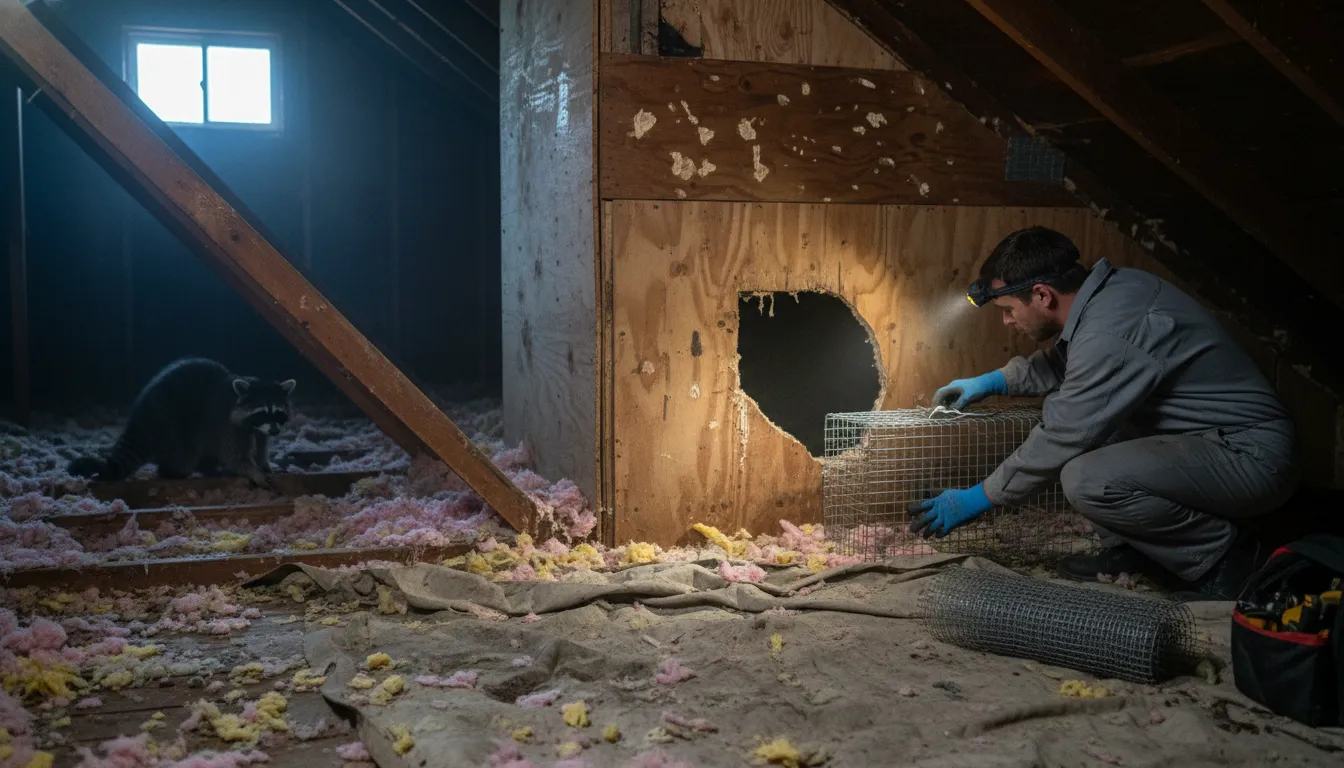
Find the Best Wildlife Removal Companies for Your Business
No obligation • Fast responses • Nationwide coverage

Why you can trust Pest Crews
Pest Crews is a leading U.S. resource for finding and evaluating residential and commercial pest control services. Our team researches providers, reviews treatment approaches, and organizes unbiased information to help you make informed decisions. Companies cannot pay to change our editorial content or influence how they appear.
Search providers near you
Top Wildlife Removal Companies in Largo, Florida Ranked
Living in Largo offers beautiful weather and proximity to nature, but sometimes that wildlife gets a little too close for comfort. When raccoons raid your attic, squirrels nest in your soffits, or armadillos dig up your yard, you need effective and legal solutions. This guide provides a comprehensive overview of nuisance animal control in Largo, covering local regulations, common problem species, do-it-yourself options, and when to call a professional. Use this information to understand your rights, responsibilities, and the best path to reclaiming your property from unwanted animal guests.
Phoenix Pest Management and Wildlife Control
705 Live Oak St Ste G, Tarpon Springs, FL 34689
Phoenix Pest Management and Wildlife Control provides pest and wildlife removal services in Tampa, FL. They handle a variety of pests including cockroaches, ants, rodents, bees, and wasps, as well as wildlife such as rats, squirrels, and raccoons. The company also offers restoration services to repair damage caused by animals and protect properties from future invasions. Owner Steve Barker has about 20 years of experience and started the business in 2012, serving the Greater Tampa Bay area with eco-friendly pest control products and permanent exclusion materials.
The Rodent Pros
1810 W Kennedy Blvd suite 314, Tampa, FL 33606
The Rodent Pros is a pest control company based in Tampa, FL, specializing in rodent control, wildlife removal, and pest extermination. They offer a comprehensive approach that includes identifying rodent species, sealing entry points, trapping, repairing damage, and sanitizing affected areas. With over 20 years of experience, The Rodent Pros focus on rodent remediation and trapping without using poisons, emphasizing safer and more humane methods. They provide 24-hour service to address urgent rodent and wildlife issues promptly in the Tampa area.
All In One Wildlife Removal LLC
Tampa, FL
All In One Wildlife Removal LLC provides rodent and wildlife control services in Tampa, FL, and surrounding counties including Hernando, Citrus, Pasco, Pinellas, and Hillsborough. They handle the removal and exclusion of various nuisance wildlife such as rats, raccoons, squirrels, opossums, bats, and mice from attics, yards, crawlspaces, and mobile homes. Their approach includes locating entry points, sealing them to prevent re-entry, and humane trapping and relocation when necessary. The company is certified in rodent and wildlife removal in Hernando County and offers a one-year guarantee on their work.
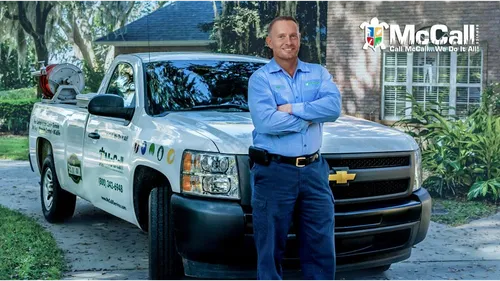
McCall Pest & Wildlife - Tampa
2610 Tampa E Blvd, Tampa, FL 33619
McCall Pest & Wildlife - Tampa provides comprehensive pest and wildlife control services in Tampa, FL. Serving both residential and commercial clients, they address issues with rodents, termites, mosquitoes, birds, and other wildlife. Their expertise includes termite inspections and monthly mosquito treatments designed to reduce outdoor pests. With nearly a century of experience across Florida, McCall Pest & Wildlife focuses on eco-friendly products to protect both customers and the environment. They offer customized commercial pest control solutions for various businesses, including schools and healthcare facilities.

PURCOR Pest Solutions
4630 Woodland Corporate Blvd ste 201, Tampa, FL 33614
PURCOR Pest Solutions provides pest and termite control services in Tampa, FL. They manage a variety of pests including ants, mice, spiders, roaches, rodents, and seasonal invaders for both residential and commercial properties. Their licensed professionals also offer wildlife removal and cleanup services for affected areas such as basements and crawlspaces. PURCOR emphasizes environmentally conscious pest management and offers resources to address termite concerns. The company is locally managed and focused on serving the Tampa community with expert pest control solutions.
Understanding Florida's Nuisance Wildlife Regulations
In Largo, all wildlife management activities are governed by the Florida Fish and Wildlife Conservation Commission (FWC). The state allows property owners to address nuisance animals that are causing damage, posing a safety threat, or causing an annoyance within or upon a building on their land. However, this right comes with specific legal responsibilities to ensure methods are humane and safe.
It's crucial to distinguish between general nuisance wildlife and situations requiring immediate government intervention. For issues involving sick, injured, or potentially rabid animals, you should contact Pinellas County Animal Services at 727-582-2600. 1 2 They handle domestic animal issues and public health alerts, such as rabies outbreaks. 2 For a protected species, like bats during their maternity season, or for a dangerous situation involving an alligator, you must contact the FWC directly for guidance. The FWC operates a Nuisance Alligator Hotline (1-866-FWC-GATOR) for alligators over four feet long that pose a threat.
Common Nuisance Wildlife in Largo
Largo's diverse habitats support a wide array of wildlife that can become problematic in residential areas. Knowing what you're dealing with is the first step toward effective control.
Mammals:
- Raccoons & Opossums: These nocturnal scavengers are attracted to unsecured garbage and pet food. They often seek shelter in attics, crawl spaces, and under decks, causing significant mess and potential structural damage.
- Squirrels: Gray squirrels, fox squirrels, and even flying squirrels are common. They chew on wiring, insulation, and wood to enter attics and build nests, creating fire hazards and costly repairs. 3 4
- Rodents: Roof rats and Norway rats are prevalent, especially in older neighborhoods with dense vegetation. 5 House mice also frequently invade homes seeking food and shelter. 6
- Armadillos: Known for their destructive digging, armadillos root through lawns and gardens in search of insects, leaving unsightly holes and damaged landscaping.
- Bats: While beneficial for insect control, bats can colonize attics or wall voids. Their guano (droppings) poses health risks and can damage insulation. Removal is strictly regulated.
- Feral Hogs: In more rural or wooded edges of the county, wild hogs can cause extensive property damage by rooting up large areas of land. 7 8
Other Wildlife:
- Snakes: Several species are common in Florida. While most are non-venomous, any snake inside a home or garage is a cause for concern and should be handled cautiously. 9
- Nuisance Birds: Birds like sparrows, starlings, or pigeons may nest in dryer vents, chimneys, or soffits, leading to blockages and debris accumulation.
DIY Wildlife Control: What Homeowners Can and Cannot Do
Florida law permits residents to trap or euthanize nuisance wildlife on their own property, provided they follow FWC rules. 10 Here's a breakdown of legal do-it-yourself animal control strategies.
Legal Trapping Methods:
- You may use live cage traps or snares.
- Traps must be checked at least once every 24 hours.
- Trapping should generally be conducted during daylight hours.
Post-Capture Requirements: This is where regulations are strict. An animal you live-trap cannot simply be driven to a park and released.
- Euthanasia: The animal may be humanely euthanized.
- Legal Release: If releasing, you have only two options:
- Release the animal on the same contiguous property where it was caught.
- Release it on a property of at least 40 contiguous acres within the same county, but only with the written permission of the landowner.
- You must also ensure the release does not violate any active county rabies alerts. 11
Prohibited Actions:
- Poison: The use of rodenticides or any poison is prohibited for non-rodent wildlife (e.g., raccoons, opossums, squirrels). 12
- Firearms: Discharging a firearm is illegal within most Largo city limits and residential areas; always check local ordinances first.
- Protected Species: Certain animals, like bobcats, cannot be euthanized and must be released following the rules above. 13
Find the perfect wildlife removal companies for your needs
Get personalized recommendations and expert advice
The Most Effective Solution: Habitat Modification and Exclusion
Trapping removes the current problem, but exclusion-sealing animals out for good-is the cornerstone of long-term wildlife control. This involves a thorough inspection of your home's exterior to identify and seal all potential entry points.
Key Prevention Steps:
- Secure Food Sources: Use garbage cans with tight-fitting, locking lids. Never leave pet food outdoors overnight. 14
- Seal Entry Points: Carefully inspect your roofline, soffits, vents, and foundation. Use heavy-duty materials like steel mesh, hardware cloth, or professional-grade sealants to close any gaps larger than a quarter-inch. 15
- Chimney Caps: Install a professionally fitted chimney cap to keep raccoons, squirrels, and birds out.
- Vent Covers: Cover attic, dryer, and soffit vents with animal-proof screening.
- Yard Maintenance: Remove woodpiles, dense brush, and debris that provide shelter for animals. Trim tree limbs back at least 6-8 feet from the roofline. 16 17
When to Hire a Professional Wildlife Control Operator
For many homeowners, DIY wildlife removal is daunting, risky, or simply ineffective for persistent problems. This is when hiring a private Nuisance Wildlife Control Operator (NWCO) is the wisest choice. Professionals are licensed, insured, and knowledgeable about complex state and local laws.
Consider professional help for:
- Large or Dangerous Animals: Such as raccoons, bats, or when a nest of young is involved.
- Inaccessible Infestations: Animals deep in an attic, wall void, or chimney.
- Protected Species: Like bats, which have specific legal handling procedures.
- Repeated Invasions: If animals keep returning, a professional can find and seal all entry points.
- Significant Damage: When repairs to wiring, insulation, or structural wood are needed.
The FWC provides an online directory to find registered trappers in your area. 18
Understanding the Cost of Professional Wildlife Removal
The price for professional animal removal services in Largo varies based on the species, extent of the infestation, and the necessary repairs. 19 20 Most companies provide free or low-cost inspections before giving a detailed quote.
Typical Cost Components:
- Inspection/Service Call: An initial assessment fee often ranges from $75 to $150+. 21 22
- Trapping and Removal: This is typically a per-animal fee or a flat rate for a set trapping period. For example, removing a raccoon or opossum may have a set removal fee. 23
- Exclusion and Repair: This is the most critical-and often most significant-part of the cost. Sealing all entry points and repairing damage (chewed wires, soiled insulation, damaged soffits) can range from several hundred to thousands of dollars, depending on the job's scope. 24 25
- Complex Cases: Bat removal is particularly specialized due to health regulations and the need for meticulous exclusion, often costing several hundred dollars or more. 26
Always request a detailed, written estimate that breaks down inspection, removal, exclusion, cleanup, and repair costs before work begins.
Frequently asked questions
Sources
Footnotes
-
Resources Nuisance Wildlife - Broward County - https://www.broward.org/Animal/Resources/pages/nuisancewildlife.aspx ↩
-
Animal Services Enforcement - Pinellas County - https://pinellas.gov/animal-services-enforcement/ ↩ ↩2
-
Largo Wildlife Removal - Trutech Wildlife Service - https://www.trutechinc.com/largo-wildlife-removal/ ↩
-
How to Get Rid of Squirrels - Squirrel Removal from Attic - https://www.pestworld.org/news-hub/pest-articles/how-to-get-rid-of-squirrels/ ↩
-
Norway Rats in Florida: Identification & Control - https://www.nativepestmanagement.com/blog/2025/may/norway-rats-in-florida-identification-control/ ↩
-
Daytona Beach, FL | Mice Control - https://www.trulynolen.com/franchise/daytona-fl/mice ↩
-
Land Managers' Feral Hog Management Practices Inventory in Florida - https://journals.flvc.org/fshs/article/download/84024/81004 ↩
-
What Can States Do About Feral Swine? - https://csgsouth.org/wp-content/uploads/QofM-November_02.pdf ↩
-
Wildlife Removal Florence | Wildlife Control & Removal - https://greenville.aaacwildliferemoval.com/ ↩
-
I have a question about nuisance wildlife trapping. Do I need ... - https://www.fdacs.gov/Business-Services/Pest-Control/Pest-Control-FAQ/I-have-a-question-about-nuisance-wildlife-trapping.-Do-I-need-any-sort-of-state-pest-control-license-to-trap-wild-hogs-raccoons-opossums-etc. ↩
-
Relocating Wildlife - FWC - https://myfwc.com/conservation/you-conserve/wildlife/relocate/ ↩
-
Resources Nuisance Wildlife - Broward County - https://www.broward.org/Animal/Resources/pages/nuisancewildlife.aspx ↩
-
FAQs: Nuisance Wildlife - FWC - https://myfwc.com/conservation/you-conserve/wildlife/faqs/ ↩
-
Nuisance Wildlife - Solutions for Your Life - UF/IFAS Extension - https://sfyl.ifas.ufl.edu/natural-resources/nuisance-wildlife/ ↩
-
Overview of How to Stop Damage Caused by Nuisance ... - https://edis.ifas.ufl.edu/publication/UW368 ↩
-
How to Modify Habitat to Discourage Nuisance Wildlife in Your Yard - https://edis.ifas.ufl.edu/publication/UW370 ↩
-
The Best Way To Keep Wildlife Away From Your Brooklyn Yard - https://wildlifeny.com/the-best-way-to-keep-wildlife-away-from-your-brooklyn-yard/ ↩
-
Nuisance Wildlife Control Operator Registration - FWC - https://myfwc.com/license/wildlife/nuisance-wildlife-permits/trapper-registration/ ↩
-
Wildlife Removal Services from Turner Pest Control Wildlife Experts - https://www.turnerpest.com/pest-control/wildlife-removal/ ↩
-
How Much Does Wildlife Control and Exclusion Cost? - https://www.terminix.com/wildlife-control/cost/ ↩
-
Best Wildlife Removal and Pest Control in Largo, FL - https://wildremoval.com/service-areas/largo/ ↩
-
Largo Wildlife Control / Florida Animal Removal - http://www.aaanimalcontrol.com/professional-trapper/city/FL-Largo.htm ↩
-
FAQs: Nuisance Wildlife - FWC - https://myfwc.com/conservation/you-conserve/wildlife/faqs/ ↩
-
Humane Wildlife Removal Service in Tampa, FL - https://www.pestbear.com/services/wildlife-removal ↩
-
Animal Exclusion Greensboro - https://www.crittercontroltriad.com/animal-exclusion-services-greensboro-winston-salem/ ↩
-
Largo Rodent & Wildlife Removal - https://allinonewildliferemoval.com/pinellas-county-largo/ ↩