Find the Best Wildlife Removal Companies for Your Business
No obligation • Fast responses • Nationwide coverage
Why you can trust Pest Crews
Pest Crews is a leading U.S. resource for finding and evaluating residential and commercial pest control services. Our team researches providers, reviews treatment approaches, and organizes unbiased information to help you make informed decisions. Companies cannot pay to change our editorial content or influence how they appear.
Search providers near you
Top Wildlife Removal Companies in North Port, Florida Ranked
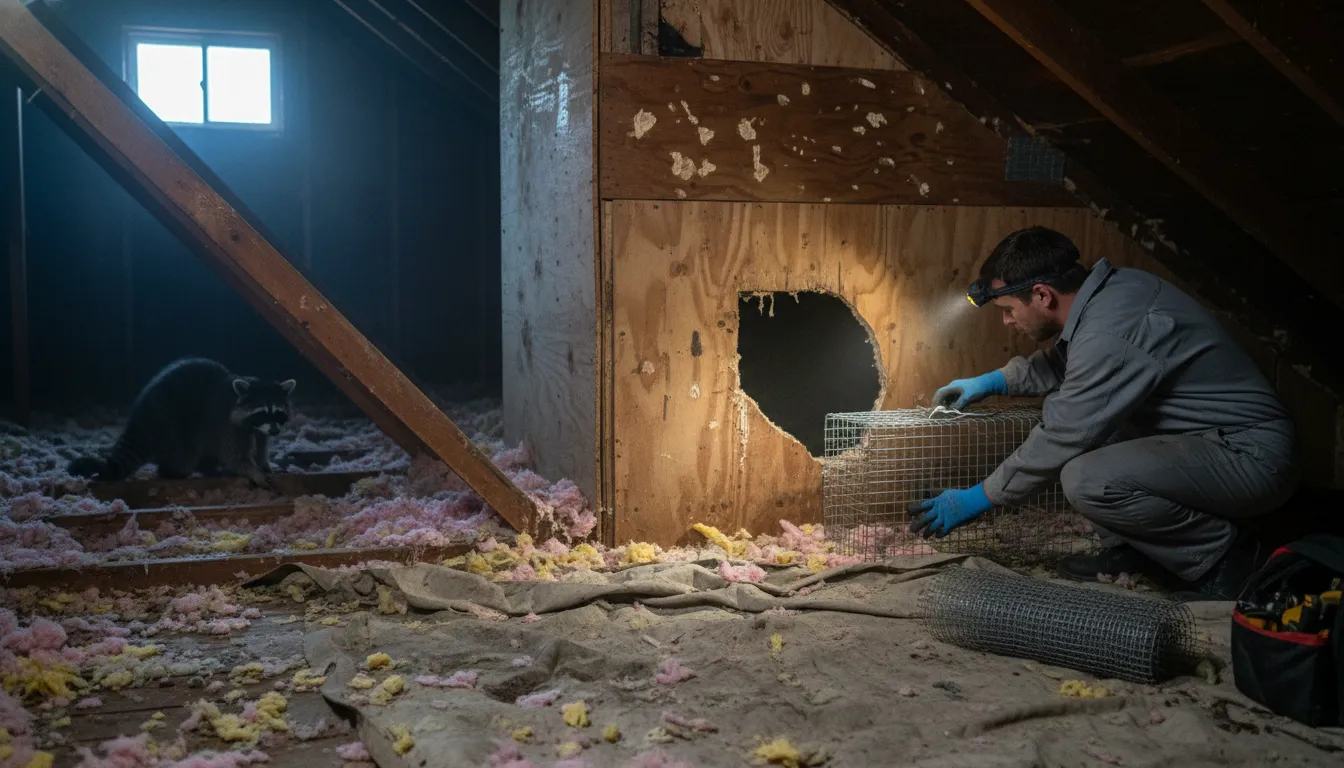
Living in North Port means enjoying Florida's beautiful natural environment, but sometimes that wildlife gets a little too close for comfort. Wildlife removal, also known as nuisance animal control or critter management, is the process of safely and legally addressing wild animals that have become a problem on your property. Whether it's a raccoon in the attic, an iguana in the yard, or a snake under the deck, these situations require specific knowledge of local laws and humane handling techniques. This guide will help you understand your options, from prevention and DIY steps to when it's essential to call a professional wildlife control operator.
Critter Control of Sarasota
Fort Lauderdale, FL
Critter Control of Sarasota provides wildlife removal and pest control services in Fort Lauderdale, FL. They specialize in humane removal and exclusion of nuisance animals such as raccoons, squirrels, bats, rats, and birds. Their process includes thorough inspections, species-specific removal techniques, and repairs to prevent re-entry. The company also offers attic remediation for contamination caused by wildlife. Critter Control of Sarasota follows local regulations for protected species and provides 24/7 emergency wildlife removal services. They serve Sarasota County, Manatee County, and nearby Gulf Coast communities.
Quest Termite & Pest Services
Cape Coral, FL
Quest Termite & Pest Services is a family-owned pest control company based in Cape Coral, FL. Serving Southwest Florida since 1999, they offer eco-friendly pest management solutions tailored to residential and commercial clients. Their services include termite inspections, bed bug treatment, rodent control, mosquito control, bee and wasp removal, and wildlife removal. The company emphasizes safe and effective pest control methods with technicians who receive ongoing training to ensure proper use of products.
Critter Control of Southwest Florida
Cape Coral, FL
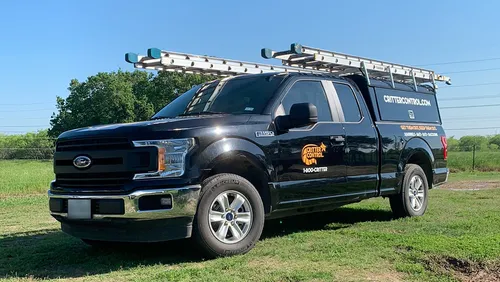
Critter Control of Southwest Florida provides wildlife removal and pest control services in Cape Coral, FL. They specialize in humane removal of raccoons, rodents, squirrels, bats, and skunks, along with inspection, exclusion, and repair to prevent future intrusions. Their process includes thorough inspections to identify animal activity, strategic trapping or exclusion methods, and restoration of any damage caused by wildlife. The company serves both residential and commercial properties, addressing issues like attic infestations, structural damage, and pest-borne diseases. Critter Control of Southwest Florida operates with trained specialists who use advanced techniques and offers 24/7 availability for wildlife emergencies.
Complete Pest Solutions of Fort Myers
Cape Coral, FL
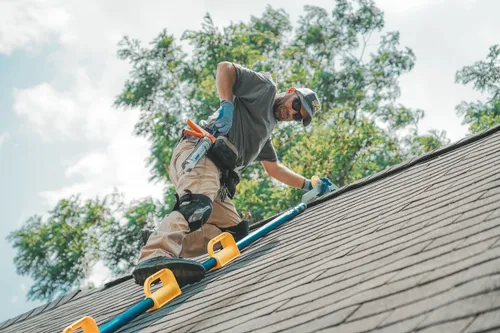
Complete Pest Solutions of Fort Myers provides comprehensive pest control services in Cape Coral, FL, and surrounding Southwest Florida counties. They handle a wide range of pests including bed bugs, termites, ants, rodents, mosquitoes, bees, wasps, and wildlife for both residential and commercial clients. The company offers specialized termite inspections and control, as well as humane wildlife removal. With over 20 years of experience, Complete Pest Solutions uses advanced equipment and techniques to address pest issues effectively. They also provide a quarterly pest control program for year-round protection across multiple counties.
Trutech Wildlife Service
Cape Coral, FL
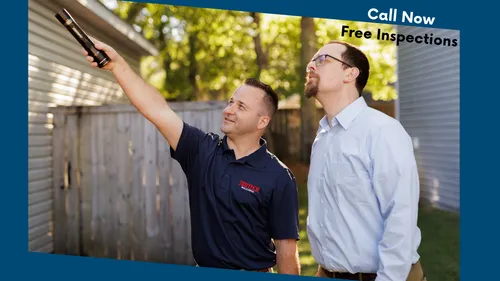
Trutech Wildlife Service provides wildlife removal and pest control services in Cape Coral, FL. They offer residential and commercial wildlife removal, pest control, and exclusion and remediation services. Their team uses humane methods such as cage traps, one-way valves, and deterrents to manage animals like raccoons, bats, squirrels, and rodents. With over 40 years of experience in Southwest Florida, Trutech emphasizes customized solutions tailored to each situation. Their technicians hold specialized degrees and receive ongoing training to ensure knowledgeable service.
Common Nuisance Wildlife in North Port
North Port's diverse habitats are home to a wide array of animals that can occasionally become nuisances for homeowners. The most frequently encountered species include mammals like raccoons, opossums, armadillos, skunks, wild hogs, and bats 1. Rodent issues, including various rat species and moles, are also common 1 2. Reptilian nuisances often involve snakes and the non-native green iguana 1. Bird problems typically center around Muscovy ducks and woodpeckers 1. Of course, in Florida, alligators are a unique and serious concern that requires immediate, specialized attention.
Understanding which animal you're dealing with is the first step, as the rules and methods for removal vary significantly. For instance, the regulations for relocating a native opossum are very different from those for a non-native iguana.
Florida's Wildlife Removal Regulations: What Homeowners Need to Know
The Florida Fish and Wildlife Conservation Commission (FWC) is the primary authority governing wildlife removal across the state, including North Port 3. The core principle is that property owners may address wildlife that is causing damage, posing a safety threat, or is an annoyance in or upon a building. However, how you address it is tightly regulated.
For native species (like raccoons, opossums, and most snakes), the rules are strict. If you trap an animal, you have two legal options: humanely euthanize it or release it on the same contiguous property where it was caught 4. Relocating wildlife to a park, forest, or another neighborhood is highly restricted. It requires a minimum of 40 contiguous acres of suitable habitat, written permission from the landowner, and compliance with county health ordinances-a bar too high for most residents 4.
For non-native, invasive species (like iguanas, Muscovy ducks, and wild hogs), the rules change. These animals may not be transported or relocated except for the purpose of euthanasia. No special permit from the FWC is required for a property owner or their authorized agent to remove them.
It is illegal to use poison to kill any native wildlife in Florida. Furthermore, the inhumane treatment of any animal is punishable by law. Discharging firearms may also be prohibited by North Port city ordinances, making this an unsuitable removal method in most residential areas.
Prevention: Your First and Best Defense
Before wildlife becomes a problem, proactive prevention is the most effective and cost-efficient strategy. The goal is to make your property less attractive and accessible to nuisance animals.
- Secure Food Sources: Use garbage cans with tight-fitting, locking lids. Never leave pet food outdoors overnight. Clean barbecue grills after use and consider using a grill cover. Pick up fallen fruit from trees.
- Eliminate Shelter: Keep yards tidy by trimming overgrown vegetation and storing firewood, lumber, and debris piles away from your home's foundation. Seal off crawl space openings with sturdy wire mesh.
- Proof Your Home: Conduct a thorough inspection of your home's exterior. Look for loose siding, damaged roof vents, gaps in soffits, and openings where utility lines enter. Use appropriate materials like hardware cloth, steel wool, or professional-grade sealants to close any potential entry points larger than a quarter-inch. Install chimney caps.
These steps can prevent the vast majority of common wildlife conflicts before they start, saving you the stress and expense of a removal situation 5.
DIY Wildlife Removal: What You Can (and Can't) Do
For simple situations, a homeowner may choose to handle the issue themselves. Live cage traps or snares can be used for many common nuisance animals. If you go this route, you are legally required to check traps at least every 24 hours. Remember the relocation rules: any trapped native animal must be dealt with on your property.
For non-native species like iguanas, you may remove them from your property without an FWC permit. However, handling wildlife always carries risks-from bites and scratches to disease exposure. Many animals, when cornered or scared, can be surprisingly aggressive.
If you are uncomfortable, if the animal is in a dangerous location (like inside a wall), or if the species is potentially dangerous (like a venomous snake or a mother raccoon with young), it is time to stop DIY efforts and seek help.
Find the perfect wildlife removal companies for your needs
Get personalized recommendations and expert advice
When and How to Call for Professional Help
Professional Nuisance Wildlife Control Operators (NWCOs) are licensed and trained to handle complex or hazardous situations. You should strongly consider calling a professional for:
- Animals inside the living structure of your home (attic, walls, chimney).
- Suspected bat colonies (which have special protected status considerations).
- Removal of dead animals from inaccessible areas.
- Any situation involving potential aggression or disease risk.
- When exclusion and repair work (like resealing an attic) is needed to prevent re-entry.
The FWC maintains an online directory of registered trappers, which is an excellent place to start your search for a qualified professional. For non-emergency issues with common wild animals, you can also contact Sarasota County Sheriff Animal Services.
Special Cases: Alligators, Bears, and Injured Wildlife
Some wildlife situations require contacting specific agencies directly:
- Alligators: If you see an alligator you believe is a nuisance (generally over 4 feet in length and showing a lack of fear of people, or in a location that poses a threat), call the FWC's Statewide Nuisance Alligator Program (SNAP) hotline at 866-FWC-GATOR (866-392-4286) 6. Do not approach or attempt to handle the animal.
- Bears: While less common in North Port than in some parts of Florida, bear sightings do occur. Report bear conflicts, sightings in unexpected areas, or concerns to the FWC's Wildlife Alert Hotline at 888-404-FWCC (3922) 7.
- Injured or Orphaned Wildlife: If you find a native animal that is clearly injured or orphaned (use caution and observe from a distance first), contact a licensed wildlife rehabilitator. The Wildlife Center of Southwest Florida is a local resource that can provide guidance 8.
Understanding Wildlife Removal Costs in North Port
The cost for professional wildlife control in North Port is not set by the FWC and can vary widely based on several factors 9. The primary variables are the type of animal, the location and complexity of the removal, and any necessary repair work.
Most companies charge an initial inspection or service fee, typically ranging from $75 to $150 or more 10. The removal fee itself then varies by animal:
- Raccoons/Opossums: Trapping and removal can cost several hundred dollars. If the animal has young in an attic, or if cleanup and decontamination are needed, the price increases.
- Rodents (Rats/Mice): Full remediation, including trapping, sealing entry points, and cleanup, can range from $200 to over $600 11.
- Iguanas/Snakes: Services may charge a flat fee per animal removed or a per-visit rate.
- Repairs and Exclusion: Often, the most critical-and costly-part of the job is preventing the problem from recurring. Repairing damage to roofs, soffits, vents, and foundations, and installing professional-grade exclusion barriers, can easily exceed the cost of the removal itself 12 13.
The best approach is to obtain detailed, written quotes from several reputable local NWCOs. Ensure the quote includes not just removal, but also a plan for exclusion and any necessary repairs.
Choosing a Reputable Wildlife Removal Service
When selecting a professional, look for:
- Proper Licensing: Confirm they are registered with the FWC as a Nuisance Wildlife Control Operator 14.
- Insurance: Verify they carry liability insurance to protect you and your property.
- Experience & References: Ask how long they've been in business and for references from local clients.
- Humane Practices: Their methods should align with FWC regulations and prioritize humane treatment.
- Comprehensive Service: The best companies don't just trap and remove; they diagnose how the animal got in and provide a solution to keep it and others out permanently.
Taking the time to hire a knowledgeable professional ensures the job is done safely, legally, and effectively, giving you peace of mind and protecting your North Port home.
Frequently asked questions
Sources
Footnotes
-
What Is Considered a Nuisance Animal in Florida? - https://www.turnerpest.com/what-is-considered-a-nuisance-animal-in-florida/ ↩ ↩2 ↩3 ↩4
-
Everything You Need to Know About Mole Removal - https://www.webmd.com/a-to-z-guides/how-to-get-rid-of-moles-your-yard ↩
-
Protected Wildlife Species in Florida - https://www.flapest.com/protected-wildlife-species-florida/ ↩
-
Relocating Wildlife - FWC - https://myfwc.com/conservation/you-conserve/wildlife/relocate/ ↩ ↩2
-
Nuisance Wildlife - Solutions for Your Life - UF/IFAS Extension - https://sfyl.ifas.ufl.edu/natural-resources/nuisance-wildlife/ ↩
-
Statewide Nuisance Alligator Program - FWC - https://myfwc.com/wildlifehabitats/wildlife/alligator/snap/ ↩
-
Bears in unexpected places and what you should do - FWC - https://myfwc.com/news/all-news/bears-624/ ↩
-
Animal Services - North Port, FL - https://www.northportfl.gov/City-Services-and-Safety/Residents/Animal-Services ↩
-
FAQs: Nuisance Wildlife - FWC - https://myfwc.com/conservation/you-conserve/wildlife/faqs/ ↩
-
Wildlife Removal Services from Turner Pest Control Wildlife Experts - https://www.turnerpest.com/pest-control/wildlife-removal/ ↩
-
How Much Does Rodent Removal Cost? - https://www.jamisonpest.com/blogs/how-much-does-rodent-removal-cost/ ↩
-
Miami Certificate Of Occupancy Guide: Navigating Regulatory Compliance - myshyft.com - https://www.myshyft.com/blog/certificate-of-occupancy-process-miami-florida/ ↩
-
Affordable Wildlife Removal Cost - https://critterohio.com/how-much-does-wildlife-removal-cost/ ↩
-
Nuisance Wildlife Control Operator Registration - FWC - https://myfwc.com/license/wildlife/nuisance-wildlife-permits/trapper-registration/ ↩