Find the Best Wildlife Removal Companies for Your Business
No obligation • Fast responses • Nationwide coverage

Why you can trust Pest Crews
Pest Crews is a leading U.S. resource for finding and evaluating residential and commercial pest control services. Our team researches providers, reviews treatment approaches, and organizes unbiased information to help you make informed decisions. Companies cannot pay to change our editorial content or influence how they appear.
Search providers near you
Top Wildlife Removal Companies in Palm Beach Gardens, Florida Ranked
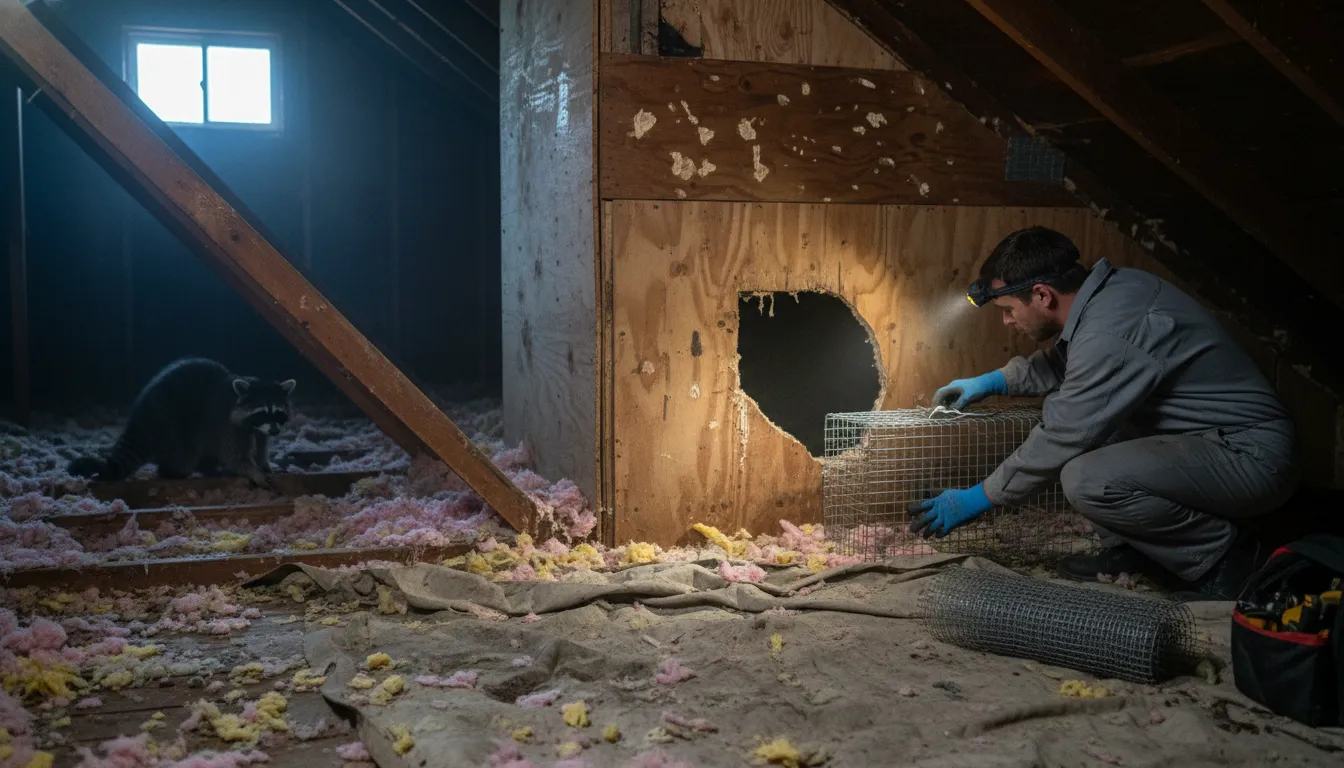
Discovering an uninvited animal in your attic, under your deck, or rummaging through your trash can be unsettling. In Palm Beach Gardens, managing nuisance wildlife requires a specific approach that balances effective removal with strict state and local regulations designed to protect Florida's diverse ecosystem. This guide provides homeowners and property managers with essential information on common local wildlife pests, effective and legal control strategies, and how to connect with licensed professionals who can resolve conflicts safely and humanely.
Rats to Bats Pest & Wildlife Control
1165 SW Martin Hwy, Palm City, FL 34990
Rats to Bats Pest & Wildlife Control is a locally owned company serving Port St Lucie, FL, and the Treasure Coast region. They provide pest and wildlife control services for residential and commercial properties, including warehouses, schools, and government agencies. The company holds certifications in pest control, wildlife management, and beekeeping from the Florida Department of Agriculture, emphasizing environmentally responsible methods. Owned by a Florida native with over 35 years living in the area, Rats to Bats offers expertise tailored to local pest challenges.
Pest Control Pro
Port St Lucie, FL
Pest Control Pro is a locally owned pest control company serving Port St Lucie, FL, and surrounding areas. They offer residential and commercial pest control services for a variety of pests including cockroaches, ants, rodents, termites, bees, wasps, and wildlife such as possums, squirrels, and raccoons. Their services include pest inspections, attic sanitation, and insulation replacement, using eco-friendly products and modern techniques to ensure safety for families and pets. Pest Control Pro provides flexible scheduling and multiple service plans including one-time and recurring treatments. They also back their work with a satisfaction guarantee.
Home Paramount Pest Control
6482 SE Federal Hwy, Stuart, FL 34997
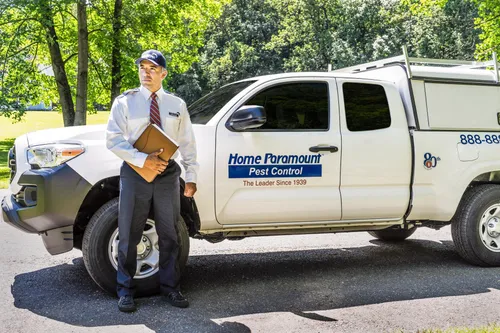
Home Paramount Pest Control is a family-owned pest control company serving Port St Lucie, FL, and the surrounding areas. They offer a wide range of pest management services including bed bug, cockroach, ant, termite, mosquito, bird, and wildlife control. The company uses a holistic approach that includes exclusion techniques, baiting, and eco-friendly options to address infestations and prevent future problems. Established in 1939, Home Paramount Pest Control has decades of experience and provides 24/7 emergency service for urgent pest issues.
Legacy Environmental Solutions
2447 SW 13th Terrace, Palm City, FL 34990
Legacy Environmental Solutions is a family-owned pest control company based in Port St Lucie, FL. They provide green pest management services for both commercial and residential properties, focusing on environmentally friendly solutions that are safe for families, pets, and guests. Their services include pest control for bed bugs, ants, rodents, mosquitoes, bees, wasps, birds, and wildlife removal. The company is licensed and insured, adhering to Florida's agricultural standards, and offers customized programs such as lawn and ornamental treatments to maintain healthy yards. Legacy Environmental Solutions also provides rodent proofing and cleanup services to prevent future infestations.
Florida Environmental Pest Management
7815 SW Ellipse Way Unit E10, Stuart, FL 34997
Florida Environmental Pest Management is a locally owned pest control company serving Port St Lucie, FL. They provide a range of services including cockroach, ant, rodent, termite, mosquito, and wildlife control. Their team conducts thorough inspections before treatment to identify pest activity and offers eco-friendly solutions that are safe for families and pets. The company has decades of experience and specializes in termite control, addressing various termite species common in South Florida. They also provide same-day rodent control services and emphasize customized pest management plans.
Common Nuisance Wildlife in Palm Beach Gardens
The subtropical climate and mix of urban and natural habitats in Palm Beach Gardens attract a wide variety of animals that can become pests. Knowing which species you're dealing with is the first step toward a proper solution.
Mammals: Raccoons are notorious for tearing into attics and soffits to create dens. Squirrels, both gray and flying species, chew on wiring and insulation, creating fire hazards. Rodents like roof rats and house mice are common invaders seeking food and shelter. Other frequent visitors include opossums, armadillos, foxes, coyotes, and bats.
Birds: Several bird species can cause significant damage. Woodpeckers drill into siding and eaves, often in search of insects or to create nesting cavities. Non-native pigeons and sparrows can nest in vents and create unsanitary conditions with their droppings. Even native wild turkeys can become a nuisance in certain suburban areas.
Reptiles: Various snake species are present, and while most are non-venomous and beneficial for rodent control, their presence in a home or garage is alarming and requires careful handling by a trained professional 1.
Understanding Florida's Wildlife Regulations
Attempting wildlife control without knowledge of Florida law can lead to violations. The Florida Fish and Wildlife Conservation Commission (FWC) sets the rules, and they are strictly enforced.
Protected Species: It is crucial to understand that most native birds, their nests, and eggs are protected by federal and state laws. You cannot harm or kill them without specific permits 2. Bats are also protected; they cannot be trapped or killed. The only legal method for bat control is exclusion, which must be done humanely and at specific times of the year when young bats are not present.
Trapping and Relocation Rules: If trapping is necessary, the FWC has clear guidelines. Live traps must be checked at least every 24 hours. Any non-target animal caught must be released immediately at the site of capture. For target species, you have two legal options: humanely euthanize the animal or release it on the property of a willing landowner within 24 hours of capture. You cannot simply trap an animal and release it in a park or other public land 3. It is illegal to relocate certain species, like raccoons or foxes, more than a short distance.
The Role of Local Authorities: Palm Beach County Animal Care and Control no longer responds to routine nuisance wildlife calls 4. Their role is now focused on domestic animals and public safety emergencies, such as a potentially rabid animal. For all other wildlife issues, residents must contact a private, FWC-permitted wildlife removal operator 4.
Effective Prevention and DIY Strategies
The best solution to a wildlife problem is to prevent it from happening in the first place. Proactive exclusion and habitat modification are key.
Seal Entry Points: Conduct a thorough inspection of your home's exterior. Look for gaps in soffits, loose roof vents, holes where pipes or cables enter, and cracks in the foundation. Use high-quality materials like hardware cloth, steel wool (for rodents), and metal flashing to seal these potential entries. Remember, a raccoon can fit through a hole the size of a baseball, a squirrel through a golf-ball-sized hole, and a mouse through a dime-sized gap.
Manage Food and Shelter: Secure trash cans with locking lids or bungee cords. Do not leave pet food outdoors overnight. Pick up fallen fruit from trees. Trim tree branches back at least 6-8 feet from your roofline to prevent easy access for squirrels and raccoons. Keep woodpiles and dense shrubbery away from the house to reduce cover for rodents and snakes.
For Specific Pests:
- Woodpeckers: Hang visual deterrents like reflective tape, old CDs, or predator decoys (owl/hawk silhouettes). Specialized netting can be installed over frequently pecked areas 5.
- Rodents: Focus on exclusion and trapping. Experts strongly advise against using poison baits (rodenticides). Poisoned rodents often die in inaccessible wall voids or attics, creating severe odor problems and posing secondary poisoning risks to pets, children, and native predators like hawks and owls 6 7.
- Bats: Never attempt to seal entry points while bats are inside. Identify main exit points at dusk and install one-way exclusion devices that allow bats to leave but not return. This work is best left to professionals due to legal protections and health considerations 8.
Find the perfect wildlife removal companies for your needs
Get personalized recommendations and expert advice
When and How to Hire a Professional Wildlife Remover
For many situations, hiring a licensed professional is the safest, most effective, and only legal option.
When to Call a Pro: Contact a professional wildlife control operator for: bats in the attic, any snake inside the home, large infestations (e.g., a colony of squirrels), animals that are sick or behaving strangely, or if you are unsure of the species or the legal methods for removal 9. If DIY efforts have failed, it's time to bring in an expert.
What to Expect from a Professional Service: A reputable operator will start with a thorough inspection to identify the pest species, locate all entry points, and assess the extent of the problem. They will then present a plan that includes humane removal, followed by exclusion-the critical step of sealing all entry points to prevent re-infestation. They should also advise on cleanup and sanitation if droppings or nesting materials are present.
Understanding Costs: Pricing for animal control services in Palm Beach Gardens varies based on the species, the complexity of the job, and the extent of damage. A relatively straightforward job, like trapping and removing an opossum from under a deck, may be on the lower end. More complex jobs, such as removing a raccoon family from an attic, sealing multiple entry points, and installing a permanent chimney cap, will cost more. For medium-complexity jobs like squirrel removal from an attic, homeowners can expect costs starting around $300 or more 10 11 12. Always get a detailed, written estimate before work begins.
The Professional Removal Process
A professional wildlife removal service follows a structured, multi-step process to ensure a complete and lasting solution.
- Inspection and Assessment: The technician will perform an interior and exterior inspection, looking for signs of activity, entry points, and potential attractants.
- Humane Removal: Using species-appropriate methods-which may include live traps, one-way doors, or hands-on techniques-the animals are removed in compliance with FWC regulations.
- Exclusion and Repair: This is the most important phase. All identified entry points are permanently sealed with professional-grade materials to prevent new animals from moving in. This may include installing vent covers, chimney caps, and repairing damaged wood or siding.
- Cleanup and Decontamination: If necessary, the affected area (like an attic or crawl space) will be cleaned of droppings, urine, and nesting materials. In some cases, disinfecting and deodorizing may be recommended to address health risks and odors.
- Follow-up and Monitoring: A good company will offer a warranty on their exclusion work and may schedule a follow-up visit to ensure the problem is fully resolved and no new entry points have been exploited.
Frequently asked questions
Sources
Footnotes
-
Palm Beach Gardens Wildlife Removal, Pest Animal Control FL - http://www.wildlife-removal.com/city/FL-Palm-Beach-Gardens.htm ↩
-
Nuisance Wildlife Permits - FWC - https://myfwc.com/license/wildlife/nuisance-wildlife-permits/ ↩
-
FAQs: Nuisance Wildlife | FWC - https://myfwc.com/conservation/you-conserve/wildlife/faqs/ ↩
-
Public Safety - Animal Care Wildlife Issues - https://discover.pbc.gov/publicsafety/animalcare/pages/wildlife.aspx ↩ ↩2
-
Overview of How to Stop Damage Caused by Nuisance Wildlife in ... - https://edis.ifas.ufl.edu/publication/UW368 ↩
-
Palm Beach Gardens Wildlife Animal Control - http://www.wildlifeanimalcontrol.com/Palm-Beach-Gardens.html ↩
-
Nuisance Wildlife - Solutions for Your Life - UF/IFAS Extension - https://sfyl.ifas.ufl.edu/natural-resources/nuisance-wildlife/ ↩
-
Nuisance Wildlife Removal - Turner Pest Control - https://www.turnerpest.com/nuisance-wildlife-removal/ ↩
-
Removing Nuisance Wildlife | FWC - https://myfwc.com/conservation/you-conserve/wildlife/remove/ ↩
-
AAAC Wildlife Removal of the Palm Beaches - https://palm-beaches.aaacwildliferemoval.com/service-area/palm-beach/ ↩
-
Wildlife Removal Palm Beach Gardens - AAAC Wildlife Removal of the Palm Beaches - https://palm-beaches.aaacwildliferemoval.com/service-area/palm-beach-gardens/ ↩
-
Prices for Palm Beach Gardens Wildlife Pest Control Animal Trapping - http://www.aaanimalcontrol.com/Professional-TRAPPER/prices/FL-Palm-Beach-Gardens-prices.htm ↩