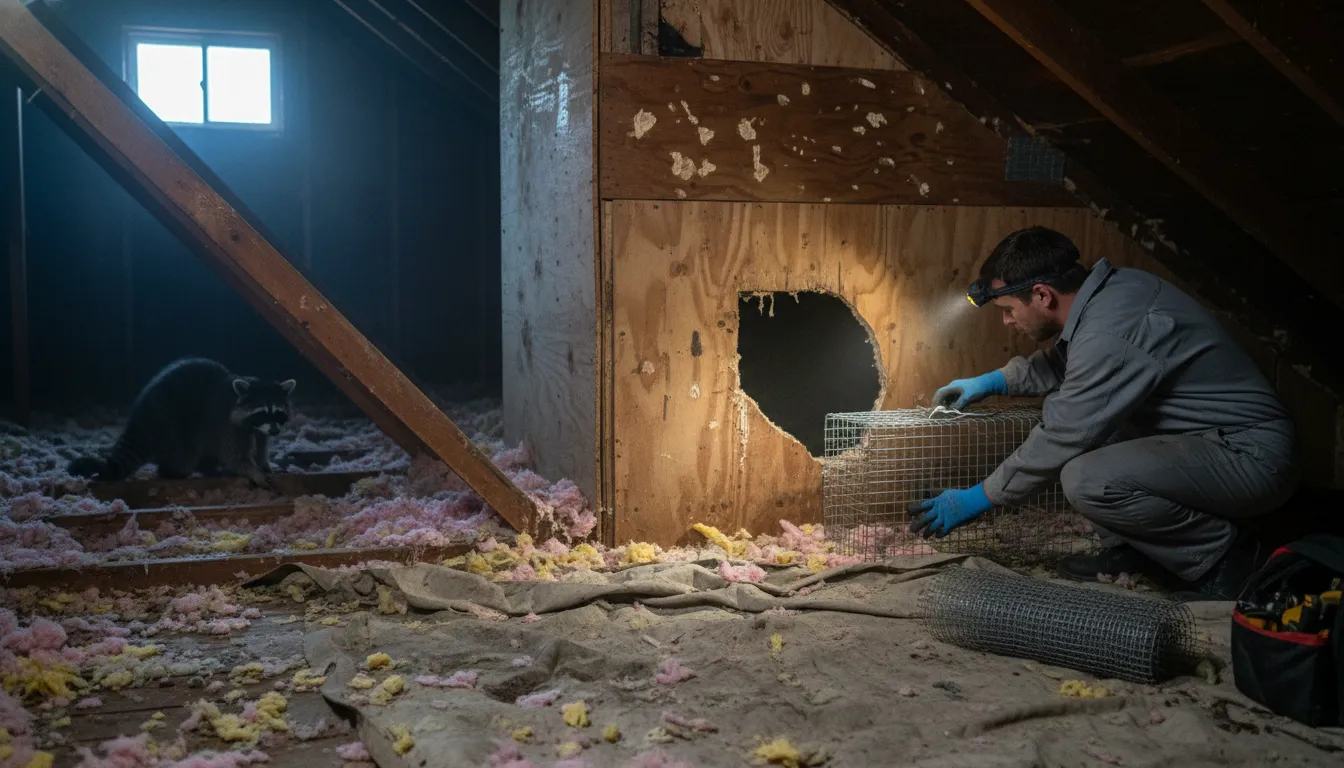
Find the Best Wildlife Removal Companies for Your Business
No obligation • Fast responses • Nationwide coverage
Why you can trust Pest Crews
Pest Crews is a leading U.S. resource for finding and evaluating residential and commercial pest control services. Our team researches providers, reviews treatment approaches, and organizes unbiased information to help you make informed decisions. Companies cannot pay to change our editorial content or influence how they appear.
Search providers near you
Top Wildlife Removal Companies in Raleigh, North Carolina Ranked
Finding an unexpected animal in your attic, chimney, or under your deck can be unsettling. In Raleigh, wildlife removal is the specialized service focused on humanely and legally resolving conflicts with nuisance animals that have entered your home or property. This process is crucial for protecting your home from damage, preventing health risks, and ensuring the safety of both people and animals according to North Carolina's specific regulations. This guide will help you understand the common wildlife issues in the area, the legal framework for animal control, and how to find qualified local professionals to handle the situation effectively.
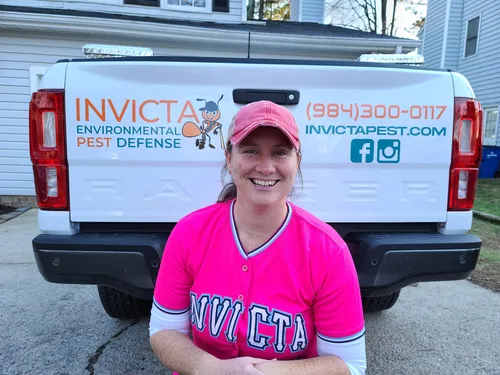
Invicta Environmental Pest Defense
5300 Wenesly Ct, Raleigh, NC 27616
Invicta Environmental Pest Defense is a mom-owned pest control company serving Raleigh, NC. They offer a wide range of pest management services including ant, bed bug, termite, rodent, mosquito, wasp, and wildlife removal treatments for both residential and commercial properties. Their team includes a wildlife biologist and a board-certified entomologist, ensuring expert care with environmentally responsible methods. Invicta is one of the few companies in North Carolina with multiple Premier Technicians certified by the NCPMA and holds Quality Pro and Green Pro certifications. Their approach focuses on pet-friendly, low-impact treatments that protect families and homes. With over 18 years of experience in rodent and wasp control, they provide specialized services backed by industry certifications.
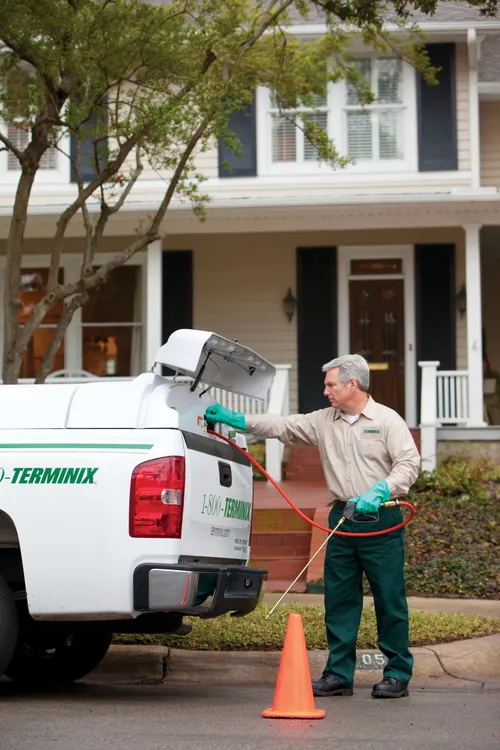
Terminix
150 Golden Dr #100, Durham, NC 27705
Terminix provides pest, termite, wildlife, and moisture control services in Durham, NC. They offer residential and commercial pest control with options for quarterly, bi-monthly, and monthly treatments. Terminix specializes in moisture control to prevent wood-decaying fungus and reduce insect infestations, serving Eastern North Carolina to Tidewater, VA. The company is known for its knowledgeable technicians and consistent service.
Neuse Termite & Pest Control
221 Guy Rd, Clayton, NC 27520
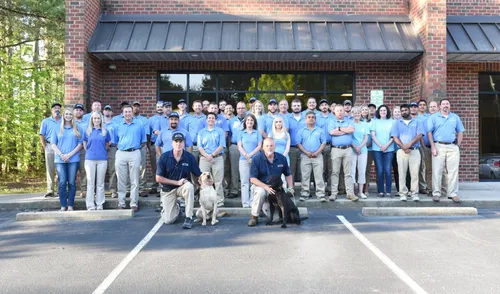
Neuse Termite & Pest Control provides pest management services in Raleigh, NC, specializing in residential and commercial pest control. Their offerings include treatments for bed bugs, cockroaches, ants, rodents, termites, mosquitoes, bees, wasps, birds, and wildlife removal. The company serves multiple counties across North Carolina, ensuring comprehensive coverage for various pest issues. They offer tailored pest control plans to meet different needs and budgets.
Orkin
609 Mercury St, Raleigh, NC 27603
Orkin offers residential and commercial pest control services in Raleigh, North Carolina. They handle a wide range of pests including bed bugs, cockroaches, ants, rodents, termites, mosquitoes, and wildlife. Orkin uses science-backed methods such as dry foam void filler, Sentricon® bait, and liquid barriers for termite control. With over 120 years of experience, Orkin provides tailored seasonal pest management to address the unique pest challenges throughout the year. They also offer 24/7 phone support and flexible scheduling to assist customers promptly.
RIDD Pest Control
2810 Yonkers Rd #3f, Raleigh, NC 27604
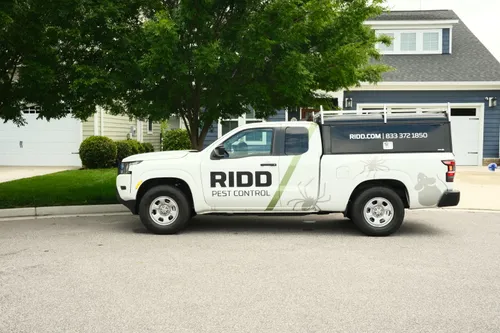
RIDD Pest Control is a pest management company based in Raleigh, NC, offering eco-friendly and pet-safe solutions for a variety of pest issues. Their services include ant, cockroach, rodent, termite, mosquito, bee and wasp removal, as well as wildlife control. They use advanced treatment methods such as barrier sprays, granular bait placement, mosquito fogging, and crack and crevice dusting to effectively manage and prevent pest infestations. RIDD Pest Control emphasizes customized service plans tailored to individual homes and prioritizes safety for families and the environment.
Common Nuisance Wildlife in Raleigh
The Raleigh area is home to a diverse range of wildlife, and as urban and suburban environments expand, encounters become more frequent. Understanding which animals are most likely to cause problems is the first step. The most common culprits for wildlife intrusion and damage in Raleigh homes include mammals like squirrels, raccoons, rats, bats, opossums, and groundhogs. You may also encounter foxes or coyotes on larger properties. Beyond mammals, snakes and various bird species can also become persistent nuisances, requiring specific removal strategies.
Each species presents unique challenges. Raccoons are intelligent and dexterous, often tearing into roof vents or soffits to create dens. Squirrels and rats are prolific chewers, damaging electrical wiring, insulation, and structural wood. Bats, which are protected in many contexts due to their ecological role, can colonize attics and pose specific health concerns. Proper identification of the animal is essential, as the removal methods, legal protections, and potential for young (which require careful handling) vary significantly.
Why Professional Wildlife Control is Necessary
While it might be tempting to handle a wildlife problem yourself, there are compelling reasons to seek professional animal removal services. First and foremost are the strict North Carolina state laws governing wildlife. For instance, it is illegal to relocate many species, including raccoons, foxes, coyotes, skunks, and groundhogs. These animals must often be euthanized or released on the property where they were captured, a process regulated by licensed professionals. Attempting relocation yourself could result in legal penalties and often simply moves the problem to a neighbor.
Secondly, safety and health risks are significant. Wild animals can carry diseases such as rabies, leptospirosis, and histoplasmosis (from bat guano). They may also become aggressive, especially if they feel cornered or are protecting young. A professional Wildlife Control Operator (WCO) has the training, protective equipment, and experience to handle animals safely, minimizing risk to you and your family.
Finally, effective wildlife management is about more than just trapping. The core of a permanent solution is exclusion-permanently sealing the entry points an animal used to get in. Without expert exclusion, another animal will likely take its place. Professionals can identify all potential entry points, remove any animals humanely, and perform necessary repairs to prevent re-entry, providing a long-term solution.
Understanding Raleigh's Wildlife Removal Laws and Agencies
Navigating the legal landscape is a critical part of dealing with nuisance wildlife. In Raleigh, different agencies handle different types of animal problems. It's important to know who to call.
- City of Raleigh Animal Control (919-996-3232): This agency handles domesticated animals and specific public safety threats. You should contact Animal Control for stray dogs or cats, farm animals in the road, vicious animals, any situation involving a suspected rabid animal, or to file a formal written nuisance complaint 1 2. They generally do not handle wildlife inside homes or complex wildlife conflicts.
- Licensed Wildlife Control Operators (WCOs): For almost all wildlife inside a structure (e.g., squirrels in the attic, bats in the chimney, raccoons under the deck), you need a licensed WCO. These professionals are trained and permitted by the state to handle the humane trapping, removal, and exclusion of nuisance wildlife 3. They understand the depredation permit requirements for certain species like deer or bear and ensure all actions are compliant with North Carolina Wildlife Resources Commission regulations.
- North Carolina Wildlife Resources Commission (NCWRC): This state agency sets the overarching regulations. They define what constitutes a "nuisance animal" (one causing property damage, posing a health risk, or creating persistent noise/odor) and issue the permits that WCOs operate under 4.
Find the perfect wildlife removal companies for your needs
Get personalized recommendations and expert advice
The Professional Wildlife Removal Process
When you hire a professional for animal extraction or wildlife exclusion in Raleigh, they typically follow a structured process to ensure the problem is completely resolved.
- Inspection and Assessment: The technician will perform a thorough inspection of your property, inside and out, to identify the species involved, locate all entry points, assess the extent of damage, and check for the presence of young. This initial assessment usually has a fee, often ranging from $100 to $200, which is frequently credited toward the total service cost.
- Humane Removal and Trapping: Using methods appropriate for the species and situation, the professional will remove the animals. This may involve one-way exclusion doors, hand-removal, or live cage trapping. As noted, relocation options are extremely limited by law 5. The cost for removal varies widely but can range from $200 to $500 for simpler cases like squirrels or rats, and $500 to $1,500 or more for complex bat or raccoon infestations 6.
- Exclusion and Repair: This is the most critical step for preventing future problems. Once all animals are confirmed out, the technician will seal all identified entry points using durable materials like hardware cloth, steel flashing, and professional-grade sealants. They will also advise on or perform repairs to damage caused by the animals, such as replacing insulation, cleaning up waste, or repairing chewed wires. Exclusion and repair work can cost between $300 and $1,000+, depending on the scope 7 8.
- Clean-up and Decontamination: For certain infestations, especially those involving bats or rodents, biohazard clean-up is recommended. This involves safely removing contaminated insulation, disinfecting the area, and addressing odor issues to restore a healthy living environment.
DIY Prevention Tips for Raleigh Homeowners
While removal should be left to the pros, homeowners can take proactive steps to make their properties less attractive to wildlife, a practice often called wildlife proofing.
- Seal Entry Points: Conduct seasonal inspections of your home's exterior. Look for gaps around roof vents, fascia boards, chimney flashing, and where utility lines enter. Seal any openings larger than a quarter-inch with appropriate materials 9.
- Secure Food Sources: Use locking lids on trash cans, store pet food indoors, and clean up fallen fruit or birdseed from the yard. Compost piles should be well-contained 10.
- Modify Habitat: Trim tree branches that overhang or touch your roof to eliminate highways for squirrels and raccoons. Keep woodpiles and dense brush away from the home's foundation to reduce shelter for snakes and rodents 11.
- Chimney and Vent Caps: Install sturdy, animal-proof caps on chimneys, stove vents, and roof vents. These are common entry points that are easy to secure.
Taking these steps can significantly reduce the likelihood of needing wildlife conflict resolution services. However, if an animal does get inside, remember that safe and legal removal requires the expertise of a licensed professional familiar with Raleigh's specific wildlife challenges and regulations.
Frequently asked questions
Sources
Footnotes
-
Dangerous and Nuisance Animals | Raleighnc.gov - https://raleighnc.gov/police/services/animal-control/dangerous-and-nuisance-animals ↩
-
Animal Control | Raleighnc.gov - https://raleighnc.gov/animal-control ↩
-
Wildlife Control vs. Pest Control and Animal Control - https://freedomwildlifesolutions.com/what-is-the-difference-between-wildlife-control-vs-pest-control-vs-animal-control-in-north-carolina/ ↩
-
Wildlife Depredation - https://www.ncwildlife.org/hunting/regulations/nongame-and-other-regulations/wildlife-depredation ↩
-
Wildlife Problem FAQ's - https://www.ncwildlife.org/connect/have-wildlife-problem/wildlife-problem-faqs ↩
-
Raleigh Wildlife Removal - https://www.wildmantrapping.com/raleigh-wildlife-removal ↩
-
Wildlife Control Laws in Carolina - Gregory Pest Solutions - https://www.smarterpestcontrol.com/blog/residential-pest-control/wildlife-control-laws-carolina ↩
-
Nuisance Wildlife Removal (Raleigh-Durham Area) - https://freedomwildlifesolutions.com/wildlife-removal/ ↩
-
Raleigh Wildlife Control / North Carolina Animal Removal - http://www.aaanimalcontrol.com/professional-trapper/city/NC-Raleigh.htm ↩
-
Raleigh Wildlife Removal, Pest Animal Control NC - Carolina ... - http://www.wildlife-removal.com/city/NC-Raleigh.htm ↩
-
Wildlife Information - Wake County Government - https://www.wake.gov/departments-government/animal-services/animal-control/wildlife-information ↩