Find the Best Wildlife Removal Companies for Your Business
No obligation • Fast responses • Nationwide coverage

Why you can trust Pest Crews
Pest Crews is a leading U.S. resource for finding and evaluating residential and commercial pest control services. Our team researches providers, reviews treatment approaches, and organizes unbiased information to help you make informed decisions. Companies cannot pay to change our editorial content or influence how they appear.
Search providers near you
Top Wildlife Removal Companies in Allen, Texas Ranked
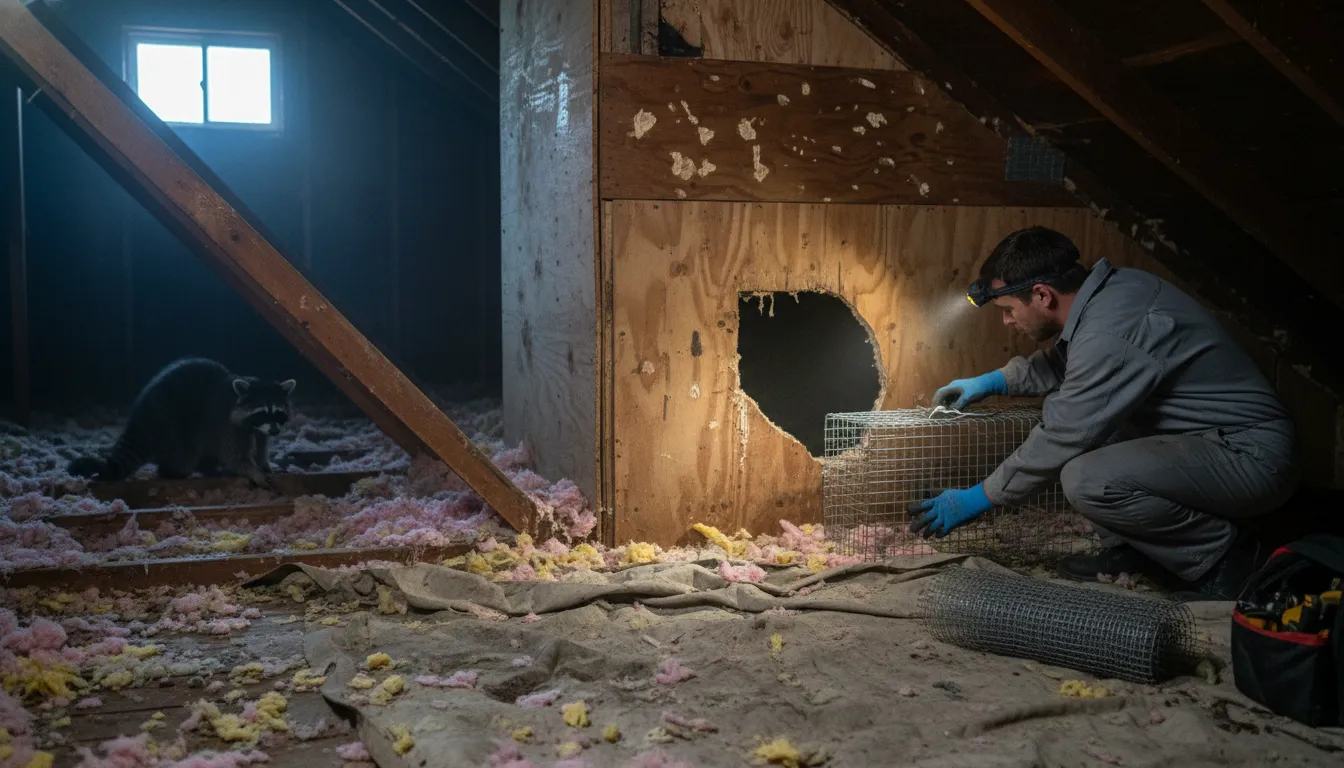
Living alongside nature is part of Texas's charm, but when raccoons, squirrels, or snakes decide to move into your attic or walls, the situation quickly becomes a nuisance and a hazard. Wildlife removal is the specialized process of safely and humanely evicting these unwanted animal guests and securing your home against future invasions. This service is crucial for protecting your property from costly damage and your family from potential health risks. For Allen residents, finding a local expert who understands Texas wildlife laws and local building practices is key to a permanent solution.
Big D Pest & Termite Services
211 Smith St, McKinney, TX 75069
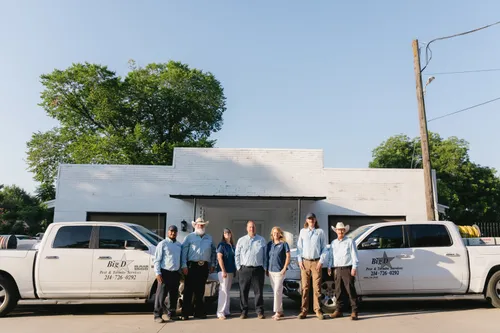
Big D Pest & Termite Services is a pest control company based in McKinney, TX, offering solutions for homes and businesses. They provide integrated pest management services targeting a wide range of pests including ants, roaches, rodents, termites, mosquitoes, wasps, and wildlife. Their approach focuses on eco-friendly and safe methods that protect children and pets while effectively managing infestations. With over 30 years of experience, they emphasize thorough inspections and customized treatments to ensure long-lasting pest prevention. Emergency and same-day appointments are available to address urgent pest issues promptly.
Legacy Rodent Control
Dallas, TX
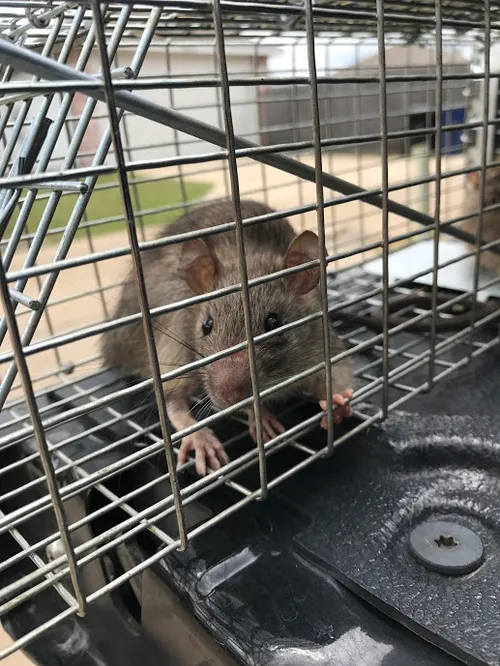
Legacy Rodent Control is a certified and insured rodent control and wildlife removal company serving Dallas, TX, and the surrounding Dallas-Fort Worth area. They specialize in removing rodents and animals from homes, followed by decontamination to protect health and property. Their services include a disinfecting fogging treatment that eliminates pheromone scents to prevent re-infestation, often avoiding the need to replace insulation. In cases of severe damage, they also provide remediation and insulation replacement. With over 10 years of experience, Legacy Rodent Control offers trained specialists and guarantees their work with a two-year warranty.
PCI Pest Control
300 Davis St STE 178, McKinney, TX 75069
PCI Pest Control provides comprehensive pest management services in Dallas, TX, focusing on both residential and commercial properties. Their services include treatment for bed bugs, cockroaches, ants, rodents, termites, bees, wasps, and wildlife removal. They offer customized plans such as quarterly maintenance and specialized treatments like no-prep bed bug applications and rodent exclusion using hardware cloth and copper mesh. PCI Pest Control has been serving the area since 2000, delivering pest control solutions tailored to seasonal challenges, especially during colder months when pests seek indoor shelter.
Stellar Pest and Wildlife
Frisco, TX
Stellar Pest and Wildlife is a family-owned pest control company serving Frisco, TX, and nearby communities including Allen, Plano, and McKinney. They provide pest and wildlife control services tailored to local conditions, addressing issues such as ants, rodents, termites, and bed bugs. Their approach includes integrated pest management techniques and the use of low-toxicity products designed to be safe for families and pets. The company also offers humane wildlife removal through trapping, exclusion, and relocation methods. Stellar Pest and Wildlife has earned multiple local awards and has been serving the Dallas-Fort Worth Metroplex for several years. They provide emergency and same-day services when needed.
Home and Hive
3408 Belterra Dr, Celina, TX 75009
Home and Hive is a pest control company based in Dallas, TX, specializing in live honey bee removal and pollinator-minded pest control solutions. They focus on safely relocating bee colonies while managing other pests such as spiders, roaches, mosquitoes, mice, and squirrels for both residential and commercial clients. As a family-operated and woman-owned business with a background in beekeeping, Home and Hive is committed to protecting honey bees and promoting sustainable pest control practices.
Common Wildlife Problems in Allen
Allen's mix of suburban neighborhoods and green spaces creates an ideal habitat for several species that can become problematic for homeowners. Understanding which animals are most likely to cause issues is the first step in addressing an infestation.
The most frequent culprits in Allen include raccoons, squirrels, opossums, and various rodents like rats and mice. These mammals are attracted to the shelter and potential food sources that homes provide. In some areas, woodpeckers can also become a nuisance, causing damage to siding and eaves. Reptiles, particularly snakes, are another common concern, especially as they seek out cool, dark places or pursue rodent prey into your garage or crawl space.
Feral hogs represent a unique and destructive challenge in parts of Texas, capable of tearing up lawns and landscaping in search of food 1. While less common within dense city limits, they are a significant concern in more rural fringes of the community.
What You Can Do: DIY Prevention and Legal Trapping
Before an animal gets inside, there are several effective steps homeowners can take to make their property less inviting. These methods focus on habitat modification and exclusion.
Habitat Modification: Simple yard maintenance can deter wildlife. Trim tree branches back at least six feet from your roofline to prevent squirrels and raccoons from accessing your roof. Store firewood, lumber, and debris piles well away from your home's foundation. Keep gutters clean and downspouts clear to avoid creating moist, attractive nesting spots and to prevent water damage that can create entry points.
Exclusion (Sealing Entry Points): This is the most critical DIY task. Conduct a thorough inspection of your home's exterior. Look for gaps in soffits, loose roof vents, holes where utility lines enter, and cracks in the foundation. Use durable materials like steel mesh, hardware cloth, or metal flashing to seal these openings. Remember, a mouse can fit through a hole the size of a dime, and even small gaps are an invitation.
Legal Trapping in Texas: Texas law allows landowners to trap nuisance fur-bearing animals on their own property without a license. However, the law is strict about what happens next. You cannot legally relocate a trapped animal without authorization from the Texas Parks & Wildlife Department (TPWD). Relocating wildlife often simply moves the problem to another property and can spread disease. You are required to report the take of a nuisance animal to TPWD, and you may only keep the pelt during officially open hunting seasons 2 3. This makes DIY trapping a temporary solution at best, as it doesn't address the attractants or entry points that led to the problem.
When to Call the City of Allen Animal Services
The City of Allen provides a valuable public service for specific wildlife situations that pose an immediate safety risk. Knowing when to call them (214-509-4378) can resolve dangerous scenarios quickly.
Contact Allen Animal Services if you encounter:
- A wild animal that appears sick, injured, or is acting unusually aggressive. This is critical, as animals like raccoons and skunks are rabies vector species.
- An animal trapped in a storm drain, deep window well, or other dangerous location from which it cannot escape.
- For assistance with removing an animal you have already trapped in a live cage.
It's important to note that Animal Services generally does not intervene for animals simply living in their natural habitat (like a squirrel in a tree) or for exterminating rodents on private property. Their role is focused on public safety and welfare, not pest control.
Find the perfect wildlife removal companies for your needs
Get personalized recommendations and expert advice
When to Hire a Professional Wildlife Removal Expert
For most ongoing infestations or situations involving property damage, a professional wildlife control operator is the most effective and legally compliant choice. These experts provide comprehensive solutions that go beyond simple trapping.
You should call a professional for:
- Complex Infestations: If you hear noises in your walls or attic, especially during the day (squirrels) or night (rodents, raccoons), a professional can identify the species, locate all entry points, and remove all animals, including young.
- Damage Repair and Exclusion: Professionals don't just remove the animal; they repair the damage it caused and install permanent barriers to prevent re-entry. This can involve repairing chewed wires, ripped insulation, and structural damage.
- Attic Cleanup and Restoration: Animal droppings and urine pose serious health risks and can ruin insulation. Professionals have the equipment and protective gear to safely remove contaminated materials, disinfect the area, and restore it with new insulation.
- Handling Dangerous Species: For issues with feral hogs, large snake removals, or bat colonies (which are protected), professionals have the experience and tools to handle the job safely and in accordance with all TPWD regulations 4.
Understanding Wildlife Removal Costs in Allen
The cost for professional animal removal and exclusion varies based on the species, the extent of the infestation, and the repairs needed. Most companies begin with an inspection, which typically ranges from $100 to $250.
Removal and Trapping: The cost to remove an animal, such as a raccoon or squirrel, can range from $150 to $400 per animal, depending on the complexity of the extraction.
Exclusion and Repair: This is where costs can scale. Sealing all entry points with professional-grade materials and making minor repairs might start around $500. For significant damage repair-such as replacing roof vents, soffits, or sections of siding-costs can easily exceed $1,000 to $2,000 or more.
Cleanup and Decontamination: Safely removing contaminated insulation, droppings, and nesting materials, followed by sanitizing the area, can cost between $400 and $1,500+, depending on the size of the affected area like an attic or crawl space 5 6.
Key Texas Regulations for Homeowners
Navigating wildlife issues requires an understanding of state regulations designed to protect both people and animals.
- Texas Parks & Wildlife Department (TPWD): TPWD sets all regulations for trapping, hunting, and relocating wildlife. As noted, relocation of trapped animals is heavily restricted 7.
- Public Safety vs. Pest Control: Allen Animal Services handles public safety incidents but does not provide pest control services for private property. For rodent extermination, you must contact a licensed pest or wildlife control company 8 9.
- Reporting Violations: If you suspect illegal trapping, hunting, or wildlife trade, you can report it anonymously to Operation Game Thief at 1-800-792-GAME (4263) 10.
Long-Term Prevention Strategies
After any wildlife issue is resolved, implementing long-term strategies is essential to avoid a repeat occurrence. Consistent property maintenance is your best defense. Install chimney caps and stovepipe vent guards. Ensure crawl space vents are secured with heavy-gauge mesh. Keep trash cans sealed with tight-fitting lids or bungee cords. By eliminating food, water, and shelter, you make your home an unattractive target for Allen's local wildlife.
Frequently asked questions
Sources
Footnotes
-
Wild Animals - Animal Law - Guides at Texas State Law Library - https://guides.sll.texas.gov/animal-law/wild-animals ↩
-
Wildlife Removal Texas Homes: Effective Solutions for Safe Living - https://literallydarling.com/blog/2024/11/25/wildlife-removal-texas-homes-effective-solutions-for-safe-living/ ↩
-
Texas Wildlife Control and Animal Removal - http://www.aaanimalcontrol.com/professional-trapper/state/texas.htm ↩
-
Nuisance Animals of Texas | RMWBH Law - https://rmwbh.com/nuisance-animals-of-texas/ ↩
-
Wildlife Removal Allen - https://collin-county.aaacwildliferemoval.com/service-area/allen ↩
-
Allen, TX Wildlife Removal And Rodent Pest Control Services - https://omegaanimalremoval.com/allen-tx/ ↩
-
Nuisance Fur-bearing Animals - https://tpwd.texas.gov/regulations/outdoor-annual/hunting/fur-bearing-animal-regulations/nuisance-fur-bearing-animals ↩
-
Wild Animals | Allen, TX - https://www.allenpolice.org/services/animal_services/wild_animals.php ↩
-
Rodent Control and Prevention | Allen, TX - https://www.cityofallen.org/departments/community_enhancement/health_and_food_safety/rodent_control_and_prevention.php ↩
-
Fur-bearing Animal Regulations - Texas Parks and Wildlife - https://tpwd.texas.gov/publications/pwdpubs/media/pwd_br_w7000_0065.pdf ↩