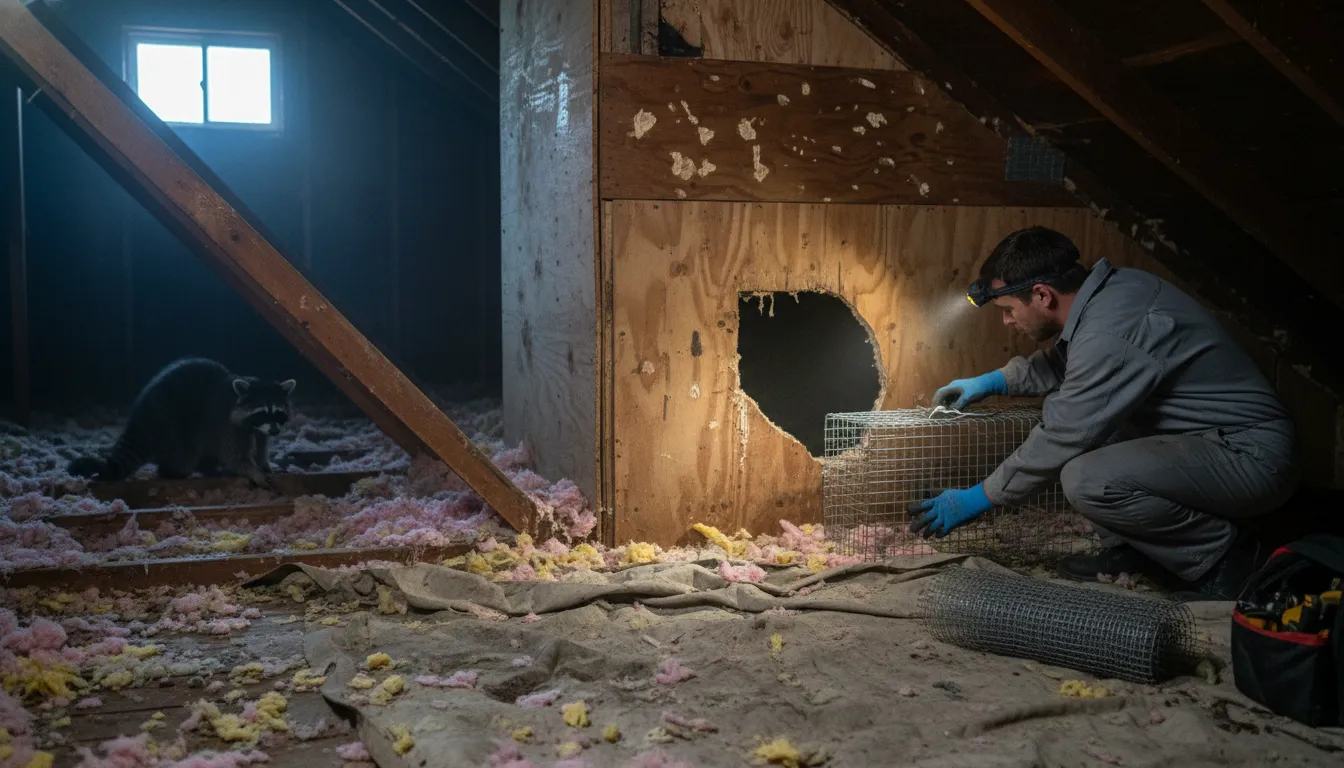
Find the Best Wildlife Removal Companies for Your Business
No obligation • Fast responses • Nationwide coverage
Why you can trust Pest Crews
Pest Crews is a leading U.S. resource for finding and evaluating residential and commercial pest control services. Our team researches providers, reviews treatment approaches, and organizes unbiased information to help you make informed decisions. Companies cannot pay to change our editorial content or influence how they appear.
Search providers near you
Top Wildlife Removal Companies in San Antonio, Texas Ranked
Living in San Antonio means sharing our beautiful landscape with a diverse array of native wildlife. While this biodiversity is a point of pride, it can lead to challenging situations when raccoons, squirrels, bats, or snakes decide your attic, chimney, or yard is their new home. Professional wildlife removal is the safe, humane, and regulated process of evicting these animals and preventing their return. This resource helps you understand the local regulations, identify your options, and connect with qualified specialists who can resolve conflicts with nuisance animals effectively and legally.

X Out Pest Services
8611 Honiley St, San Antonio, TX 78254
X Out Pest Services is a pest control company serving San Antonio, TX, specializing in the elimination and prevention of a wide range of pests including bed bugs, cockroaches, ants, rodents, termites, mosquitoes, bees, wasps, and wildlife. They offer customized treatments that target nesting and feeding areas both inside and outside the home, maintaining an exterior pest barrier to provide year-round protection. Established in 2006, the company combines experienced technicians with advanced pest control technology to deliver effective pest management solutions. Their services include termite inspections and mosquito control, with a focus on safety for children, pets, and the environment.
Urban Texas Pest Control
9450 Brushy Point St, San Antonio, TX 78250
Urban Texas Pest Control is a family-owned pest control company serving San Antonio, TX, and surrounding areas. With over 25 years of experience, they provide residential and commercial pest control services targeting a wide range of pests including ants, cockroaches, rodents, termites, bed bugs, and wasps. The company uses eco-friendly and advanced pest control methods to create safe, healthy environments while addressing local pest challenges. Their expertise includes comprehensive pest inspections and tailored treatments designed to prevent future infestations.
Anytime Pest Elimination San Antonio
8114 City Base Landing ste 116, San Antonio, TX 78235
Anytime Pest Elimination San Antonio provides comprehensive pest control services in San Antonio, TX. They handle a wide range of pest issues including bed bugs, cockroaches, ants, rodents, termites, mosquitoes, bees, wasps, birds, and wildlife. The company uses advanced pest control techniques and offers flexible one-time treatment options without requiring ongoing contracts. With over 30 years of experience, Anytime Pest Elimination has a strong local presence and deep knowledge of regional pest behavior. They also provide 24/7 availability with a round-the-clock answering service to assist clients day or night.
Deep Six Pest Control
1247 Watson Ln E, New Braunfels, TX 78130
Deep Six Pest Control is a family-owned pest control company serving San Antonio, TX, and surrounding areas including New Braunfels, San Marcos, and Austin. With over 20 years of experience, they offer a wide range of pest management services such as termite inspections, mosquito treatments, rodent and wildlife removal, and control of ants, bed bugs, roaches, spiders, bees, and more. They provide commercial and residential pest control solutions and specialize in termite prevention and wood-destroying insect (WDI) reports. Deep Six Pest Control often offers same-day service to address urgent pest issues promptly.
A-Bear Pest Control
623 E Euclid Ave, San Antonio, TX 78212
A-Bear Pest Control is a San Antonio, TX-based company providing pest control and extermination services for both residential and commercial clients. Serving Texans since 2004, they offer a wide range of services including termite extermination, rodent control, and wildlife removal. A-Bear is licensed and bonded, with certifications in pest control, termite extermination, lawn fertilization, and weed control. The company emphasizes responsible and sustainable pest management to improve the quality of life for its customers and community. As a service-disabled veteran-owned business, A-Bear Pest Control brings over 25 years of experience to the San Antonio area.
Common Nuisance Wildlife in San Antonio
The San Antonio area is home to numerous species that can become problematic for homeowners. Knowing which animal you're dealing with is the first step, as it dictates the legal regulations and the best removal approach.
Mammals:
- Raccoons: Intelligent and dexterous, raccoons are notorious for rummaging through trash, damaging roofs to access attics, and creating latrines that pose health risks.
- Squirrels: Both gray and fox squirrels can chew through siding, soffits, and electrical wiring to nest in attics, potentially causing fire hazards and significant structural damage.
- Bats: Several bat species, vital for insect control, may roost in attics or wall voids. Their guano can accumulate and create odor and health concerns. Bats are protected by state law, making their removal highly regulated.
- Opossums & Rodents: While opossums are generally less destructive, they may take shelter under decks or in crawl spaces. Rats and mice are perennial pests that require control to prevent property damage and disease.
Reptiles:
- Snakes: The region hosts both venomous (like rattlesnakes, copperheads, and coral snakes) and numerous non-venomous species. Encounters are common in yards, garages, and sometimes inside homes, especially during warmer months.
Other Species: Issues with feral hogs, birds, skunks, and armadillos also occur, each requiring specific strategies for resolution 1.
Understanding Your Options: DIY, Animal Control, or Professional Services
Not every wildlife sighting requires a professional call. Here's a breakdown of when to handle it yourself, when to contact the city, and when to hire a specialist.
What You Can Do Yourself (DIY Prevention)
Proactive habitat modification is your first and best defense against unwanted wildlife visitors.
- Seal Entry Points: Use sturdy materials like steel mesh, hardware cloth, or chimney caps to seal potential access holes in your roof, eaves, vents, and foundation.
- Remove Attractants: Secure trash cans with locking lids, bring in pet food at night, and clean up fallen fruit or birdseed. Eliminating food and water sources removes the incentive for animals to stay 2 3.
- Modify Habitat: Trim tree branches that overhang or touch your roof to limit access for squirrels and raccoons. Keep woodpiles and dense brush away from your home's exterior to reduce shelter for snakes and rodents 4.
When to Call San Antonio Animal Care Services (ACS)
The city's Animal Care Services (ACS) has a specific mandate. They are a critical resource for public safety incidents but do not handle general wildlife intrusions.
- Call 311 or ACS Directly If: A wild animal has bitten or scratched a person or a domestic pet. This is a public health priority, and ACS will respond to secure the animal for rabies observation if necessary.
- ACS Limitations: It's important to know that ACS does not provide traps or removal services for common nuisance situations like raccoons in the attic, bats in the chimney, or snakes in the yard. For these issues, they will refer you to private wildlife control operators 5.
Find the perfect wildlife removal companies for your needs
Get personalized recommendations and expert advice
When to Hire a Professional Wildlife Removal Service
For most ongoing infestations or potentially dangerous situations, a licensed professional is the safest and most effective solution.
- Complex Infestations: Animals like raccoons or squirrels nesting in attics often have young present, requiring careful, humane extraction.
- Protected or Hazardous Species: The legal removal of protected bats or the safe handling of venomous snakes requires specialized training and permits.
- Complete Exclusion: Professionals don't just remove the animal; they find and seal all potential entry points to prevent future problems, a service known as wildlife exclusion.
- Insulation Repair & Cleanup: After removal, services like decontaminating areas soiled by droppings or urine and replacing damaged insulation are often necessary for health and safety.
Texas Regulations Governing Wildlife Control
Texas Parks and Wildlife Department (TPWD) regulations are designed to protect native species while allowing for the resolution of genuine conflicts. Professional operators are well-versed in these laws.
- Fur-bearing Animals: Species like raccoons, beavers, and foxes are classified as fur-bearers. Relocating them typically requires a Trap, Transport, and Transplant Permit (TTTP) from TPWD. Professionals obtain these permits and follow strict reporting and relocation guidelines.
- Bats: All bat species in Texas are protected. It is illegal to kill them. Exclusion work must be done humanely and at specific times of the year (outside the maternity season when flightless pups are present) to prevent fatalities 6 7.
- Feral Hogs: Classified as an unprotected, exotic species, feral hogs may be hunted on private property year-round with the landowner's permission, though local city ordinances may restrict discharge of firearms 8.
- General Permitting: Professionals often hold Nuisance Wildlife Control Permits, which authorize them to legally trap and handle a variety of problem species in compliance with state law 9.
What to Expect from Professional Wildlife Removal
A reputable service will follow a comprehensive process to ensure a lasting solution.
- Inspection: A thorough inspection of your property to identify the animal species, entry points, and the extent of the infestation.
- Humane Removal: Using methods appropriate to the species, such as live traps, one-way exclusion doors (which let animals out but not back in), or direct hand-removal for reptiles 10.
- Exclusion & Repair: Sealing all identified entry points with durable materials to prevent re-entry. This is the most critical step for a permanent fix.
- Cleanup & Restoration: Removing contaminated insulation, droppings, and nesting materials, followed by sanitizing the area and potentially replacing insulation.
- Prevention Advice: Providing recommendations for ongoing habitat modification to keep your property less attractive to wildlife.
Cost Considerations for Wildlife Removal in San Antonio
Costs are not one-size-fits-all and can vary significantly based on the company, the type of animal, the severity of the infestation, and the complexity of the exclusion work required. For example, removing a single snake from a garage will cost far less than excluding a family of raccoons from an attic and repairing the damage they caused. Most companies provide free inspections and detailed quotes. You can expect pricing to reflect the inspection, the removal labor, materials for exclusion, and any cleanup or repair services 11.
Key Steps for San Antonio Homeowners
If you suspect a wildlife problem, follow this action plan:
- Identify: Safely observe from a distance or look for signs (tracks, droppings, sounds) to determine the likely species.
- Prevent: Immediately implement DIY prevention steps like securing trash and removing outdoor food sources.
- Assess: Decide if the situation is an immediate danger (bite/scratch) requiring a 311 call to ACS, or a persistent nuisance requiring a professional.
- Call a Pro: For active infestations, contact licensed and insured wildlife removal services for inspections and quotes. Verify their knowledge of TPWD regulations, especially for bats and fur-bearers.
Frequently asked questions
Sources
Footnotes
-
Wildlife Removal Metro | Wild Animal Control Metro - https://san-antonio.aaacwildliferemoval.com/service-area/metro/ ↩
-
Wildlife Removal San Antonio | Wild Animal Control San Antonio - https://san-antonio.aaacwildliferemoval.com/ ↩
-
Wildlife - City of San Antonio - https://www.sa.gov/Directory/Departments/ACS/Wildlife ↩
-
Wildlife Removal Texas Homes: Effective Solutions for Safe Living - https://literallydarling.com/blog/2024/11/25/wildlife-removal-texas-homes-effective-solutions-for-safe-living/ ↩
-
Animal Control - City of San Antonio - https://www.sa.gov/Directory/Departments/ACS/Animal-Control ↩
-
Understanding 'nuisance wildlife' in San Antonio - https://sanantonioreport.org/understanding-nuisance-wildlife-san-antonio-sponsored/ ↩
-
Wild Animals - Animal Law - Guides at Texas State Law Library - https://guides.sll.texas.gov/animal-law/wild-animals ↩
-
Nuisance Animals of Texas | RMWBH Law - https://rmwbh.com/nuisance-animals-of-texas/ ↩
-
Nuisance Fur-bearing Animals - https://tpwd.texas.gov/regulations/outdoor-annual/hunting/fur-bearing-animal-regulations/nuisance-fur-bearing-animals ↩
-
San Antonio TX Wildlife Control: Bat, Squirrel, Raccoon Removal - https://www.crittercontrol.com/office-finder/texas/san-antonio/ ↩
-
San Antonio Wildlife Control / Texas Animal Removal - http://www.aaanimalcontrol.com/professional-trapper/city/TX-San-Antonio.htm ↩