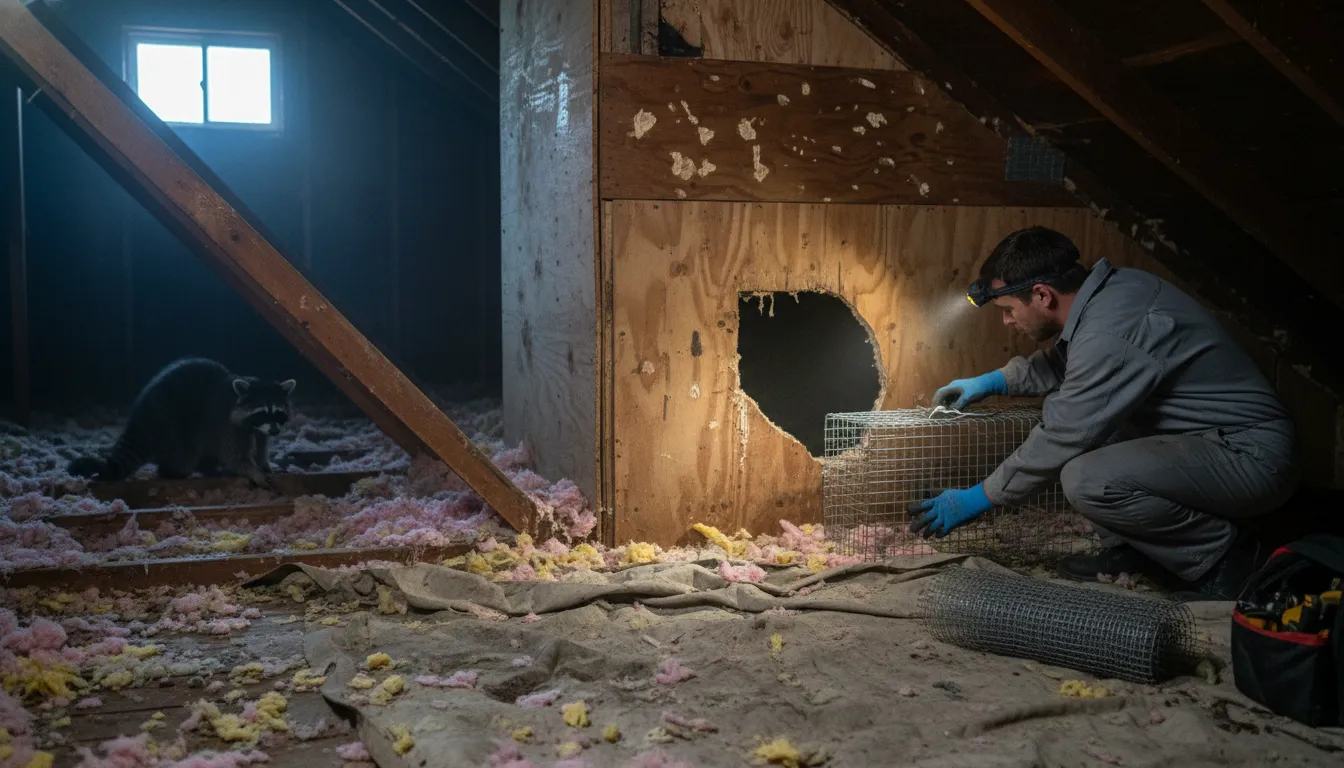
Find the Best Wildlife Removal Companies for Your Business
No obligation • Fast responses • Nationwide coverage

Why you can trust Pest Crews
Pest Crews is a leading U.S. resource for finding and evaluating residential and commercial pest control services. Our team researches providers, reviews treatment approaches, and organizes unbiased information to help you make informed decisions. Companies cannot pay to change our editorial content or influence how they appear.
Search providers near you
Top Wildlife Removal Companies in Conroe, Texas Ranked
When raccoons rummage through your trash or squirrels take up residence in your attic, it's more than just a nuisance-it's a problem that requires a safe, legal, and effective solution. Wildlife removal is the specialized service of humanely evicting and excluding wild animals from homes and businesses. In Conroe, with its proximity to wooded areas and waterways, encounters with wildlife are common. This guide helps you understand when to take action, how the process works, and how to find qualified local professionals to protect your property and the animals involved.
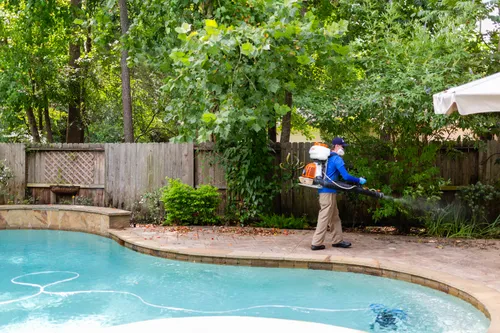
SkeeterCide Mosquito-Pest-Wildlife
3007 Woodland Hills Dr #116, Kingwood, TX 77339
SkeeterCide Mosquito-Pest-Wildlife provides pest control services in Houston, TX, specializing in mosquitoes, rodents, insects, and wildlife removal. They offer tailored pest control solutions using an Integrated Pest Management approach, including mosquito yard fogging, misting systems, and commercial pest control. Their services cover residential and community-wide mosquito control with custom-designed automated systems that activate at peak mosquito activity times. The company employs licensed exterminators who stay updated through ongoing education and certifications, emphasizing safe and eco-friendly treatments.
The Bug Master
603 Nursery Rd, The Woodlands, TX 77380
The Bug Master provides pest control and prevention services in Houston, TX, focusing on residential and commercial properties in The Woodlands area. Their services cover common household pests such as ants, cockroaches, spiders, and scorpions, as well as mosquitoes, termites, rodents, and urban wildlife like raccoons and skunks. They offer termite inspections and treatments using the Sentricon® termite baiting system to protect properties from termite damage. The company also delivers commercial pest control tailored to various business types, including restaurants and warehouses, ensuring pest-free work environments. The Bug Master serves multiple neighborhoods in The Woodlands, including Alden Bridge, Cochran's Crossing, and Sterling Ridge.
Orkin
1420 N Sam Houston Pkwy E Ste 120, Houston, TX 77032
Orkin provides comprehensive pest control services in Houston, TX, addressing common pests such as cockroaches, ants, mosquitoes, rodents, termites, bed bugs, and stinging insects. They offer customized pest management plans for both residential and commercial properties, utilizing methods like dry foam void filler, Sentricon® bait, and liquid barriers for termite control. With over 120 years of experience, Orkin combines science-backed solutions with local pest knowledge. The company also offers 24/7 availability to respond promptly to pest issues in the Houston area.
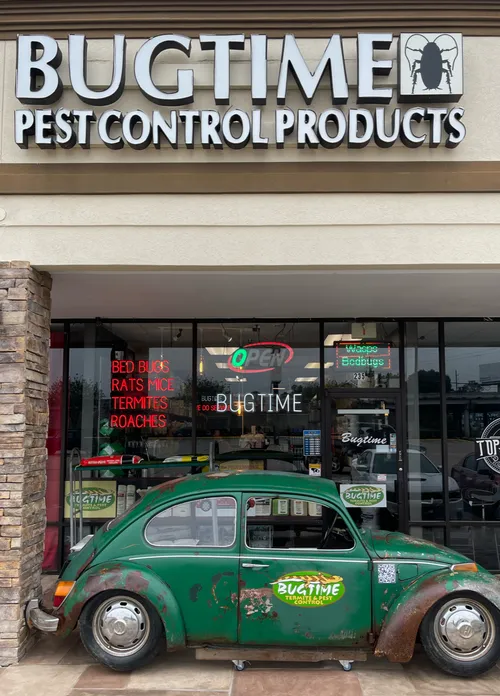
Bugtime Termite & Pest Control
235 Farm to Market 1960 Bypass Rd E, Humble, TX 77338
Bugtime Termite & Pest Control is a veteran-run, family-owned pest control company serving Houston, TX, and surrounding areas including Humble, Atascocita, Conroe, Spring, and The Woodlands. Since 1998, they have provided both residential and commercial pest control services, specializing in termite inspections, cockroach and ant control, mosquito management, bee and wasp removal, and wildlife removal. Their approach includes detailed inspections and targeted treatment plans with an emphasis on eco-friendly methods and preventative measures. Bugtime offers emergency pest control services and uses advanced technology to address infestations efficiently while prioritizing the safety of families and businesses.
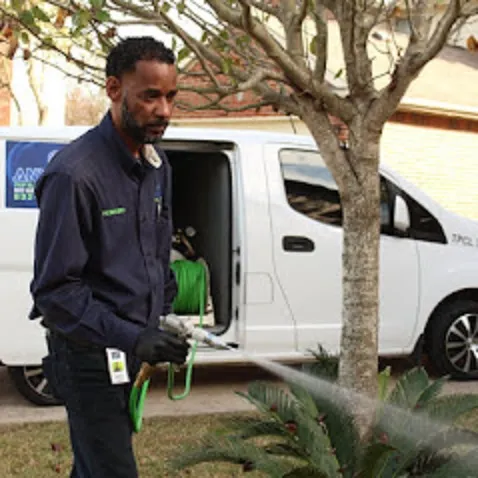
Anytime Pest Elimination Humble
7544 Farm to Market 1960 Rd E Suite 1524, Humble, TX 77346
Anytime Pest Elimination Humble is a pest control company serving Houston, TX, specializing in eliminating a wide range of pests including bed bugs, cockroaches, ants, rodents, termites, mosquitoes, bees, wasps, birds, and other wildlife. The company offers commercial and residential pest control services with flexible one-time treatment options and a 24-hour answering service. With over 30 years of experience, Anytime Pest Elimination Humble has deep local knowledge and uses advanced pest control techniques to provide effective and lasting pest management solutions. Their team is available day and night to address pest issues promptly.
Common Nuisance Wildlife in Conroe
The Greater Conroe area is home to a diverse array of wildlife, but certain species are more likely to become problematic for homeowners and businesses. Knowing what you're dealing with is the first step.
- Raccoons: Intelligent and dexterous, raccoons are notorious for tipping over trash cans, tearing into soffits to access attics, and creating latrines that pose health risks.
- Squirrels: Both gray and fox squirrels can cause significant damage by chewing electrical wiring, insulation, and wooden structures inside attics and walls. Their constant activity is often heard as scratching or scurrying sounds during the day.
- Skunks & Opossums: These animals often seek shelter under decks, sheds, or crawl spaces. While generally less destructive, skunks pose a obvious olfactory threat, and opossums may raid pet food left outdoors.
- Rodents: Rats and mice are common invaders that can squeeze through incredibly small gaps. They contaminate food, chew materials, and reproduce rapidly, often requiring integrated pest management strategies.
- Bats: Several bat species are native to Texas and are protected due to their ecological benefits. However, a colony in an attic is a serious issue due to accumulated guano (droppings), which can harbor histoplasmosis spores, and the potential for rabies exposure.
- Birds: Pigeons, woodpeckers, and starlings can nest in vents, chimneys, and eaves. Their nests block ventilation, and their droppings are corrosive and unsanitary. Woodpeckers can also damage siding while searching for insects or establishing territory.
DIY vs. Professional Wildlife Control
Some minor wildlife issues can be mitigated with proactive homeowner efforts, while others absolutely require the expertise of a licensed professional.
When DIY May Suffice:
- Securing trash cans with locking lids or bungee cords.
- Removing outdoor pet food, bird feeders, and fallen fruit that attract animals.
- Sealing small entry points with steel wool and caulk (for mice).
- Using live traps for the occasional squirrel or opossum in the yard, provided you understand local laws on release 1.
When to Call a Professional Wildlife Removal Service:
- Animals Inside Structures: Any animal living in your attic, walls, or chimney requires professional extraction and exclusion to ensure all individuals are removed and entry points are sealed.
- Protected or Dangerous Species: Bat removal is highly regulated. Handling raccoons, skunks, or bats also carries a rabies risk.
- Large or Persistent Infestations: A single rat is one thing; evidence of a full colony is another. Professionals have the tools and knowledge for complete eradication.
- Extensive Damage or Cleanup: After animals are removed, attics often need decontamination, insulation replacement, and repair of chewed wires or ducts.
- Legal Compliance: Professionals understand Texas Parks & Wildlife Department (TPWD) regulations regarding the trapping and relocation of nuisance fur-bearing animals.
Find the perfect wildlife removal companies for your needs
Get personalized recommendations and expert advice
Understanding the Wildlife Removal Process
A reputable wildlife control operator (WCO) follows a systematic approach that goes beyond simple trapping.
- Inspection: The technician will perform a thorough inspection of your property, inside and out, to identify the pest species, locate all entry points, and assess the extent of the damage and contamination.
- Removal: The appropriate removal method is selected. This is often one-way exclusion doors that allow animals to leave but not re-enter, rather than lethal trapping. For animals like squirrels or raccoons inside a living space, more direct trapping may be necessary 2.
- Exclusion: This is the most critical, long-term step. All identified entry points are permanently sealed with durable materials like steel mesh, hardware cloth, or chimney caps to prevent re-entry. Without proper exclusion, the problem will recur 3 4.
- Cleanup & Restoration: The affected area is cleaned, disinfected, and deodorized. Services may also include removing contaminated insulation, repairing chewed wires, and replacing damaged wood.
- Follow-up: Many companies offer a warranty period and will schedule a follow-up visit to ensure the exclusion is holding and no new activity is present.
Texas Laws and Regulations for Wildlife Control
It's crucial to handle wildlife issues legally. Texas has specific laws governing nuisance animals.
- Landowner Rights: In Texas, a landowner or their agent does not need a hunting or trapping license to trap, hunt, or kill nuisance fur-bearing animals (like raccoons, skunks, or squirrels) on their own property if the animals are causing damage 5.
- Relocation Rules: Relocating a trapped animal is not simple. It requires prior written authorization from a Texas Parks & Wildlife Department (TPWD) biologist. You must also have written permission from the landowner of the release site. Relocating animals without permits is illegal, as it can spread disease and create problems elsewhere 6 7.
- Protected Species: All migratory birds, their nests, and eggs are protected by federal law. Bats are also protected in Texas. It is illegal to harm or remove them without specific permits. This is a key reason why bird and bat control must be left to licensed professionals who use legal exclusion methods 8 9.
- Animal Control vs. Wildlife Control: The City of Conroe's Animal Control division typically handles stray domestic animals (dogs, cats), aggressive animals posing an immediate public safety threat, and sick or injured wildlife. For wild animals actively damaging property or living in structures, you need a licensed wildlife control operator 10.
What to Expect: Service and Cost Considerations
The cost of animal removal in Conroe varies widely based on the species, the location and extent of the infestation, and the necessary repairs.
- Small Job (e.g., trapping a single opossum under a deck): May start around $100 - $200 11.
- Standard Job (e.g., removing squirrels from an attic with basic exclusion): Typically ranges from $300 to $500. Industry averages in the area cite prices like $299-$370+ for common attic invasions.
- Large/Complex Job (e.g., removing a raccoon family, performing a full attic cleanup, and repairing significant damage): Can cost $500 to $800 or more.
- Costs by Species:
- Bat Removal: $230 - $700+, highly dependent on colony size and cleanup needs.
- Raccoon Removal: $200 - $600+.
- Squirrel Removal: $200 - $600+ 12.
- Skunk Removal: $300 - $600 13.
Always request a detailed, written estimate that breaks down inspection, removal, exclusion, and cleanup costs. Be wary of quotes that seem unusually low, as they may not include essential exclusion work.
Finding a Qualified Wildlife Removal Provider in Conroe
When your home is invaded, you need a competent and ethical professional. Look for a provider that:
- Is fully licensed and insured for wildlife control in Texas.
- Offers comprehensive inspections and detailed written proposals.
- Emphasizes humane removal and permanent exclusion as the solution.
- Provides clear information on cleanup and repair services.
- Has positive, verifiable customer reviews and references.
- Understands and complies with all TPWD and federal regulations.
Taking the time to find a specialist who focuses on wildlife, rather than a general pest control company, will ensure the job is done correctly, legally, and with lasting results.
Frequently asked questions
Sources
Footnotes
-
Conroe TX Wildlife Control: Bat, Squirrel, Raccoon Removal - Critter Control ↩
-
Wildlife Removal Conroe - AAAC Wildlife Removal of Houston ↩
-
Local Laws on Wildlife Control in Texas - The Critter Team ↩
-
Wild Animals - Animal Law - Guides at Texas State Law Library ↩
-
Conroe Pest Control Costs & Prices - ProMatcher Cost Report ↩