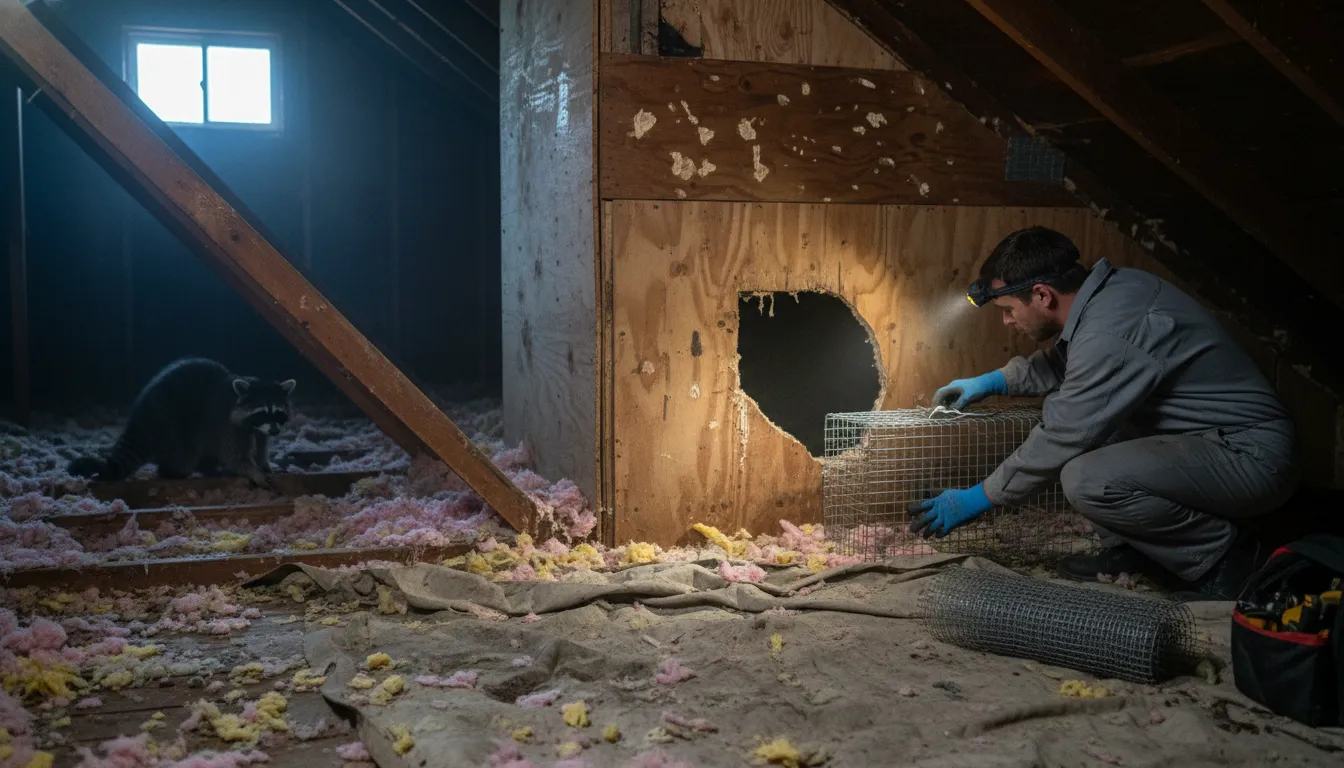
Find the Best Wildlife Removal Companies for Your Business
No obligation • Fast responses • Nationwide coverage

Why you can trust Pest Crews
Pest Crews is a leading U.S. resource for finding and evaluating residential and commercial pest control services. Our team researches providers, reviews treatment approaches, and organizes unbiased information to help you make informed decisions. Companies cannot pay to change our editorial content or influence how they appear.
Search providers near you
Top Wildlife Removal Companies in Grand Prairie, Texas Ranked
Discovering a raccoon in your attic or a family of squirrels nesting in your eaves is a common and stressful experience for Grand Prairie homeowners. Wildlife removal is the professional service dedicated to humanely and effectively resolving conflicts with nuisance animals that have entered your home or property. This process is crucial for protecting your family's health, preventing costly structural damage, and ensuring the animals are handled according to local Texas laws. The following guide will help you understand your options, from DIY prevention to professional intervention, so you can find the right local expertise to restore peace and safety to your home.
Romex Pest & Termite Control
1606 109th St Suite A, Grand Prairie, TX 75050
Romex Pest & Termite Control provides eco-friendly pest control services in Dallas, TX, serving both homes and businesses. Their offerings include treatment for bed bugs, rodents, termites, mosquitoes, and other common pests, using non-toxic methods that prioritize the safety of families and pets. The company employs advanced detection and treatment tools combined with integrated pest management strategies tailored to local needs. Romex Pest & Termite Control is licensed and insured across Texas and neighboring states, emphasizing environmentally responsible solutions.
Myles Pest Services
6517 Smithfield Rd c, North Richland Hills, TX 76182
Myles Pest Services is a pest control company serving Dallas, TX, and the Greater Fort Worth area. With over 35 years of experience, they provide tailored pest control solutions including rodent exclusion, termite protection, mosquito treatments, and general pest management. Their services focus on long-term results and customer convenience, offering online scheduling and upfront pricing. The company emphasizes a customer-first approach backed by a satisfaction guarantee.
Buzz Kill Pest Control
Fort Worth, TX
Buzz Kill Pest Control is a licensed and insured pest control company serving Fort Worth, TX, and surrounding areas since 2008. They offer comprehensive pest management services for residential and commercial properties, including treatments for ants, cockroaches, rodents, termites, mosquitoes, bed bugs, and wildlife removal. Their services include preventative maintenance plans, complete extermination for active infestations, and specialized treatments such as bed bug heat treatments and termite baiting systems. The company uses advanced technology like thermal imaging and electronic rodent monitoring to enhance pest detection and control. Buzz Kill Pest Control also provides 24/7 emergency pest response for urgent situations in the North Texas region.
Ivy Green Pest Control
Fort Worth, TX
Ivy Green Pest Control is a family-owned pest control company serving Fort Worth, TX, and nearby communities. With over 30 years of experience, they offer comprehensive residential and commercial pest management services including termite control, mosquito treatments, rodent extermination, bed bug removal, and wildlife extraction. Their approach emphasizes safe, eco-friendly methods using EPA-approved products to protect homes and businesses while minimizing environmental impact. The company provides thorough inspections to identify pest issues and applies targeted treatments for lasting results. Ivy Green Pest Control also offers same-day service responses and a 30-day pest-free guarantee, prioritizing customer safety and satisfaction.
Stellar Pest and Wildlife
Frisco, TX
Stellar Pest and Wildlife is a family-owned pest control company serving Frisco, TX, and nearby communities including Allen, Plano, and McKinney. They provide pest and wildlife control services tailored to local conditions, addressing issues such as ants, rodents, termites, and bed bugs. Their approach includes integrated pest management techniques and the use of low-toxicity products designed to be safe for families and pets. The company also offers humane wildlife removal through trapping, exclusion, and relocation methods. Stellar Pest and Wildlife has earned multiple local awards and has been serving the Dallas-Fort Worth Metroplex for several years. They provide emergency and same-day services when needed.
Common Wildlife Intruders in Grand Prairie
The Dallas-Fort Worth metroplex, including Grand Prairie, is home to a diverse array of wildlife that frequently comes into contact with residential areas. Knowing which animals are most likely to cause problems is the first step in identification and control.
- Raccoons: These intelligent, dexterous mammals are notorious for tearing into attic vents, soffits, and chimneys to create dens. They are attracted by pet food, open trash cans, and accessible water sources.
- Squirrels: Both gray and fox squirrels can chew through wood, siding, and electrical wiring to enter attics, often causing fire hazards and significant damage as they nest and store food.
- Rodents: This category includes roof rats, Norway rats, and house mice. They seek shelter in wall voids, crawl spaces, and garages, contaminating surfaces with droppings and gnawing incessantly.
- Opossums & Skunks: These nocturnal scavengers often take up residence under decks, porches, or sheds. While generally less destructive to structures, they can create odor problems and dig up lawns in search of grubs.
- Coyotes: Increasingly common in suburban areas, coyotes pose a threat to small pets. Their presence is often linked to available food sources like unsecured trash or fallen fruit.
- Bats: Colonies can roost in attics or behind shutters. While beneficial for insect control, their guano (droppings) can pose serious health risks and create persistent odors.
- Birds: Pigeons, sparrows, and starlings may nest in vents, gutters, and eaves, leading to clogged drainage systems and acidic droppings that damage roofing and siding.
Attractants for these animals are plentiful in residential settings. Common lures include unsecured pet food bowls, bird feeders, overgrown vegetation that provides cover, open compost piles, and poorly sealed trash receptacles 1.
Why Professional Wildlife Control is Essential
Attempting to handle a wild animal infestation on your own can be ineffective, dangerous, and even illegal. Professional wildlife removal specialists, often called animal control operators, provide critical services that go beyond simple trapping.
Humane and Legal Compliance: In Texas, the trapping and relocation of many fur-bearing animals are regulated. Professionals understand the specific rules from the Texas Parks and Wildlife Department (TPWD), which often require authorization and landowner permission for a release site. They ensure all actions are humane and comply with Grand Prairie's local ordinances, which have specific rules about when traps can be set and how they must be monitored.
Effective Exclusion: The core of lasting wildlife control is not just removing the animal, but preventing its return. This is known as exclusion. Professionals identify and permanently seal all potential entry points with durable materials like steel mesh, hardware cloth, and specialized vent covers. Without proper exclusion, a removed animal or a new one will simply re-enter 2.
Health and Safety: Wildlife can carry diseases such as rabies, leptospirosis, and histoplasmosis (from bat guano). They also host parasites like fleas, ticks, and mites. Professionals have the training and protective equipment to safely handle contaminated areas and animals, minimizing risk to your household.
Damage Repair and Cleanup: After removal, professionals often provide attic restoration services. This includes removing contaminated insulation, cleaning and disinfecting the area, and replacing insulation. This step is vital for eliminating odors and health hazards left behind by droppings and urine.
Find the perfect wildlife removal companies for your needs
Get personalized recommendations and expert advice
Understanding the Wildlife Removal Process
A reputable professional will follow a systematic, multi-step process to ensure a complete solution.
- Inspection and Assessment: The technician will conduct a thorough inspection of your property, inside and out, to identify the species, locate all entry points, and assess the extent of the damage and contamination.
- Humane Removal: Using a combination of one-way exclusion doors, live traps, or hands-on techniques (for regulated species like bats), the animals are removed from the structure. Poisons are generally avoided by ethical professionals as they can cause animals to die in inaccessible areas, leading to severe odor problems and secondary poisoning of pets or other wildlife 3.
- Exclusion and Sealing: Once all animals are confirmed out, every identified entry point is sealed shut with animal-proof materials. This is the most critical step for a permanent solution.
- Cleanup and Decontamination: The affected area is cleaned, and disinfectants are applied to neutralize health risks. Damaged insulation may be removed and replaced.
- Prevention Advice: A good technician will provide recommendations for making your property less attractive to wildlife, such as securing trash, trimming tree branches away from the roof, and managing other attractants.
Costs of Wildlife Removal in Grand Prairie
The cost for animal removal services varies significantly based on the species, the number of animals, the location of the infestation, and the extent of damage and cleanup required. Prices are typically higher for animals that are harder to access or pose greater health risks. Here is a general range based on local service data 4 5 6:
- Rats and Mice: $175 - $550
- Squirrels and Moles: $200 - $550
- Opossums and Skunks: $250 - $600
- Raccoons: $400 - $600
- Bats: $230 - $700
These estimates usually cover inspection, removal, and basic exclusion. Additional costs for major attic restoration, insulation replacement, or extensive repairs will increase the total. Many companies offer free inspections and quotes.
City Resources and When to Call for Help
The City of Grand Prairie Animal Services provides specific guidance and services for wildlife situations.
- For Immediate Danger: If a wild animal is acting aggressively, appears sick, or has bitten a person or pet, call 911 immediately.
- Animal Services Contact: You can contact Animal Services online or by phone for reports of animal bites, dangerous animals, deceased animals on public property, or persistent noise complaints (which may require video evidence or an affidavit) 7 8.
- Using City Traps: Residents can borrow traps from the city with specific restrictions. Traps can only be set Monday through Thursday (not on weekends or holidays) and only if the weather is appropriate (not below 40°F or above 90°F) 9. You are required to monitor the trap daily. If you capture an animal, you must call Animal Services before 3:00 PM for pickup. Traps cannot be placed in attics or garages for pickup.
DIY Prevention Tips
While professional help is needed for active infestations, homeowners can take proactive steps to deter wildlife:
- Seal Entry Points: Conduct seasonal checks of your home's exterior. Look for gaps in rooflines, loose vent covers, and holes where utilities enter. Seal them with appropriate materials.
- Remove Attractants: Keep trash cans securely lidded, pick up fallen fruit from trees, store pet food indoors, and clean grills after use.
- Modify Habitat: Trim tree limbs back at least 6-8 feet from your roof. Keep vegetation near the house trimmed and clear woodpiles or dense brush away from the foundation.
- Secure Outdoor Areas: Install chimney caps and stovepipe vent guards. Use sturdy wire mesh to cover the underside of decks and porches.
- Avoid Ineffective Deterrents: Common home remedies like mothballs, ammonia, or ultrasonic devices are largely ineffective for established problems and can be hazardous. Focus on physical exclusion instead 10 11.
Frequently asked questions
Sources
Footnotes
-
Nuisance Animals of Texas | RMWBH Law - https://rmwbh.com/nuisance-animals-of-texas/ ↩
-
Wildlife Removal Grand Prairie - https://dallas.aaacwildliferemoval.com/service-area/grand-prairie ↩
-
Nuisance Fur-bearing Animals - https://tpwd.texas.gov/regulations/outdoor-annual/hunting/fur-bearing-animal-regulations/nuisance-fur-bearing-animals ↩
-
Grand Prairie Rodent & Wildlife Removal - Paragon Pest Control - https://www.paragonpestdfw.com/pest-control/rodent-wildlife-removal/ ↩
-
Grand Prairie, TX Wildlife Removal And Rodent Pest Control - https://omegaanimalremoval.com/grand-prairie-tx/ ↩
-
Wildlife Removal Grand Prairie TX Humane Animal Control ... - https://www.perplexity.ai/page/wildlife-removal-grand-prairie-gZZ8ZPJeSL6n4EJaTcJAxA ↩
-
Report Animal Complaints - City of Grand Prairie - https://www.gptx.org/Departments/Animal-Services/Report-Animal-Complaints ↩
-
Animal Noise Complaints - City of Grand Prairie - https://www.gptx.org/Departments/Animal-Services/Report-Animal-Complaints/Animal-Noise-Complaints ↩
-
Trapping Policies - City of Grand Prairie - https://www.gptx.org/Departments/Animal-Services/Wildlife/Trapping-Policies ↩
-
Wildlife - City of Grand Prairie - https://www.gptx.org/Departments/Animal-Services/Wildlife ↩
-
Grand Prairie Wildlife Animal Control - Wildlife Animal Control - http://www.wildlifeanimalcontrol.com/Grand-Prairie.html ↩