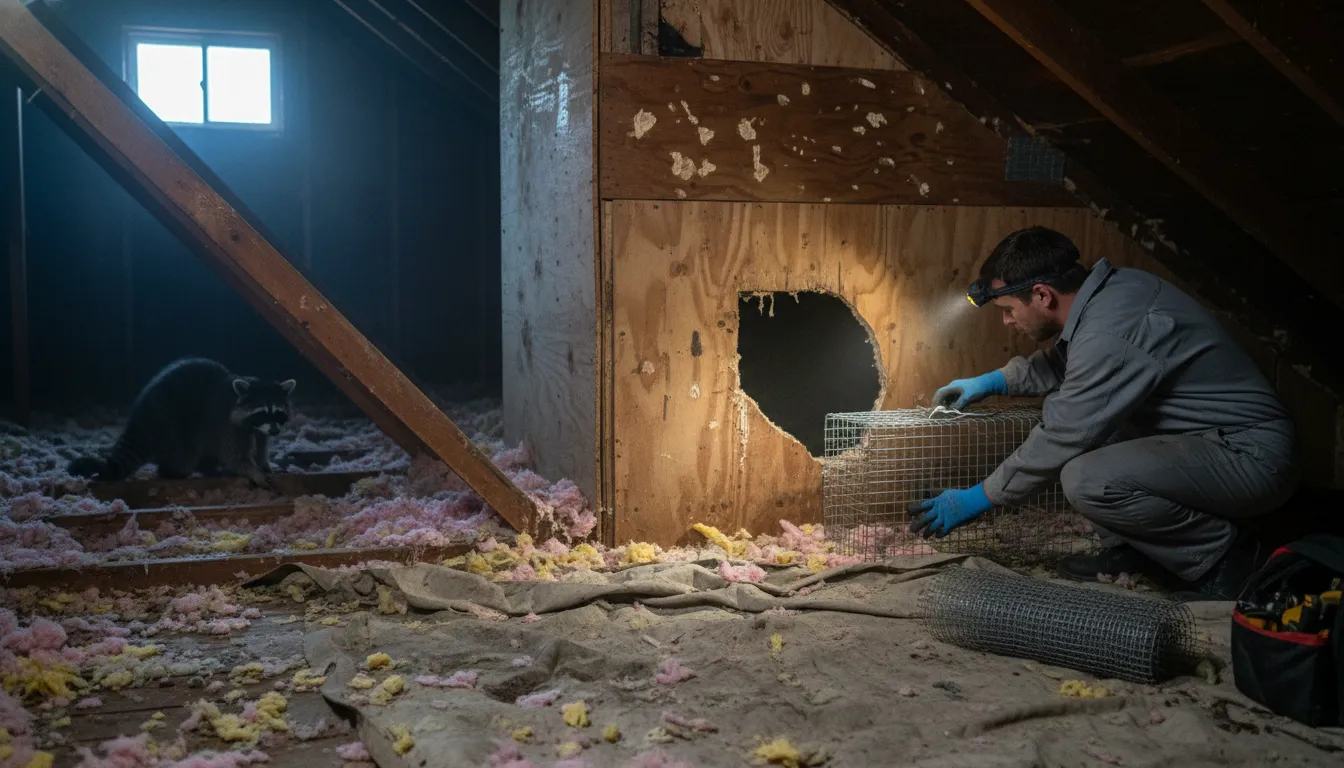
Find the Best Wildlife Removal Companies for Your Business
No obligation • Fast responses • Nationwide coverage

Why you can trust Pest Crews
Pest Crews is a leading U.S. resource for finding and evaluating residential and commercial pest control services. Our team researches providers, reviews treatment approaches, and organizes unbiased information to help you make informed decisions. Companies cannot pay to change our editorial content or influence how they appear.
Search providers near you
Top Wildlife Removal Companies in Killeen, Texas Ranked
Living alongside nature is part of Texas's charm, but when wild animals decide to move into your attic, under your deck, or into your walls, they become unwelcome guests. Wildlife removal in Killeen addresses the safe and humane eviction of nuisance animals like raccoons, squirrels, and opossums from residential and commercial properties. This service is crucial for protecting your home's structure, preventing health hazards, and ensuring the safety of both people and animals. For Killeen homeowners, finding a qualified local expert is key to resolving these conflicts effectively and in compliance with Texas regulations.
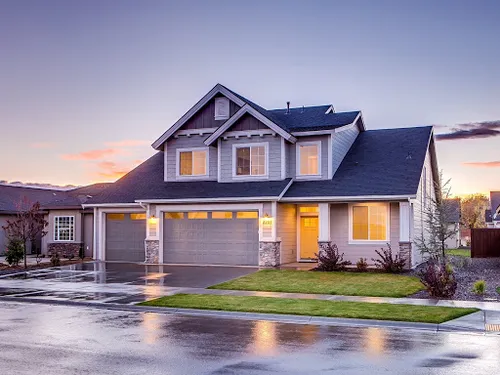
Common Nuisance Wildlife in Killeen
The Central Texas landscape around Killeen supports a diverse array of wildlife, some of which frequently find our homes and yards to be ideal substitutes for their natural habitats. Knowing which animals are likely culprits can help you identify a problem early.
Mammals:
- Raccoons: Intelligent and dexterous, they are notorious for tipping over trash cans, tearing into attic vents, and creating dens in chimneys or crawl spaces.
- Squirrels: Both gray and fox squirrels can cause significant damage by chewing on electrical wiring, wood, and insulation inside attics and walls.
- Opossums: These nocturnal scavengers often take up residence under porches, sheds, or decks and can rummage through pet food left outdoors.
- Armadillos: Their digging for insects can destroy lawns, gardens, and landscaping overnight.
- Coyotes: While typically wary of humans, they can prey on small pets and are increasingly seen in suburban areas.
- Bats: Small colonies may roost in attics or eaves; their presence is a concern due to potential rabies exposure and significant guano accumulation.
- Rodents: Rats and mice are persistent invaders that chew, contaminate food, and can introduce other pests like fleas.
Birds:
- Woodpeckers: They drill into siding and eaves in search of insects or to create nesting cavities, causing repetitive damage.
- Pigeons & Starlings: These birds often nest on roof ledges, in vents, or in warehouse rafters, where their droppings can corrode surfaces and pose health risks.
Why Professional Animal Removal Matters
Attempting to handle a wildlife intrusion on your own can be ineffective, dangerous, or even illegal. Professional wildlife control services provide expertise that goes beyond simple trapping.
Safety and Health: Many animals will defend themselves if cornered, risking bites or scratches. Species like bats pose a rabies risk, and accumulations of droppings from rodents or birds can harbor fungi and bacteria that cause respiratory illnesses. Professionals have the training and protective equipment to manage these hazards safely.
Humane and Legal Compliance: Texas has specific laws regarding the treatment of wildlife. The Texas Parks & Wildlife Department (TPWD) regulates the trapping and relocation of many species, particularly furbearing animals like raccoons and opossums. Licensed professionals understand these regulations, including which species require special permits for relocation, ensuring actions are both humane and legal. Texas cruelty laws also mandate that trapped animals receive proper care or are dispatched humanely.
Effective Exclusion: The core of lasting wildlife control is not just removing the animal but preventing its return. Professionals identify and seal potential entry points with durable materials like steel mesh and flashing, and install barriers like chimney caps and vent covers. This step, often called exclusion, is critical for a permanent solution.
Integrated Problem-Solving: A reputable service will address the entire situation. This includes removing the animals, sealing entry points, cleaning and sanitizing affected areas to remove odors and contaminants, and sometimes making minor repairs to damaged wood, vents, or siding.
Understanding Costs for Wildlife Control
The cost for wildlife removal and exclusion in Killeen is not a flat fee; it varies based on the scope and complexity of the job. Homeowners can expect pricing to be influenced by several key factors.
Primary Cost Factors:
- Species: The type of animal affects the techniques and time required. Removing a colony of bats or a family of raccoons is typically more involved than evicting a single opossum.
- Infestation Size: The number of animals present directly impacts the labor and materials needed.
- Location and Access: An animal in an open yard is simpler to address than one deep within an attic, inside walls, or under a concrete slab. Difficult access can increase labor time.
- Extent of Damage and Repairs: If animals have chewed wiring, soiled insulation, or damaged structural elements, the cost will reflect the necessary cleanup, sanitization, and repair work.
Typical Price Ranges: Based on local service estimates, simpler removal jobs-such as trapping a ground-dwelling animal and performing basic exclusion-often fall in the range of $200 to $600 1. More complex scenarios, like removing a family of raccoons from an attic, decontaminating the space, and performing comprehensive sealing and repairs, can range from $800 to over $1,500 1. It's always advisable to get detailed, written estimates from licensed providers that break down removal, exclusion, and any repair costs.
Find the perfect wildlife removal companies for your needs
Get personalized recommendations and expert advice
Prevention: Your First Line of Defense
The most effective and economical strategy is to make your property less attractive to wildlife in the first place. Consistent prevention can save you from costly removal services down the line.
- Secure Food Sources: Use trash cans with locking lids or secure them in a garage. Avoid leaving pet food outdoors overnight, and pick up fallen fruit from trees.
- Eliminate Shelter: Seal off crawl spaces under porches and decks with sturdy wire mesh. Keep woodpiles and brush piles away from your home's foundation.
- Modify the Landscape: Trim tree branches back at least 6-8 feet from your roofline to prevent easy access for squirrels and raccoons. Consider installing motion-activated sprinklers or lights to deter nocturnal visitors.
- Proactive Home Maintenance: Conduct seasonal inspections of your home's exterior. Look for and seal any holes, gaps, or cracks in siding, roof soffits, and around utility lines with steel wool or hardware cloth. Ensure all vent covers are intact and install chimney caps.
When to Call a Professional vs. DIY
Understanding when a situation requires expert intervention is important for your safety and for the animal's welfare.
Consider DIY Only If:
- The animal is a non-protected species (like non-venomous snakes or certain rodents) and you are knowledgeable about safe, humane handling.
- The issue is minor and preventive, such as installing a chimney cap or securing a trash can.
- You are only dealing with deterrents, like applying taste repellents to deter woodpeckers.
You Should Call a Professional For:
- Dangerous Animals: This includes venomous snakes, coyotes acting aggressively, or large predators 2.
- Public Health Risks: Any encounter with bats inside living spaces, or evidence of a large rodent infestation, warrants professional help due to disease risks 3.
- Complex Infestations: Animals nesting inside attics, walls, or chimneys often require specialized tools and exclusion techniques.
- Protected or Regulated Species: If you suspect the animal is a furbearer (e.g., raccoon, opossum) or a protected species, a licensed professional will know the legal protocols for handling and relocation as per TPWD regulations 4.
- When You're Unsure: If you are uncomfortable identifying the animal, assessing the entry points, or handling traps, it's best to call an expert from the start.
Legal and Regulatory Framework in Texas
Texas law clearly defines how conflicts with wildlife should be managed. The Texas Parks & Wildlife Department (TPWD) sets the regulations. Landowners have the right to address nuisance wildlife on their property, but important rules apply:
- A license is not required to trap nuisance furbearing animals (like raccoons or opossums) on your own property.
- However, if you wish to relocate a live-trapped animal, you generally need a TPWD permit and must obtain written permission from the landowner where the animal will be released 5.
- For animals not classified as game or furbearing, different rules may apply, and all methods must comply with state animal cruelty laws 6.
For residents within Killeen city limits, Killeen Animal Services can be a resource for certain situations, particularly for injured animals or aggressive strays, though they may refer wildlife conflicts to licensed private operators 7. Always check current city guidelines for non-emergency contacts.
Frequently asked questions
Sources
Footnotes
-
Wildlife Removal in Killeen, TX - GGA Pest Management - https://ggapest.com/killeen/pest-services/critters/wildlife-removal ↩ ↩2
-
Wild Animals - Animal Law - Guides at Texas State Law Library - https://guides.sll.texas.gov/animal-law/wild-animals ↩
-
Are Animal Control Officers Considered Law Enforcement ... - https://www.youtube.com/watch?v=VsuxXuSw0-s&t=76 ↩
-
Nongame, Exotic, Endangered, Threatened & Protected Species - https://tpwd.texas.gov/regulations/outdoor-annual/hunting/nongame-and-other-species ↩
-
Nuisance Fur-bearing Animals - https://tpwd.texas.gov/regulations/outdoor-annual/hunting/fur-bearing-animal-regulations/nuisance-fur-bearing-animals ↩
-
Animal Cruelty Laws - SPCA of Texas - https://spca.org/resources/help-animals/animal-cruelty-laws/ ↩
-
Frequently Asked Questions - City of Killeen - https://www.killeentexas.gov/236/FAQs ↩