Find the Best Wildlife Removal Companies for Your Business
No obligation • Fast responses • Nationwide coverage

Why you can trust Pest Crews
Pest Crews is a leading U.S. resource for finding and evaluating residential and commercial pest control services. Our team researches providers, reviews treatment approaches, and organizes unbiased information to help you make informed decisions. Companies cannot pay to change our editorial content or influence how they appear.
Search providers near you
Top Wildlife Removal Companies in Little Elm, Texas Ranked
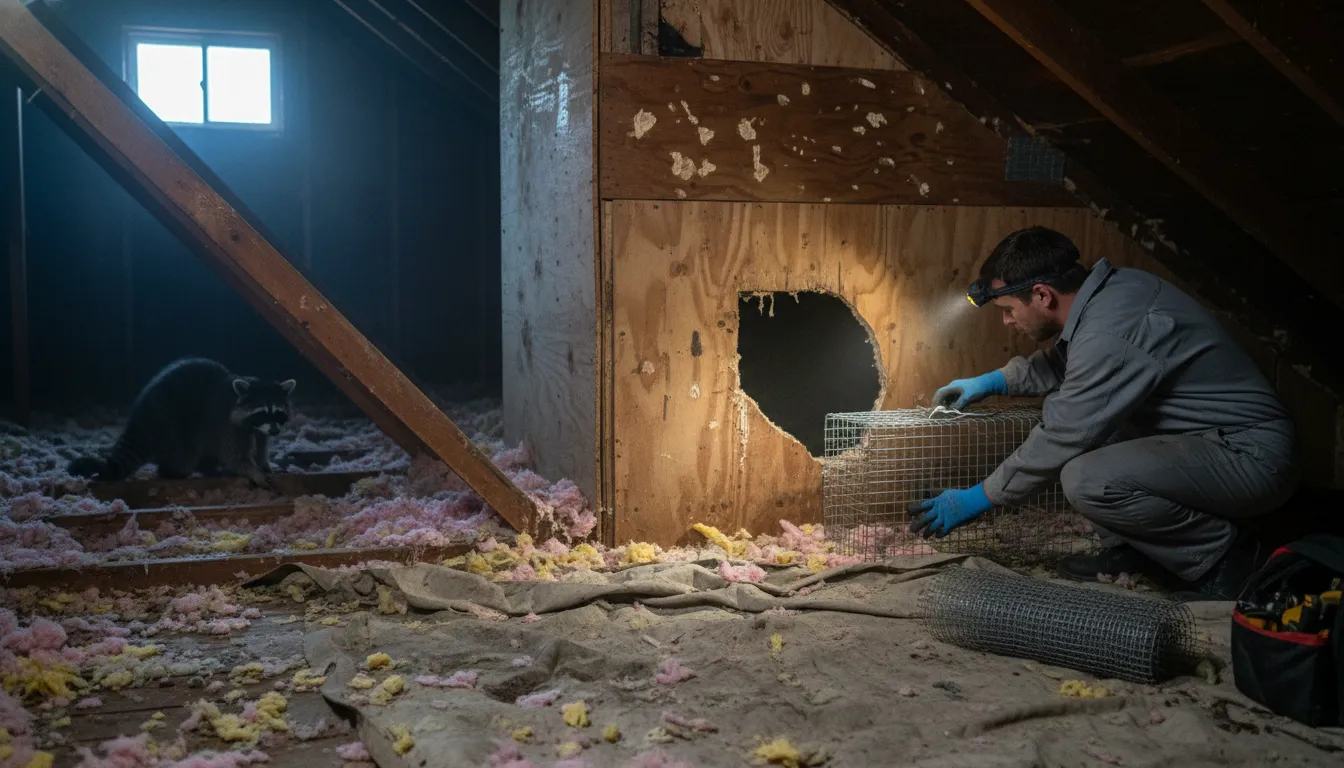
Finding an uninvited wild animal in your attic, under your deck, or rummaging through your trash can be a startling and stressful experience for any homeowner in Little Elm. Wildlife removal is the specialized service of safely and humanely evicting nuisance animals from your property and implementing measures to prevent their return. This process is crucial not only for your peace of mind but also for protecting your home's structural integrity and your family's health from potential damage and diseases. The following guide will help you understand the local wildlife challenges, your options for animal control, and how to connect with qualified professionals who can resolve your specific situation effectively and in compliance with Texas laws.
Romex Pest & Termite Control
1606 109th St Suite A, Grand Prairie, TX 75050
Romex Pest & Termite Control provides eco-friendly pest control services in Dallas, TX, serving both homes and businesses. Their offerings include treatment for bed bugs, rodents, termites, mosquitoes, and other common pests, using non-toxic methods that prioritize the safety of families and pets. The company employs advanced detection and treatment tools combined with integrated pest management strategies tailored to local needs. Romex Pest & Termite Control is licensed and insured across Texas and neighboring states, emphasizing environmentally responsible solutions.
Myles Pest Services
6517 Smithfield Rd c, North Richland Hills, TX 76182
Myles Pest Services is a pest control company serving Dallas, TX, and the Greater Fort Worth area. With over 35 years of experience, they provide tailored pest control solutions including rodent exclusion, termite protection, mosquito treatments, and general pest management. Their services focus on long-term results and customer convenience, offering online scheduling and upfront pricing. The company emphasizes a customer-first approach backed by a satisfaction guarantee.
Ivy Green Pest Control
Fort Worth, TX
Ivy Green Pest Control is a family-owned pest control company serving Fort Worth, TX, and nearby communities. With over 30 years of experience, they offer comprehensive residential and commercial pest management services including termite control, mosquito treatments, rodent extermination, bed bug removal, and wildlife extraction. Their approach emphasizes safe, eco-friendly methods using EPA-approved products to protect homes and businesses while minimizing environmental impact. The company provides thorough inspections to identify pest issues and applies targeted treatments for lasting results. Ivy Green Pest Control also offers same-day service responses and a 30-day pest-free guarantee, prioritizing customer safety and satisfaction.
Big D Pest & Termite Services
211 Smith St, McKinney, TX 75069
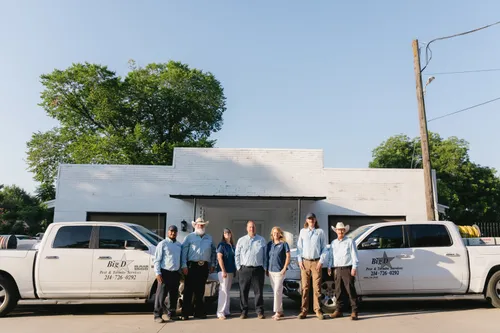
Big D Pest & Termite Services is a pest control company based in McKinney, TX, offering solutions for homes and businesses. They provide integrated pest management services targeting a wide range of pests including ants, roaches, rodents, termites, mosquitoes, wasps, and wildlife. Their approach focuses on eco-friendly and safe methods that protect children and pets while effectively managing infestations. With over 30 years of experience, they emphasize thorough inspections and customized treatments to ensure long-lasting pest prevention. Emergency and same-day appointments are available to address urgent pest issues promptly.
Legacy Rodent Control
Dallas, TX
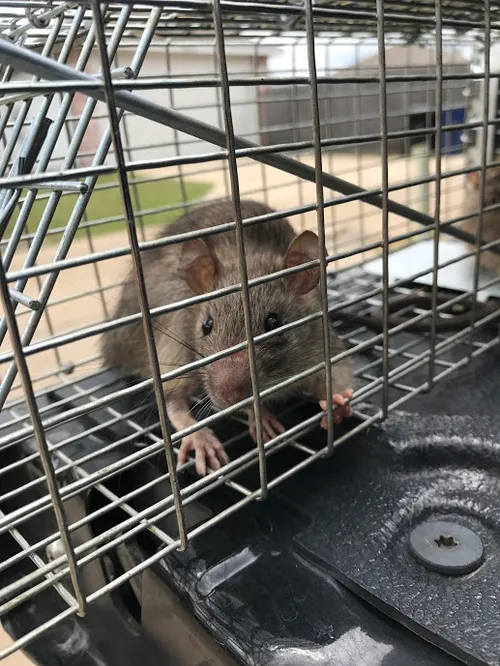
Legacy Rodent Control is a certified and insured rodent control and wildlife removal company serving Dallas, TX, and the surrounding Dallas-Fort Worth area. They specialize in removing rodents and animals from homes, followed by decontamination to protect health and property. Their services include a disinfecting fogging treatment that eliminates pheromone scents to prevent re-infestation, often avoiding the need to replace insulation. In cases of severe damage, they also provide remediation and insulation replacement. With over 10 years of experience, Legacy Rodent Control offers trained specialists and guarantees their work with a two-year warranty.
Understanding Little Elm's Nuisance Wildlife
The expanding suburbs and natural habitats around Lewisville Lake make Little Elm a prime location for a variety of wildlife species to coexist-sometimes too closely-with human residents. Knowing which animals are common culprits can help you identify a problem early.
Common Mammals: The most frequent offenders seeking shelter in Little Elm homes and yards include squirrels, raccoons, opossums, and armadillos. These animals are often attracted to accessible attics, crawl spaces, and decks. You may also encounter bats roosting in eaves or vents, as well as skunks, coyotes, and the occasional bobcat in more open or wooded areas.
Reptiles: Texas is home to numerous snake species, both venomous and non-venomous. While many are beneficial for rodent control, their presence in your yard or, worse, inside your home, necessitates careful and knowledgeable handling.
When these animals move from the surrounding environment into your living space, they cease to be mere wildlife and become a nuisance that requires professional attention.
Why Professional Wildlife Control is Essential
Attempting to handle a wild animal situation on your own can be ineffective, dangerous, and even illegal. Professional wildlife control operators (often called Wildlife Control Operators or WCOs) bring expertise that is critical for a lasting solution.
Health and Safety Risks: Wild animals can carry diseases transmissible to humans and pets, such as rabies, leptospirosis, and histoplasmosis (from bat guano). They may also become aggressive if cornered or protecting young. Professionals have the training and protective equipment to manage these risks safely.
Legal Compliance: Texas has specific regulations governing the trapping and relocation of wildlife. For instance, while landowners can trap certain nuisance fur-bearing animals on their own property, any relocation requires authorization from the Texas Parks and Wildlife Department (TPWD) and permission from the landowner where the animal will be released. Harming protected or endangered species is strictly illegal. A licensed professional understands these laws and ensures all actions are compliant.
Effective Exclusion: Removing the animal is only half the battle. If the entry points aren't found and sealed, another animal will simply take its place. Professionals perform thorough inspections and use durable materials to exclude animals, paying special attention to details like sealing holes as small as 1/4 inch to prevent bat re-entry.
What Little Elm Animal Services Can and Cannot Do
It's important for residents to understand the distinction between municipal animal control and private wildlife removal services.
The Little Elm Animal Control department is primarily equipped to handle issues related to domestic animals. This includes responding to stray dogs and cats, livestock concerns, and dangerous incidents involving pets. They are not staffed or equipped to capture, trap, or remove wild animals from private property 1.
You should contact Little Elm Animal Control for:
- A loose or aggressive dog in your neighborhood.
- Injured domestic animals.
- Issues with livestock.
For any issue involving wild animals-such as squirrels in the attic, a raccoon under the porch, or a snake in the garage-you will need to seek help from a private, licensed wildlife control operator 2 3.
Find the perfect wildlife removal companies for your needs
Get personalized recommendations and expert advice
Prevention: Your First Line of Defense
The most effective and cost-efficient strategy for wildlife control is to make your property less attractive to animals in the first place. Proactive prevention can save you from the hassle and expense of a removal job.
Seal Entry Points: Conduct seasonal inspections of your home's exterior. Look for gaps in siding, loose roof vents, holes in soffits, and cracks in foundations. Use high-quality materials like hardware cloth, steel wool, and metal flashing to seal any openings, remembering that bats can enter through holes as small as a quarter-inch.
Eliminate Food Sources: Secure your trash cans with locking lids or bungee cords. Avoid leaving pet food outdoors overnight. Clean up fallen fruit from trees and consider using covered compost bins. If you feed birds, use feeders that are difficult for squirrels to raid and avoid ground-feeding styles that attract raccoons and opossums 4.
Remove Shelter and Water: Trim tree branches back at least 6-8 feet from your roofline to prevent easy access for squirrels and raccoons. Keep brush piles, woodpiles, and dense vegetation away from your home's foundation. Fix leaky outdoor faucets and ensure proper drainage to eliminate standing water.
Pet Safety: Keep small pets indoors or supervised when outside, especially at dawn and dusk. Walk dogs on a leash, particularly in areas near greenbelts or creeks where coyotes may be present 5.
The Wildlife Removal Process and Associated Costs
When prevention isn't enough and wildlife has moved in, understanding the typical removal process and potential costs can help you make an informed decision.
Inspection and Assessment: A professional will start with a thorough inspection to identify the animal species, locate all entry and exit points, and assess the extent of the infestation and any damage.
Humane Removal and Exclusion: The method varies by species. For animals like squirrels or raccoons in an attic, one-way doors are often installed over the main entry point, allowing animals to leave but not return. For other situations, live trapping may be necessary. Crucially, this step is followed by sealing all identified entry points with permanent materials.
Clean-up and Decontamination: This is a vital step, especially after rodents or bats. Professionals will remove contaminated insulation, droppings, and nesting materials and apply enzymatic cleaners and disinfectants to eliminate odors and health hazards. This discourages future animals from being attracted to the scent.
Cost Considerations: Prices in Little Elm vary based on the animal, the location of the problem, and the scope of work required.
- Simple Jobs: For a basic squirrel removal from an attic or a bat exclusion from a soffit, including sealing entry points, costs often range from $200 to over $500.
- Medium Jobs: Situations requiring multiple traps or more extensive ground work, such as persistent raccoon or opossum issues, typically start around $300 and up.
- Complex Jobs: Major infestations requiring full attic decontamination, insulation replacement, or large-scale exclusion can range from $500 to $1,000 or more 6 7 8.
For any persistent or complex issue, especially involving bats or animals inside walls, contacting a licensed wildlife control operator with TPWD knowledge is strongly recommended to ensure a legal and effective solution 9.
Frequently asked questions
Sources
Footnotes
-
Nuisance Fur-bearing Animals - https://tpwd.texas.gov/regulations/outdoor-annual/hunting/fur-bearing-animal-regulations/nuisance-fur-bearing-animals ↩
-
Wildlife Rescue | Town of Little Elm, TX - Official Website - https://www.littleelm.gov/480/Wildlife-Rescue ↩
-
Little Elm Wildlife Removal, Pest Animal Control TX - Red Rover ... - http://www.wildlife-removal.com/city/TX-Little-Elm.htm ↩
-
AAAC Wildlife Removal & Control In Little Elm TX - https://aallanimalcontrol.com/denton/little-elm-wildlife-removal/ ↩
-
Nuisance Animals of Texas | RMWBH Law - https://rmwbh.com/nuisance-animals-of-texas/ ↩
-
Little Elm Wildlife Control / Texas Animal Removal - http://www.aaanimalcontrol.com/professional-trapper/city/TX-Little-Elm.htm ↩
-
Little Elm Tx Wildlife Control - https://www.911wildlife.com/where-we-service/little-elm-tx-wildlife-control/ ↩
-
Prices for Little Elm Wildlife Pest Control Animal Trapping - http://www.aaanimalcontrol.com/Professional-Trapper/prices/TX-Little-Elm-prices.htm ↩
-
Local Laws on Wildlife Control in Texas - The Critter Team - https://thecritterteam.com/local-laws-on-wildlife-control-in-texas/ ↩