Find the Best Wildlife Removal Companies for Your Business
No obligation • Fast responses • Nationwide coverage

Why you can trust Pest Crews
Pest Crews is a leading U.S. resource for finding and evaluating residential and commercial pest control services. Our team researches providers, reviews treatment approaches, and organizes unbiased information to help you make informed decisions. Companies cannot pay to change our editorial content or influence how they appear.
Search providers near you
Top Wildlife Removal Companies in Temple, Texas Ranked
Finding unwelcome wildlife in your home or on your property can be a stressful and urgent situation. Professional wildlife removal services in Temple provide safe, humane, and effective solutions to manage nuisance animals, from trapping and exclusion to cleanup and prevention. This guide will help you understand the common local wildlife issues, when to call a professional, and how to navigate Texas regulations to protect your property and family.

Common Nuisance Wildlife in Temple
Temple's blend of urban and natural landscapes makes it a habitat for various animals that can become problematic for homeowners. Understanding which species are most likely to cause issues is the first step in addressing a wildlife problem.
Mammals:
- Opossums: These nocturnal scavengers often take shelter under decks, porches, or in sheds. While generally non-aggressive, they can create messes and damage insulation if they enter an attic or crawl space.
- Skunks: Known for their potent defense mechanism, skunks dig dens under structures and can cause significant lawn damage while foraging for grubs. Safe removal is crucial to avoid being sprayed.
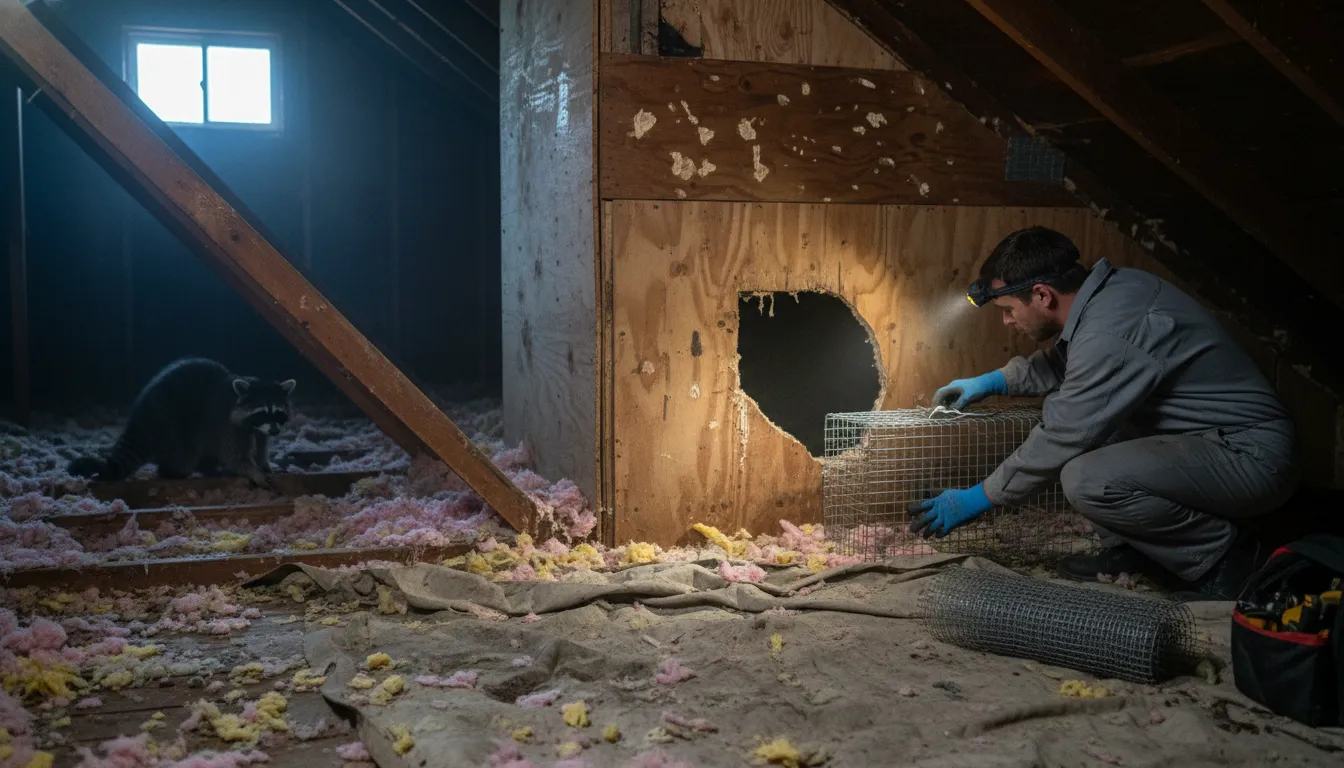
- Raccoons: Intelligent and dexterous, raccoons are adept at breaking into attics, chimneys, and trash cans. They can cause extensive structural damage and pose a health risk through their droppings.
- Foxes & Coyotes: While often seen on the outskirts, these predators can threaten small pets and poultry. Their presence close to homes requires careful management.
- Moles & Voles: These small burrowing mammals are notorious for destroying lawns and gardens with their intricate tunnel systems.
- Beavers: In areas near waterways, beavers can flood properties and damage trees, requiring specialized removal strategies.
Reptiles:
- Snakes: Several snake species are native to the Temple area. While most are non-venomous, any snake in or around the home necessitates safe, professional removal to ensure the safety of all occupants.
DIY Management vs. Professional Animal Control
For minor issues, residents have a few limited options. The City of Temple Animal Services offers cat traps for rent with a refundable deposit, available for pickup and drop-off during weekday business hours. For some non-dangerous species, a homeowner might attempt non-lethal removal using a live trap.
However, DIY efforts often fall short for several reasons. Most over-the-counter traps are ineffective for wary wildlife like raccoons or foxes. Critically, simply removing the animal does not solve the problem. If the entry points into your home are not identified and professionally sealed, another animal will quickly take its place. Furthermore, cleanup of contaminated areas like attics or crawl spaces requires specialized equipment and knowledge to safely remove hazardous waste and droppings. Mishandling wildlife can also lead to bites, scratches, or exposure to diseases like rabies or leptospirosis.
When to Call Temple Animal Control
It's important to distinguish between a nuisance wildlife situation and a scenario requiring municipal animal control. You should contact Temple Animal Control for:
- Stray domestic animals (dogs, cats) or loose livestock.
- Reports of animal cruelty or neglect.
- Aggressive animals posing an immediate public safety threat.
- To report a suspected animal bite.
- For ongoing disturbances from a neighbor's animal, such as constant barking or foul odors1.
For active infestations of wild animals inside a structure, on your property, or for preventive exclusion work, a licensed wildlife removal company is the appropriate resource.
The Professional Wildlife Removal Process
A reputable wildlife control operator follows a comprehensive, multi-step process to ensure a permanent solution.
- Inspection and Assessment: The technician will perform a thorough inspection of your property, inside and out, to identify the species involved, locate all entry points, and assess the extent of the damage or contamination.
- Humane Removal: Using species-appropriate techniques, the animals are safely removed. This may involve live trapping, one-way exclusion doors, or hands-on extraction. Ethical companies adhere to humane standards and local laws.
- Exclusion and Repair: This is the most critical step for preventing recurrence. All identified entry points-such as gaps in soffits, broken vents, or holes in foundations-are sealed with durable, animal-proof materials like steel mesh or hardware cloth.
- Cleanup and Sanitization: Areas soiled by animal waste, urine, or nesting materials are cleaned and disinfected. This may involve removing and replacing contaminated insulation to eliminate health risks and odors.
- Prevention Advice: A good technician will provide recommendations for making your property less attractive to wildlife, such as securing trash cans, trimming tree branches away from the roof, and removing accessible food sources like fallen fruit or pet food.
Find the perfect wildlife removal companies for your needs
Get personalized recommendations and expert advice
Understanding Texas Wildlife Regulations
Texas Parks and Wildlife Department (TPWD) regulations are a key factor in wildlife management. Landowners have the right to address nuisance fur-bearing animals (like raccoons, skunks, and beavers) on their own property without a hunting license. However, there are important rules to follow:
- Animals or pelts cannot be retained or sold unless it is during the official open season for that species.
- Relocation is heavily regulated. Releasing a trapped animal on another property requires prior written authorization from TPWD and permission from the landowner of the release site. Those relocating nuisance wildlife must also submit a monthly report to TPWD detailing the type, number, and release location of animals2.
These complex rules are a primary reason to hire a professional. Licensed wildlife removal companies understand the legal requirements for disposal and relocation, ensuring your situation is resolved in full compliance with state law, which protects both you and the ecosystem.
What to Expect: Wildlife Removal Costs in Temple
The cost for animal removal and control services in Temple varies based on the species, the severity of the infestation, the accessibility of the animals, and the scope of repairs needed. There is no standard flat fee. Services are typically priced based on the specific job, which may include:
- Inspection Fee: Sometimes applied, but often waived if you proceed with service.
- Removal/Trapping Fee: Costs for labor, equipment, and traps.
- Exclusion Work: Materials and labor for sealing entry points. This is a critical and valuable part of the investment.
- Cleanup and Decontamination: This service adds cost but is essential for health and safety.
For accurate pricing, you will need to contact local providers for a site-specific quote. Companies can provide estimates for common services like opossum removal, skunk trapping (with techniques to avoid spraying), mole control, or dead animal removal from attics or walls3 4.
Choosing a Qualified Wildlife Removal Service
When selecting a provider, look for:
- Licensing and Insurance: Ensure the company is properly licensed to operate in Texas and carries liability insurance.
- Experience with Local Species: Ask about their specific experience with the animal causing your issue.
- Guarantees: A reputable company should offer a warranty on their exclusion work, promising to return if animals regain entry within a certain period.
- Humane Methods: Inquire about their removal techniques and adherence to humane wildlife control standards.
- Detailed Plan and Quote: They should provide a clear, written explanation of their proposed solution and a transparent breakdown of costs.
Resolving a wildlife conflict effectively requires a combination of immediate action, professional expertise, and long-term prevention. By understanding the local wildlife, the regulations, and the professional process, Temple homeowners can reclaim their property with confidence.
Frequently asked questions
Sources
Footnotes
-
Animal Services Information - Welcome to City of Temple, TX - https://www.templetx.gov/departments/city_departments/animal_services/animalservices.php ↩
-
Nuisance Fur-bearing Animals - https://tpwd.texas.gov/regulations/outdoor-annual/hunting/fur-bearing-animal-regulations/nuisance-fur-bearing-animals ↩
-
Temple Wildlife Animal Control - Nuisance Removal Trapping - http://www.wildlifeanimalcontrol.com/Temple.html ↩
-
How Much Does Animal in Attic Removal Cost? - https://www.yahoo.com/lifestyle/much-does-animal-attic-removal-111955331.html ↩