Find the Best Termite Inspection Companies for Your Business
No obligation • Fast responses • Nationwide coverage

Why you can trust Pest Crews
Pest Crews is a leading U.S. resource for finding and evaluating residential and commercial pest control services. Our team researches providers, reviews treatment approaches, and organizes unbiased information to help you make informed decisions. Companies cannot pay to change our editorial content or influence how they appear.
Search providers near you
Top Termite Inspection Companies in Aliso Viejo, California Ranked
A termite inspection is a specialized evaluation of your property to detect the presence of wood-destroying organisms and the conditions that attract them. In Aliso Viejo's warm climate, these pests are a constant threat to the structural integrity of your home. This guide will help you understand the inspection process, what inspectors look for, and how to find qualified local professionals to protect your investment.
HomeShield Pest Control
701 E Ball Rd, Anaheim, CA 92805
HomeShield Pest Control offers eco-friendly pest control services in Irvine, CA, specializing in treatments for bed bugs, cockroaches, ants, rodents, termites, and mosquitoes. They provide both residential and commercial pest management using green pesticide solutions from EcoSMART. HomeShield is locally owned and focuses on safe, child- and pet-friendly pest control methods. Their service areas include multiple regions across California and South Florida. The company emphasizes a professional and ethical approach to pest control, backed by a 100% service satisfaction guarantee and unlimited maintenance visits between scheduled services.
HomeShield Pest Control
850 E Parkridge Ave STE 113, Corona, CA 92879
HomeShield Pest Control offers eco-friendly pest control services in Irvine, CA, focusing on child and pet-safe solutions. They provide a range of services including home and commercial pest control, rodent and termite control, bed bug treatment, and mosquito control. HomeShield uses green pesticide products from EcoSMART, known for their 100% green insecticides. The company serves multiple regions including Orange County and the Inland Empire. They emphasize a professional and ethical approach to pest management and back their work with a 100% satisfaction guarantee and unlimited maintenance calls between scheduled services.
HomeShield Pest Control
31601 Coast Hwy, Laguna Beach, CA 92651
HomeShield Pest Control offers eco-friendly pest control services in Irvine, CA, focusing on child and pet-safe solutions. They handle a variety of pests including rodents, termites, bed bugs, mosquitoes, ants, and cockroaches for both residential and commercial properties. The company uses green products from EcoSMART, known for their 100% green insecticide, and provides unlimited maintenance visits between scheduled services. HomeShield serves multiple regions including Orange County and emphasizes a responsible and ethical approach to pest management.
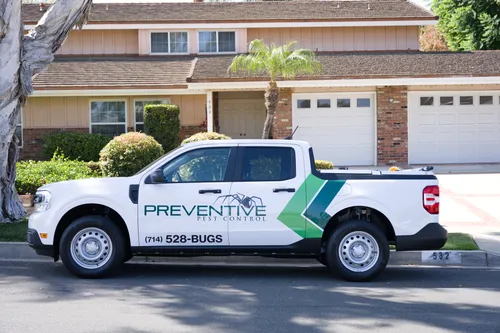
Preventive Pest Control
26060 Acero #204, Mission Viejo, CA 92691
Preventive Pest Control is a pest control company serving Irvine, CA, and nearby communities. With over 20 years of experience, they offer a wide range of services including termite inspection and treatment, ant and spider control, rodent removal, mosquito management, and wasp nest removal. Their team uses safe and effective methods tailored to both residential and commercial properties to manage and prevent pest infestations. Preventive Pest Control is known for thorough termite inspections and customized treatment plans that help protect properties from damage and recurring pest issues.
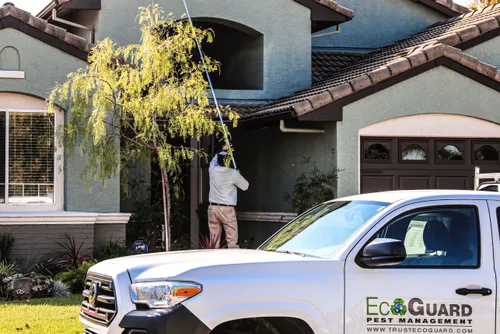
EcoGuard Pest Management
2901 E Miraloma Ave #5, Anaheim, CA 92806
EcoGuard Pest Management is a family-owned pest control company based in Irvine, CA. They provide a range of pest management services including cockroach, ant, rodent, and termite control. Their approach emphasizes eco-friendly and natural products that are safe for children, pets, and clients. EcoGuard uses a comprehensive five-point inspection and treatment program to address pest issues effectively. Services include rodent inspection, trapping, sanitation, and exclusion, as well as termite inspection, pre-treatment, treatment, and fumigation. The company is committed to supporting the local community and prioritizes safety in all their pest control solutions.
Why Termite Inspections Are Critical in Aliso Viejo
The Mediterranean climate of Orange County, with its mild temperatures and occasional moisture, creates an ideal environment for termites to thrive year-round 1. Both subterranean and drywood termite species are common in the area, and an infestation can cause significant, costly damage that often isn't covered by standard homeowners insurance. A professional wood-destroying organism (WDO) inspection is your first line of defense, identifying active infestations, past damage, and "conducive conditions" that could lead to future problems 2 3. For homeowners, this is essential preventative maintenance. For those buying or selling a home, it's often a required step in the real estate transaction process.
What Professional Inspectors Look For
A thorough termite inspection is a detailed investigation that goes beyond just looking for bugs. A certified inspector conducts a visual examination of both the interior and exterior of your property, focusing on key areas where termites are likely to feed or gain entry.
Signs of Active Infestation:
- Mud Tubes: Subterranean termites build pencil-sized tunnels of soil and saliva to travel between their colony in the ground and the wood in your home. Finding these on foundation walls, in crawlspaces, or on piers is a clear red flag.
- Frass: Drywood termites nest inside wood and push out their fecal pellets. These tiny, wood-colored, granular droppings often accumulate in small piles below "kick-out" holes in infested wood, like window sills or door frames.
- Discarded Wings: Reproductive "swarmers" shed their wings after finding a mate and a new place to start a colony. Piles of tiny, identical wings near windows, doors, or light sources often signal an active colony nearby.
- Wood Damage: Inspectors will probe exposed wood with a tool. Wood that sounds hollow, appears blistered or darkened, or crumbles easily may have internal damage from termites or other wood-destroying organisms like carpenter ants or beetles.
Identifying Conducive Conditions: A key part of the inspection is spotting issues that make your home vulnerable, even if no active termites are found. These include:
- Earth-to-Wood Contact: Soil or mulch in direct contact with siding, door frames, or structural wood provides a direct highway for subterranean termites.
- Excess Moisture: Leaky pipes, poor drainage, faulty gutters, and insufficient ventilation in crawlspaces create the damp environment termites need 4.
- Faulty Grade: Landscaping or soil that slopes toward the foundation can direct water against the home's wooden components.
The Step-by-Step Inspection Process
Understanding what happens during an inspection can help you prepare and know what to expect from the service.
1. Exterior Inspection: The inspector will walk the entire perimeter of your home. They examine the foundation for mud tubes, check siding and trim, inspect decks and fences (especially where they attach to the house), and look at nearby trees, stumps, or woodpiles 5. Roof eaves and soffits are also checked for signs of drywood termites.
2. Interior Inspection: Inside, the inspector will examine baseboards, door and window frames, built-in cabinets, and areas around plumbing penetrations under sinks and around tubs 6. They tap on wood surfaces, listening for a hollow sound and looking for cracks or blistering paint, which can hide termite activity underneath.
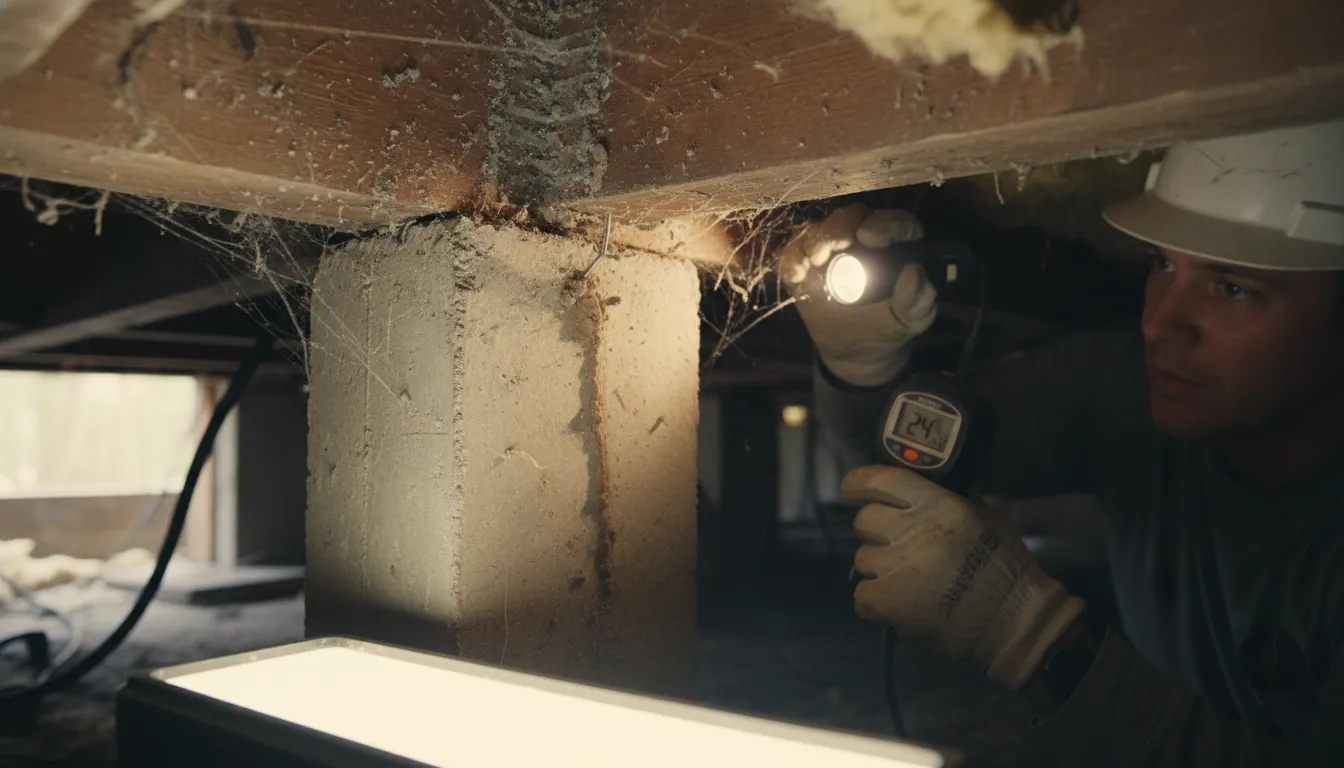
3. Inspection of Hard-to-Reach Areas: Critical parts of the inspection occur in attics, crawlspaces, and garages. In the attic, the inspector looks for frass, damaged wood on rafters, and signs of moisture. In the crawlspace, they check for mud tubes on piers, moisture on foundation walls, and proper ventilation 7.
4. The Inspection Report: After the evaluation, you will receive a detailed written report. A quality report includes photographs of any findings, a description of any active infestations or damage, a list of conducive conditions, and clear recommendations for treatment and repairs. For real estate transactions, this is often formatted as an official "Section 1" (items requiring correction) and "Section 2" (conducive conditions) report.
Find the perfect termite inspection companies for your needs
Get personalized recommendations and expert advice
Common Termite Species in Aliso Viejo
Knowing your enemy helps in identification and understanding the recommended treatment approach.
- Subterranean Termites: The most common and destructive type in California. They live in underground colonies and require contact with soil moisture. They are identified by the mud shelter tubes they build to reach above-ground wood. An infestation often starts at the ground level or in areas with constant moisture 8.
- Drywood Termites: A frequent pest in Aliso Viejo homes. Unlike subterranean termites, they infest dry, sound wood and do not need contact with soil. They are often found in attic framing, furniture, window frames, and hardwood floors. Their presence is usually given away by piles of frass 9 10.
Understanding Inspection Costs
The cost of a termite inspection in Aliso Viejo is typically based on the size and type of your home. It's an investment that can save you thousands in unexpected repair costs.
- Basic Inspection: For a standard single-family home up to 2,500 square feet, you can expect to pay between $100 and $150 for a comprehensive visual inspection and report.
- Larger Homes: For properties between 2,500 and 4,000 square feet, the price generally ranges from $150 to $225, reflecting the additional time and areas to assess.
- Real Estate (Escrow) Reports: If you need an official report for a home sale or purchase (often called a Section 1 report), there is usually an additional fee of $75 to $100 on top of the base inspection cost.
- Treatment & Repair Costs: If the inspection finds active termites, localized treatment (like spot treatments or wood replacement) can start around $250 to $700 or more, depending on the severity and extent of the infestation. Whole-structure fumigation for drywood termites is a larger, separate project with its own cost structure.
Preparing for Your Inspection
To ensure the inspector can do a thorough job, you can take a few simple steps:
- Clear clutter from your basement, garage, and crawlspace access points.
- Move items away from the interior walls, especially in storage areas.
- Trim back shrubs, vines, or mulch so there is at least a few inches of visible space between the soil and any wood siding on your home.
- Ensure all rooms and access panels to attics and crawlspaces are unlocked and accessible.
Frequently asked questions
Sources
Footnotes
-
Termite Control in California - Western Exterminator - https://www.westernexterminator.com/local-branches/california/termites ↩
-
Termite Inspections | Thrasher Termite & Pest Control, Inc. - https://thrasherpestcontrol.com/termite-control/termite-inspections/ ↩
-
Professional Termite & WDO Inspections in Orange County CA - https://www.tridentinspectiongroup.com/termite-inspections/ ↩
-
Termite Infestations: What Termite Inspectors Look For - https://www.callnorthwest.com/2024/12/termite-infestations-what-termite-inspectors-look-for/ ↩
-
8 Key Areas in Your Home to Check During a Termite Inspection - https://cleardefensepest.com/termite-inspection-checklist/ ↩
-
What Does A Termite Inspector Look For? - AG Pest Control - https://www.agpest.com/what-does-a-termite-inspector-look-for/ ↩
-
Termites and real estate inspections - Clark Pest Control - https://www.clarkpest.com/residential-service-blog-old/termites-and-real-estate-inspections ↩
-
Subterranean and Other Termites / Home and Landscape ... - UC IPM - https://ipm.ucanr.edu/home-and-landscape/subterranean-and-other-termites/ ↩
-
Termites - Aliso Viejo Pest Control Xperts - https://alisoviejopestcontrolxperts.com/termites/ ↩
-
Termite Inspection - https://www.pestcontrolanteater.com/termite-inspection/ ↩