Find the Best Termite Inspection Companies for Your Business
No obligation • Fast responses • Nationwide coverage

Why you can trust Pest Crews
Pest Crews is a leading U.S. resource for finding and evaluating residential and commercial pest control services. Our team researches providers, reviews treatment approaches, and organizes unbiased information to help you make informed decisions. Companies cannot pay to change our editorial content or influence how they appear.
Search providers near you
Top Termite Inspection Companies in Apple Valley, California Ranked
A termite inspection is a critical evaluation of your property to identify current infestations, past damage, and conditions that could attract these destructive pests. In Apple Valley, where both subterranean and drywood termites are active, a professional assessment is essential for protecting your investment. This guide explains what a termite inspection entails, why it's important for local homeowners, and how you can find qualified professionals to conduct a thorough examination of your home.

Terminix
649 S Waterman Ave, San Bernardino, CA 92408
Terminix provides pest control services in Riverside, CA, addressing a wide range of pests including ants, spiders, termites, bed bugs, roaches, rodents, and wildlife. Their local technicians understand the specific pest challenges in the area and offer customized plans to protect homes from damage caused by termites and rodents. Terminix also offers specialized capabilities such as termite inspection and control, as well as wildlife removal services.

Dixon Pest Control
13829 Park Ave Unit 100, Victorville, CA 92392
Dixon Pest Control is a family-owned pest management company serving Los Angeles, CA, and surrounding areas including Riverside and San Bernardino Counties. They offer pest control services for homes and businesses, addressing issues with rodents, roaches, termites, ants, bed bugs, and house flies. The company emphasizes eco-friendly treatments and provides tailored pest management plans for commercial properties. With over 14 years of experience, Dixon Pest Control combines expert knowledge with customer-focused service to protect properties from pests while minimizing environmental impact.
Home Defenders Termite & Pest Management Inc
San Bernardino, CA
Home Defenders Termite & Pest Management Inc provides pest control services in San Bernardino, CA. They address a variety of pest issues including termite inspections, rodent and wildlife removal, mosquito control, and general pest extermination. The company emphasizes identifying the root cause of pest problems to recommend effective treatment solutions. With over 25 years of experience, Home Defenders serves the San Bernardino National Forest area and offers guaranteed work.
Harris Termite & Pest Control
16389 Cedar View Ln, Fontana, CA 92336
Harris Termite & Pest Control is a pest control company based in San Bernardino, CA, serving the surrounding communities including Adelanto, Apple Valley, Fontana, Hesperia, Phelan, Rancho Cucamonga, Rialto, and Victorville. They offer a range of services such as termite control, rodent control, wildlife removal, and pest inspections for both residential and commercial properties. Their team includes highly trained termite inspectors and technicians who address termite damage and pest infestations to protect homes and businesses. Harris Termite & Pest Control emphasizes straightforward, professional service designed to keep pests out of homes and properties.
Robert May Termite & Pest Management
San Bernardino, CA
Robert May Termite & Pest Management provides pest control services in San Bernardino, CA, specializing in treatment and prevention for ants, spiders, rodents, termites, and other mountain pests. They serve various communities around Lake Arrowhead and Big Bear, including Blue Jay, Rimforest, and Big Bear City. The company is known for thorough pest inspections and effective removal of both insects and wildlife, addressing issues such as mice, rats, and bats. Their team emphasizes safe treatment options for families and pets and offers scheduled quarterly services to maintain pest-free environments.
Why Termite Inspections Are Crucial in the High Desert
Termites are a silent threat, often causing significant structural damage long before they are discovered. In Apple Valley and across the High Desert, the climate and environment can be conducive to termite activity. A professional termite evaluation is your first line of defense, designed to detect early signs of an infestation that an untrained eye would likely miss. Regular inspections are a key component of responsible home maintenance, helping to avoid costly repairs and preserve your property's value 1 2.
What Inspectors Look For: Signs of Termites and Conducive Conditions
During a WDO (Wood-Destroying Organism) inspection, a licensed professional conducts a meticulous visual examination of your property. They are trained to identify both clear evidence of termites and the environmental factors that invite them.
Evidence of Active Infestations or Past Damage:
- Mud Tubes: These pencil-sized tunnels made of soil and saliva are the hallmark of subterranean termites, connecting their underground colonies to wood food sources.
- Frass: Drywood termites produce these distinctive, six-sided fecal pellets, which often accumulate in small piles below "kick-out" holes in infested wood.
- Damaged Wood: Wood that sounds hollow when tapped, appears blistered or darkened, or has a honeycombed interior pattern indicates termite feeding galleries.
- Discarded Wings: Swarming termites, or "alates," shed their wings after finding a mate and a new location to start a colony. Piles of tiny, identical wings are a common sign of a recent swarm 3.
- Exit Holes: Small, round holes in drywood or plaster are where termites have pushed out frass or where swarmers have emerged.
Conducive Conditions That Attract Termites: Inspectors also note issues that increase the risk of future infestation. Correcting these problems is a vital part of termite prevention.
- Wood-to-Soil Contact: Any structural wood, such as fence posts, deck supports, or siding, in direct contact with soil provides an easy bridge for termites.
- Excess Moisture: Plumbing leaks, poor drainage, standing water near the foundation, and insufficient crawlspace ventilation create the damp environment termites need to thrive.
- Mulch and Vegetation: Dense mulch or plants piled against the foundation can retain moisture and hide termite entry points.
- Cracks in the Foundation: Even hairline cracks can serve as entry points for subterranean termites.
The Inspection Process: A Room-by-Room Guide
A comprehensive termite assessment covers both the interior and exterior of your home, focusing on areas most vulnerable to infestation. The inspector will examine all accessible locations 4 5 6.
Exterior Inspection: The inspector walks the perimeter of your home, looking at the foundation, siding, window and door frames, and any attached structures like patios or decks. They check for mud tubes, damaged wood, and soil conditions. The inspection includes roof eaves, soffits, and vents, as drywood termites can enter through attic spaces.
Interior Inspection: Inside, the inspector examines baseboards, window sills, door frames, and areas around plumbing penetrations under sinks and around tubs. They pay special attention to rooms with plumbing, as leaks are a major attractant.
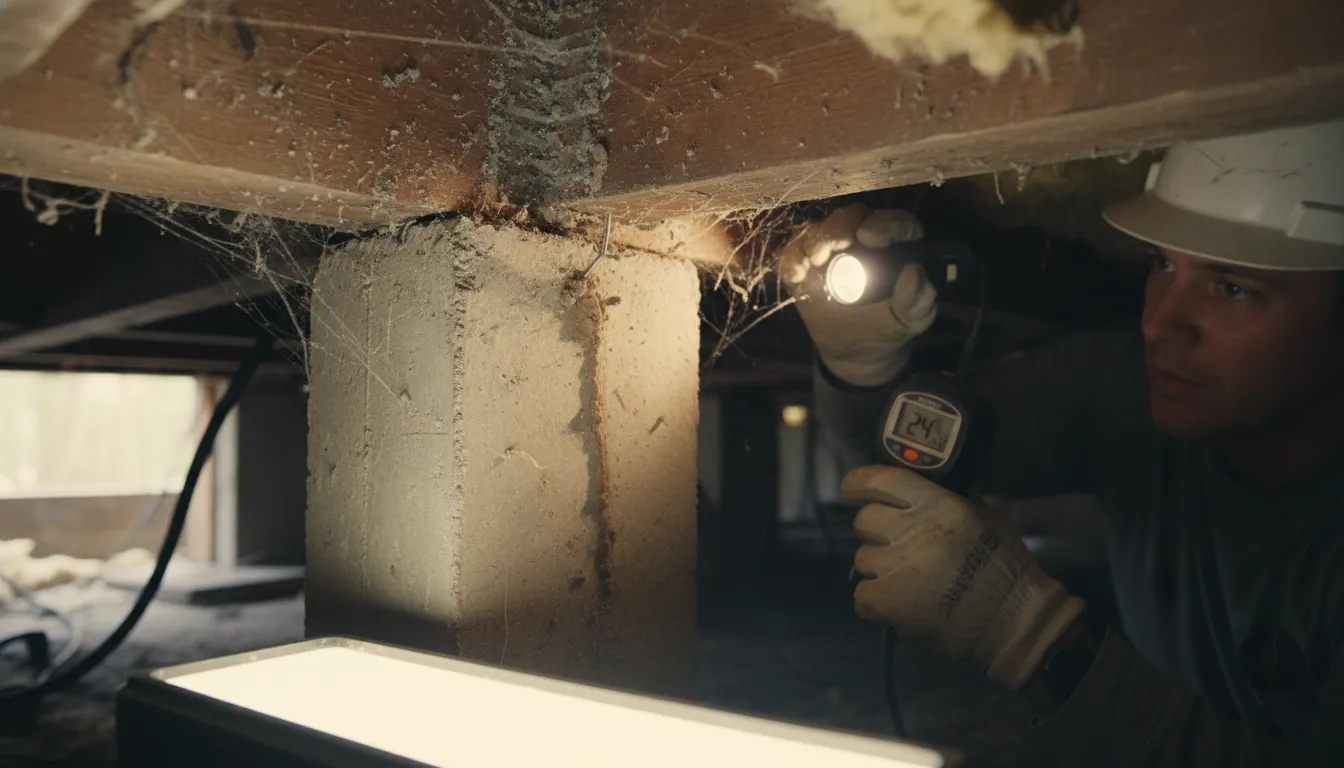
Crawlspaces and Attics: These often-overlooked areas are critical inspection points. In crawlspaces, inspectors look for mud tubes on piers and foundation walls, check vapor barriers, and assess ventilation. In attics, they search for frass, damaged roof sheathing, and evidence of swarmers.
Find the perfect termite inspection companies for your needs
Get personalized recommendations and expert advice
Understanding Inspection Reports and Costs in Apple Valley
In California, the findings of a termite inspection are formally documented in a Wood-Destroying Organism (WDO) Inspection Report. This report is divided into sections that categorize the findings 7.
- Section 1: This lists active infestations or existing damage from wood-destroying organisms that require correction. A "Section 1 clearance" is often required during real estate transactions to confirm these items have been addressed.
- Section 2: This notes conditions that are conducive to future infestation (e.g., earth-to-wood contact, excessive moisture) but where no current infestation is found. These are recommendations for prevention.
- Section 3: This area is for findings that are not within the inspector's scope, such as dry rot or other non-WDO issues that may need evaluation by another specialist.
Cost of Inspections: For a standard visual termite check in Apple Valley, homeowners can expect to pay between $100 and $200 for a typical single-family home 8 9. This cost can vary based on the home's size, age, and foundation type. If you are buying or selling a home and require a formal WDO report with a Section 1 clearance for escrow, the total cost may be higher, often adding $75 to $100 to the base inspection fee 8 10. It's important to get detailed quotes from local providers, as prices for any subsequent treatments will vary dramatically based on the type of termite, the extent of the infestation, and the treatment method required 11.
Types of Termites Found in Apple Valley
Knowing your enemy is key. Apple Valley homes can be threatened by two primary types of termites, each with different behaviors 12 13.
Subterranean Termites: These are the most common and destructive species in North America. They live in colonies in the soil and build mud tubes to travel to their food source-the wood in your home. They require constant contact with moisture to survive, which is why they are drawn to damp wood and soil. Their damage often follows the grain of the wood, leaving a honeycomb pattern.
Drywood Termites: Unlike their subterranean cousins, drywood termites infest dry, sound wood directly and do not need contact with soil. They often enter homes through attic vents or under roof shingles. A colony lives entirely within the wood it consumes, making them harder to detect until significant damage or piles of frass become visible. They are a particular concern in warmer climates like Southern California.
Choosing a Qualified Termite Inspector
Selecting a reputable professional is crucial for an accurate assessment. Look for a licensed pest control operator (PCO) with specific experience in termite detection and WDO inspections. They should carry proper insurance and be willing to explain their process clearly. In Apple Valley, many homeowners seek services from established local companies known for their expertise in the region's specific pest challenges 14. Always ask for references and ensure you understand what the inspection will and will not cover before work begins.
Frequently asked questions
Sources
Footnotes
-
The Value of Termite Inspections - Clark Pest Control - https://www.clarkpest.com/residential-service-blog-old/the-value-of-termite-inspections ↩
-
Termites and real estate inspections - https://www.clarkpest.com/residential-service-blog-old/termites-and-real-estate-inspections ↩
-
Complete Guide to Termite Inspection in Los Angeles - https://www.termikepestcontrol.com/post/termitei-nspection-los-angeles ↩
-
What Happens During a Termite Inspection - Terminix - https://www.terminix.com/termite-control/inspection/ ↩
-
Complete Guide to Termite Inspection for Home Purchase - https://bettertermite.com/termite-inspection-for-home-purchase/ ↩
-
Termite inspection: How it works - Western Exterminator - https://www.westernexterminator.com/termite-control/termite-inspection ↩
-
Understanding Termite Inspections - Info for Buyers - https://keithkylehomes.com/first-time-home-buyers/first-time-home-buyer-tips/understanding-termite-inspections/ ↩
-
Termite Control in California - Western Exterminator - https://www.westernexterminator.com/local-branches/california/termites ↩ ↩2
-
How Much Does a Termite Inspection Cost? - https://patriotinspect.com/how-much-does-a-termite-inspection-cost/ ↩
-
California Termite Inspection: Sections 1-3 Explained - https://www.usrealtytraining.com/blogs/termite-inspection-real-estate ↩
-
Termite Inspection Cost [2026 Data] - Angie's List - https://www.angi.com/articles/how-much-does-termite-inspection-cost.htm ↩
-
Subterranean and Other Termites / Home and Landscape ... - UC IPM - https://ipm.ucanr.edu/home-and-landscape/subterranean-and-other-termites/ ↩
-
Termites and Southern California - https://ecolatermite.com/termites-and-southern-california/ ↩
-
TOP 10 BEST Termite Inspection in Apple Valley, CA - Yelp - https://m.yelp.com/search?find_desc=Termite+Inspection&find_loc=Apple+Valley%2C+CA ↩