Find the Best Termite Inspection Companies for Your Business
No obligation • Fast responses • Nationwide coverage
Why you can trust Pest Crews
Pest Crews is a leading U.S. resource for finding and evaluating residential and commercial pest control services. Our team researches providers, reviews treatment approaches, and organizes unbiased information to help you make informed decisions. Companies cannot pay to change our editorial content or influence how they appear.
Search providers near you
Top Termite Inspection Companies in Hemet, California Ranked
A termite inspection is a specialized evaluation of a property to detect active infestations, past damage, and conditions conducive to wood-destroying organisms. In Hemet, these assessments are vital for protecting your investment from costly structural damage caused by local termite species. This guide explains what a professional termite inspection entails, what inspectors look for in our area, and how you can use this information to connect with qualified local specialists for your home or business.
HomeTeam Pest Defense
1120 Palmyrita Ave STE 210, Riverside, CA 92507
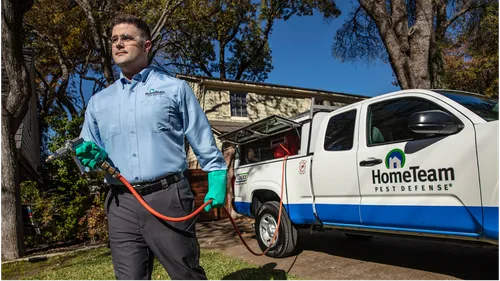
HomeTeam Pest Defense provides pest control services in Riverside, CA, and surrounding areas including Orange County and San Bernardino. They handle a variety of pests such as ants, roaches, rodents, spiders, and termites. Their service includes thorough home inspections and targeted treatments, including termite control for both existing homes and new construction. The company applies a 6-Point Advantage Service to effectively manage pest issues and offers follow-up visits if problems arise between scheduled treatments.

Terminix Commercial
1387 Center St, Riverside, CA 92507
Terminix Commercial offers comprehensive pest control services in Los Angeles, CA, specializing in commercial pest management. Their services include treatment and prevention for bed bugs, cockroaches, ants, rodents, termites, bees, wasps, and wildlife removal. The company provides tailored pest control plans such as the PESTFREE365 and termite protection systems to address common and costly pest issues. With a local team familiar with the area's pest challenges and backed by a nationwide network, Terminix Commercial ensures effective pest management solutions for businesses. They also offer termite inspections and continuous protection systems to prevent structural damage. The company serves a wide range of communities around Los Angeles and Riverside, including Ontario and San Bernardino.
Corky's Pest Control
21803 Cactus Ave Suite E - F, Riverside, CA 92518
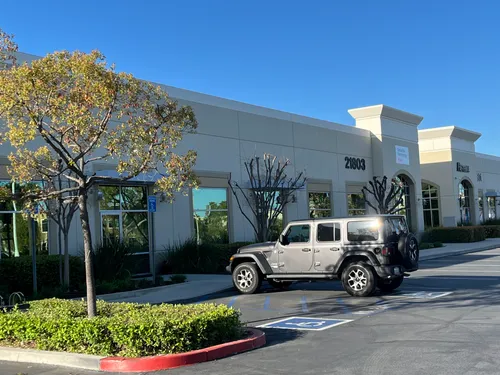
Corky's Pest Control is a pest control company serving Los Angeles, CA, offering a wide range of services including bed bug treatment, ant and cockroach control, rodent management, termite inspection and fumigation, mosquito treatment, bee and wasp removal, and wildlife relocation. Established in 1967, the company applies detailed inspections and modern methods to address pest issues effectively. They provide specialized capabilities such as termite fumigation and hive relocation for bees, ensuring safety and environmental care. Corky's Pest Control focuses on long-lasting pest management solutions tailored to residential properties.
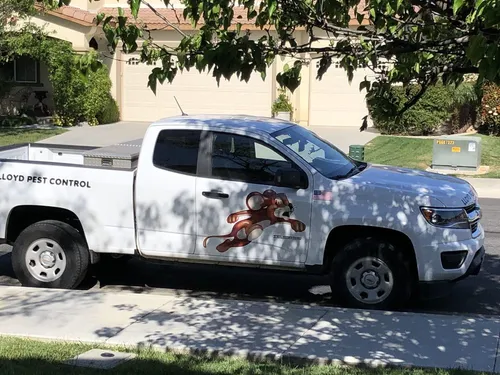
Lloyd Pest & Termite Control
7167 Old 215 Frontage Rd, Riverside, CA 92507
Lloyd Pest & Termite Control provides comprehensive pest management services in Riverside, CA, addressing common local pests such as ants, roaches, termites, rodents, bees, and wasps. The company serves both residential and commercial clients, tailoring pest control plans to the diverse needs of neighborhoods and business types in the area. Lloyd Pest & Termite Control is fully licensed, bonded, and insured, offering expertise in termite inspections and removal as well as ongoing pest prevention strategies. Their services cover a wide range of property types including homes, restaurants, schools, and industrial buildings.

Outstanding Pest Solutions
12631 Foxdale Dr, Moreno Valley, CA 92553
Outstanding Pest Solutions is a pest and termite control company serving Riverside, CA, and surrounding counties. They provide services for both residential and commercial properties, including homes, apartments, hotels, warehouses, schools, and more. Their offerings include general pest control, termite inspection and treatment, bed bug chemical and heat treatments, cockroach control, rodent control and proofing, attic cleaning and sanitizing, and insulation replacement. The company covers Riverside, San Bernardino, San Diego, Los Angeles, and Orange Counties.
Why Termite Inspections Are Critical in Hemet
The warm, dry climate of the Inland Empire is unfortunately favorable to several types of termites, making regular inspections a key part of home maintenance. Subterranean and drywood termites are both prevalent in Southern California and can cause significant, often hidden, damage to the structural integrity of a building. A professional termite inspection provides a detailed report of any findings, which is especially crucial during real estate transactions. In California, a formal Wood Destroying Organism (WDO) inspection report is frequently required to clear escrow, providing buyers and sellers with a clear understanding of the property's condition.
What a Professional Inspector Looks For
A thorough termite inspection in Hemet is a meticulous process where a trained professional examines both the interior and exterior of a structure for evidence of termites and other wood-destroying pests. The goal is to identify active infestations, past damage, and any conditions that could attract future problems.
Exterior Inspection Points
The inspector starts outside, walking the perimeter of your home or building. Key areas of focus include:
- Foundation and Slab: Searching for the pencil-sized mud tubes that subterranean termites construct to travel between their soil colony and the wood they are consuming.
- Siding, Decks, and Fences: Checking for cracks, damaged wood, and signs of moisture that can provide entry points.
- Landscaping and Trees: Looking for dead wood, stumps, or excessive soil-to-wood contact near the structure, which are conducive conditions.
- Vents and Utility Penetrations: Ensuring these areas are properly sealed to prevent pest entry.
Interior Inspection Points
Inside the property, the inspector will examine:
- Walls, Baseboards, and Trim: Tapping on wood to listen for a hollow sound, which can indicate internal damage, and looking for small "exit holes" or cracks.
- Window and Door Frames: Checking for frass (termite droppings) or damaged wood.
- Plumbing Areas: Inspecting under sinks, around tubs, and near water heaters for moisture issues that attract termites.
Sub-Area Inspection (Crawl Spaces, Attics, Basements)
Some of the most critical evidence is found in less-visible areas:
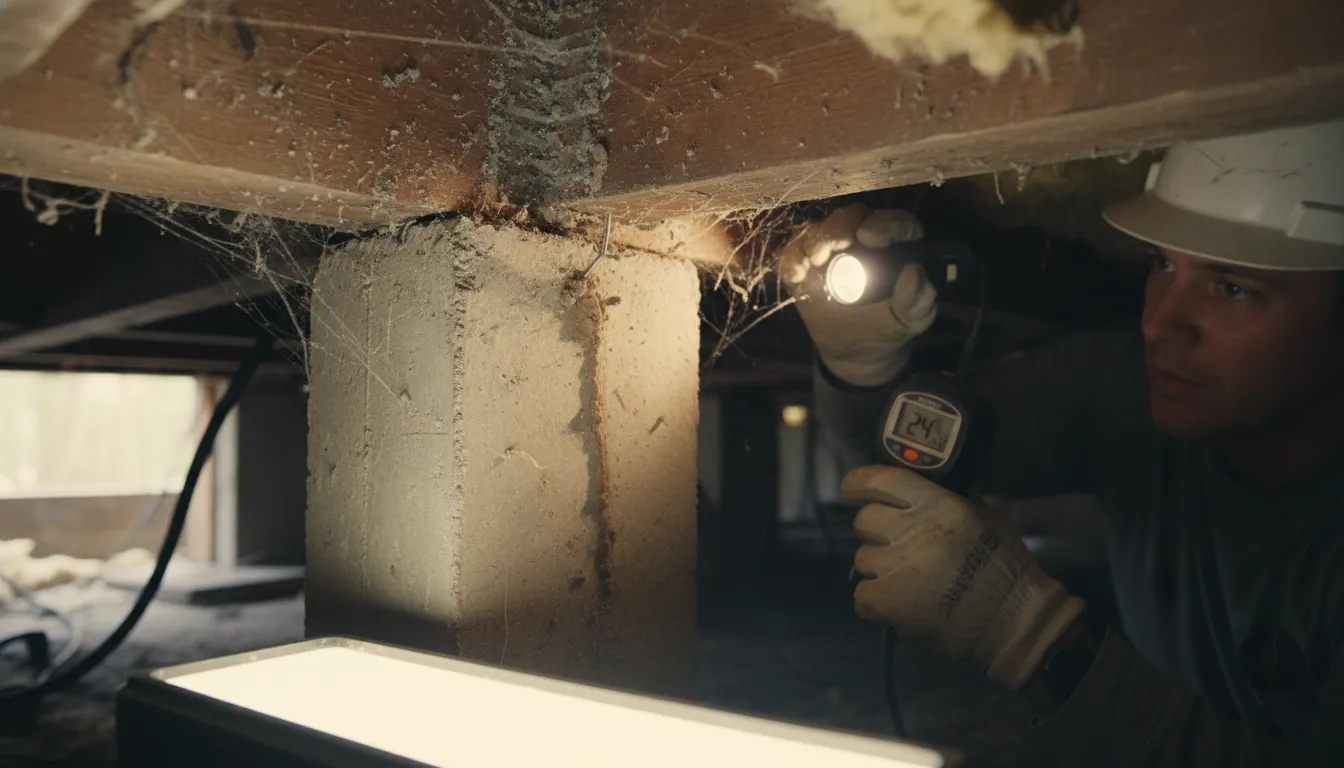
- Crawl Spaces and Basements: Inspectors look for mud tubes on foundation walls, piers, and joists, as well as excessive moisture and wood-to-soil contact 1 2.
- Attics: A common hotspot for drywood termites, where inspectors search for frass pellets, damaged rafters, and shed wings.
Key Signs of Termite Activity
Understanding the signs of an infestation can help you know when to call a professional. Here's what inspectors are trained to identify:
- Mud Tubes: These are the most definitive sign of subterranean termites. These fragile, tunnel-like structures are typically found on foundations, in crawl spaces, or along walls.
- Frass: Drywood termites do not use mud tubes. Instead, they push their fecal pellets, which resemble tiny, wood-colored granules or sawdust, out of "kick-out" holes in the wood they infest 3.
- Damaged Wood: Wood that sounds hollow when tapped, appears crumbly, or has a honeycombed interior pattern is a strong indicator of termite damage 4 5.
- Discarded Wings: Reproductive "swarmers" shed their wings after finding a mate. Piles of small, identical wings near windowsills, doors, or in spider webs are a common sign of a nearby colony 6.
- Bubbling or Peeling Paint: While not exclusively a termite sign, this can indicate moisture buildup within a wall, which may be caused by termite activity or create a conducive environment for them 7.
The Two Common Termite Species in Hemet
Subterranean Termites are the most destructive species in North America. They live in colonies in the soil and build mud tubes to access wood above ground. They require contact with moisture and are often found in damp wood or areas with poor drainage 8 9.
Drywood Termites infest dry, sound wood and do not require contact with soil. They often establish colonies in attic framing, furniture, or wall voids. Their presence is typically revealed by piles of frass 10 11.
Find the perfect termite inspection companies for your needs
Get personalized recommendations and expert advice
Understanding Inspection Costs and Reports
The cost of a termite inspection in Hemet is generally an investment in peace of mind and property protection. For a standard inspection of a typical home under 2,500 square feet, homeowners can expect to pay between $100 and $150. For larger homes, ranging from 2,500 to 4,000 square feet, the price may increase to $150 to $225 due to the additional time and complexity involved.
If you are buying or selling a home, you will likely need a formal WDO (Wood Destroying Organism) inspection report. This official document details any findings and is often required for loan approval. The cost for this report typically adds $75 to $100 to the base inspection fee 12. It's important to note that the inspection cost is separate from any recommended treatment, which can vary widely based on the infestation's size and location.
Preparing for a Termite Inspection
To ensure the inspection is as thorough and efficient as possible, you can take a few simple steps:
- Clear Access: Move boxes, stored items, and furniture away from perimeter walls, especially in garages, basements, and closets.
- Provide Entry to Sub-Areas: Ensure the inspector has clear, unobstructed access to the attic hatch, crawl space entrance, and any locked gates or sheds.
- Trim Landscaping: Cut back shrubs, vines, and tree branches that are touching the house to allow for a clear view of the foundation and siding.
By preparing your home, you enable the inspector to conduct a comprehensive evaluation, leaving no potential hiding spot unchecked.
Frequently asked questions
Sources
Footnotes
-
Termite inspection: How it works - Western Exterminator - https://www.westernexterminator.com/termite-control/termite-inspection ↩
-
Full Guide to Professional Termite Inspections for Home Inspectors - https://www.homegauge.com/learning/home-inspectors-termites/ ↩
-
Kansas City Termite Treatment | Cole Pest Control - https://www.colepestcontrol.com/termite-control/termite-treatment ↩
-
What Does A Termite Inspector Look For? - AG Pest Control - https://www.agpest.com/what-does-a-termite-inspector-look-for/ ↩
-
Termite Inspections: What to Expect and How to Prepare - https://www.petrispestcontrol.com/termite-control/termite-inspections-what-to-expect/ ↩
-
Termites and real estate inspections - Clark Pest Control - https://www.clarkpest.com/residential-service-blog-old/termites-and-real-estate-inspections ↩
-
Termite Inspections: Cost and What to Expect | Real Estate | U.S. News - https://realestate.usnews.com/real-estate/articles/termite-inspections-cost-and-what-to-expect ↩
-
What Does a Termite Inspector Look For? - Orkin - https://www.orkin.com/pests/termites/what-a-termite-inspector-does ↩
-
Subterranean and Other Termites / Home and Landscape / ... - UC IPM - https://ipm.ucanr.edu/home-and-landscape/subterranean-and-other-termites/ ↩
-
What Does a Termite Inspector Look For? A Complete Guide for ... - https://www.housebuyersofamerica.com/blog/what-does-a-termite-inspector-look-for ↩
-
Termite Inspection | Los Angeles, Orange County, San Diego, Inland Empire - https://www.griffinpestmgmt.com/termite-inspection ↩
-
California Termite Inspection: Sections 1-3 Explained - https://www.usrealtytraining.com/blogs/termite-inspection-real-estate ↩