Find the Best Termite Inspection Companies for Your Business
No obligation • Fast responses • Nationwide coverage

Why you can trust Pest Crews
Pest Crews is a leading U.S. resource for finding and evaluating residential and commercial pest control services. Our team researches providers, reviews treatment approaches, and organizes unbiased information to help you make informed decisions. Companies cannot pay to change our editorial content or influence how they appear.
Search providers near you
Top Termite Inspection Companies in Mountain View, California Ranked
A termite inspection is a specialized assessment of a property to detect the presence or evidence of wood-destroying pests, primarily termites. In a region like the Bay Area, these evaluations are critical for protecting your investment from costly structural damage. This guide will help you understand the process, what inspectors look for, and how to find qualified professionals in Mountain View to conduct a thorough examination of your home.

CalPro Inspection Group - Home & Commercial Inspectors
80 Gilman Ave Ste 2B, Campbell, CA 95008
CalPro Inspection Group - Home & Commercial Inspectors provides termite inspection and other home and commercial inspection services in San Jose, CA. They serve the Greater Sacramento area, the entire Bay Area, and surrounding cities. CalPro offers a range of specialty inspections and delivers comprehensive online reports with photos, noted issues, and suggested repairs. Their certified inspectors focus on providing reliable and honest results to help clients make informed real estate decisions.
EcoGuard Pest Management
San Jose, CA
EcoGuard Pest Management is a family-owned pest control company based in San Jose, CA. They provide eco-friendly pest management solutions for common pests like cockroaches, ants, rodents, and specialized services for subterranean termites. Their approach includes a full five-point inspection and treatment program designed to eliminate pests safely using natural and child- and pet-friendly products. Services include rodent inspection, trapping, sanitation, and exclusion, as well as termite inspection, pre-treatment, treatment, and fumigation.
Expert Exterminators
1430 Tully Rd Suite 403, San Jose, CA 95122
Expert Exterminators provides comprehensive pest control services in San Jose, CA. They specialize in treating a variety of pests including rodents, bed bugs, termites, and general household insects. Their offerings include thorough inspections, customized treatment plans, and ongoing maintenance to manage pest issues effectively. The company is licensed and staffed by trained technicians who focus on delivering tailored solutions for each pest problem. Expert Exterminators also offers termite inspections and treatments with no initial fee for inspections. Their services are available around the clock to address pest activity at any time.
MightyMite Termite Services
215 E Hacienda Ave, Campbell, CA 95008
MightyMite Termite Services provides termite and pest control for residential and commercial properties in San Jose, CA. They use state-of-the-art, low-toxicity treatment methods to eliminate termites without tenting, allowing customers to remain in their homes during treatment. The company offers thorough inspections and effective treatments backed by unmatched warranties and an industry-best no call-back rate. With a combined 80 years of experience, MightyMite Termite Services is licensed and bonded, serving the Bay Area and Monterey Counties.
Aptive Pest Control
San Jose, CA
Aptive Pest Control offers comprehensive pest management services in San Jose, CA, addressing common pests such as ants, spiders, cockroaches, rodents, termites, and wasps. Operating with a local understanding of the area's Mediterranean climate and seasonal pest activity, they provide year-round treatments tailored to prevent infestations and protect homes. Their services include exclusion methods, strategic baiting, and targeted treatments to manage and prevent pest problems effectively. Aptive Pest Control serves San Jose and surrounding communities, including Cupertino, Fremont, and Sunnyvale, ensuring coverage across the region.
Why Termite Evaluations Are Essential in Mountain View
The climate and construction styles in Mountain View and the wider Bay Area create an environment conducive to termite activity. Subterranean termites, which build mud tubes from soil to wood, and drywood termites, which infest dry wood directly, are both common threats. A professional pest inspection is the first line of defense, identifying not only active infestations but also conditions that could lead to future problems. For homeowners, this is about preventative maintenance. For buyers and sellers, it's often a mandatory step in the real estate transaction, as lenders typically require a formal termite report before approving a mortgage.
What Happens During a Professional Inspection
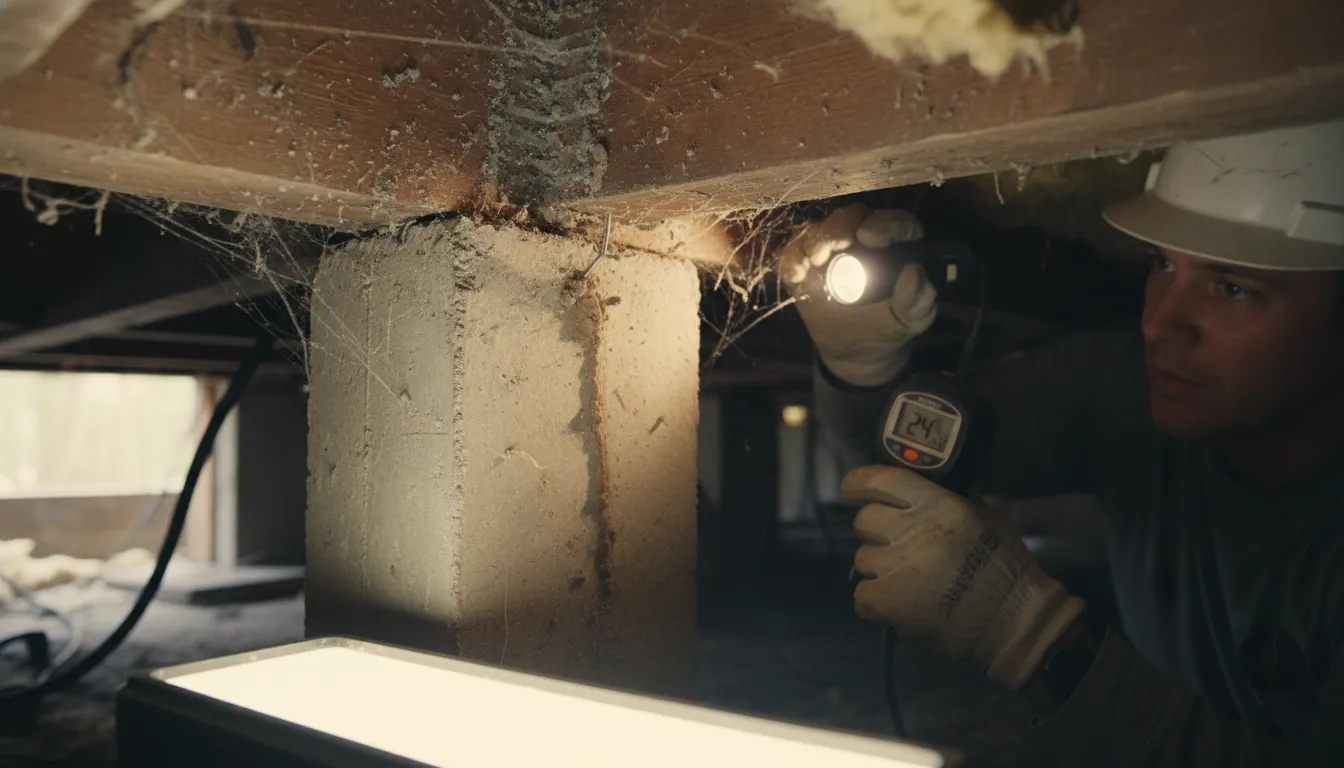
A comprehensive termite inspection is a meticulous process. A certified inspector will conduct a visual examination of both the interior and exterior of your property, focusing on areas where termites are most likely to thrive.
The inspector's checklist typically includes:
- Exterior Survey: Examining the foundation for mud tubes, checking for wood-to-soil contact (e.g., fence posts, siding, or deck supports touching the ground), and inspecting eaves, window frames, and door frames for damage or exit holes.
- Interior and Structural Assessment: Looking inside attics and crawlspaces for frass (termite droppings), damaged or hollow-sounding wood, and blistered paint. They will also check around plumbing penetrations, expansion joints, and utility access points where moisture can accumulate.
- Moisture Investigation: Since termites are attracted to moisture, the inspector will identify conditions like leaks, poor ventilation, and standing water that encourage infestation.
The goal is to compile a detailed report of findings, which forms the basis for any recommended treatment or repair actions.
Understanding Termite Inspection Reports and Costs
In California, the findings of a wood-destroying pest inspection are often categorized into formal sections. Understanding this report is key.
- Section 1 items are conditions where active infestation or damage from wood-destroying pests is observed. These items typically must be corrected, often with a certified treatment, before a lender will provide clearance 1.
- Section 2 items are conditions that are deemed likely to lead to infestation (e.g., excessive moisture, earth-to-wood contact) but where no active pests are currently found. Addressing these is recommended to prevent future issues.
- Section 3 items are areas that were not accessible for inspection (e.g., a locked storage room, furniture blocking an area).
For a standard single-family home in Mountain View under 2,500 square feet, you can expect the cost for a basic visual inspection to range from $100 to $150 2 3. If you need the official report or clearance letter (often called a "termite letter") for a real estate transaction, there is usually an additional fee, which can range from $75 to $100 2 4. Prices can be higher for larger properties, multi-unit buildings, or if more detailed reporting is required.
Find the perfect termite inspection companies for your needs
Get personalized recommendations and expert advice
Key Signs of Termite Activity to Watch For
While a professional inspection is irreplaceable, being aware of the warning signs can help you identify a potential problem early. Homeowners should periodically check for:
- Mud Tubes: Pencil-thin, tunnel-like structures made of soil and saliva on foundation walls, piers, or in crawlspaces. These are a hallmark of subterranean termites.
- Frass: Small, pellet-like droppings that resemble sawdust or coffee grounds. Drywood termites push these fecal pellets out of their kick-out holes, often accumulating in small piles.
- Discarded Wings: Swarming termites, or "alates," shed their wings after finding a mate. Piles of small, identical wings near windowsills, doors, or in spider webs are a common sign of a nearby colony.
- Damaged Wood: Wood that sounds hollow when tapped, appears crushed, or has maze-like patterns just below the surface. Paint that appears blistered or cracked can also indicate termites tunneling underneath.
Common Risk Factors in Mountain View Homes
Certain conditions make a property more vulnerable. Inspectors pay special attention to these:
- Wood-to-Soil Contact: Any structural wood, such as siding, door frames, or support posts, that directly contacts the soil provides an easy bridge for termites 5 6.
- Moisture Issues: Leaky pipes, faulty drainage, poor gutter maintenance, and inadequate ventilation in crawlspaces create the damp environment termites need 7 8.
- Cracks in the Foundation: Even small cracks can provide entry points for subterranean termites to access the wooden structure of your home 9.
- Landscaping and Mulch: Dense vegetation against the house and thick layers of mulch can retain moisture and hide termite activity.
Choosing a Service Provider for Your Inspection
Selecting the right professional is crucial. Look for a licensed and insured pest management company with specific experience in termite inspections. Inquire about their process, what their report includes, and whether they provide both inspection and treatment services (though it's often advisable to get an inspection from a party that does not perform treatment, to avoid a conflict of interest). Ask for sample reports to understand the clarity and depth of their findings. A reputable inspector will be happy to explain their methodology and answer your questions about the specific risks to homes in the Mountain View area.
Frequently asked questions
Sources
Footnotes
-
Termites and real estate inspections - https://www.clarkpest.com/residential-service-blog-old/termites-and-real-estate-inspections ↩
-
Termite Control in California - Western Exterminator - https://www.westernexterminator.com/local-branches/california/termites ↩ ↩2
-
What To Expect From Your Upcoming Home Termite Inspection - https://calprogroup.com/blog/what-to-expect-from-your-upcoming-home-termite-inspection/ ↩
-
California Termite Inspection: Sections 1-3 Explained - https://www.usrealtytraining.com/blogs/termite-inspection-real-estate ↩
-
What Happens During a Termite Inspection - Terminix - https://www.terminix.com/termite-control/inspection/ ↩
-
Triple Threat: Subterranean, Drywood, and Formosan Termites - https://ecolatermite.com/triple-threat-subterranean-drywood-and-formosan-termites/ ↩
-
The Value of Termite Inspections - Clark Pest Control - https://www.clarkpest.com/residential-service-blog-old/the-value-of-termite-inspections ↩
-
What are the Problems Caused by Subterranean Termites? | Termite Treatment & Removal - https://www.hitechtermite.com/articles/subterranean-termites-and-the-problems-they-cause ↩
-
Complete Guide to Termite Inspection in Los Angeles - https://www.termikepestcontrol.com/post/termitei-nspection-los-angeles ↩