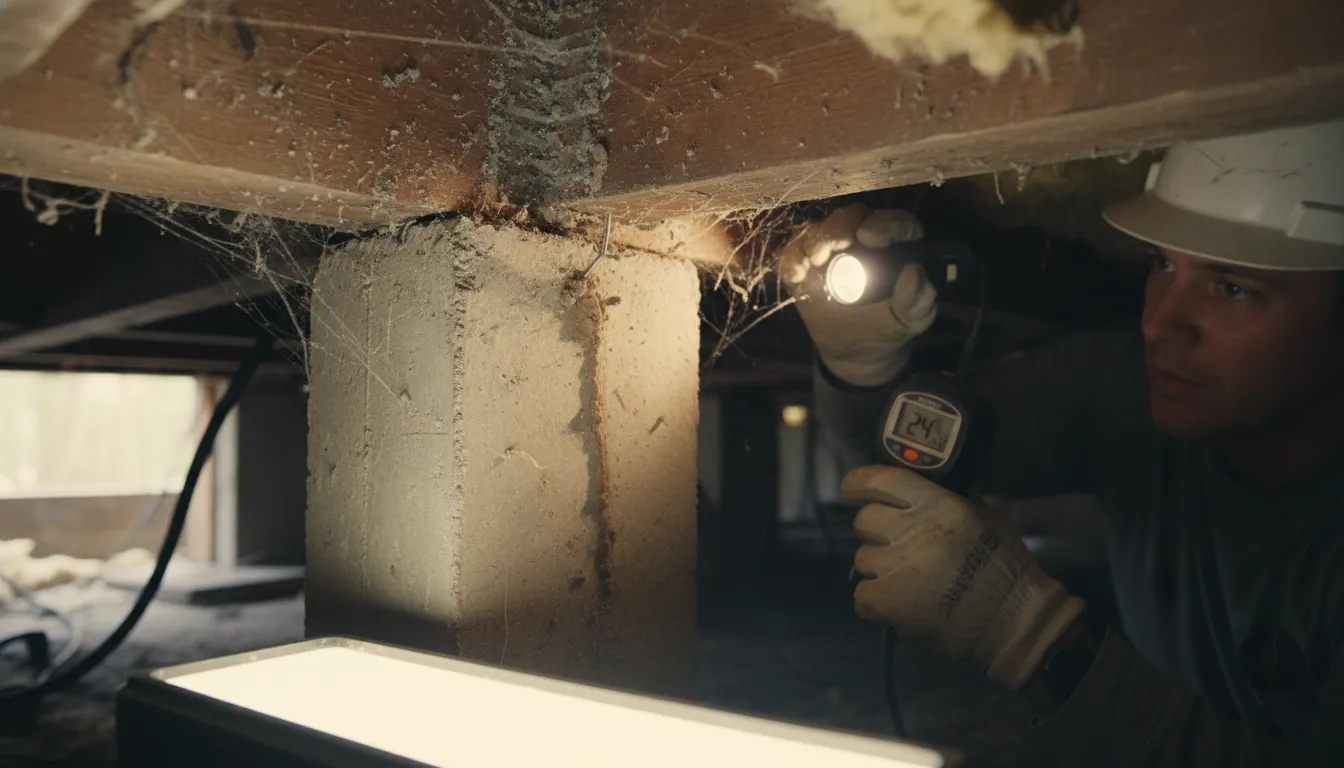
Find the Best Termite Inspection Companies for Your Business
No obligation • Fast responses • Nationwide coverage

Why you can trust Pest Crews
Pest Crews is a leading U.S. resource for finding and evaluating residential and commercial pest control services. Our team researches providers, reviews treatment approaches, and organizes unbiased information to help you make informed decisions. Companies cannot pay to change our editorial content or influence how they appear.
Search providers near you
Top Termite Inspection Companies in Perris, California Ranked
A termite inspection is a critical evaluation of your property to detect active infestations, past damage, and conditions that could attract these destructive pests. In Perris, where the warm climate is ideal for termites, a professional inspection is an essential part of responsible homeownership and real estate transactions. This guide will help you understand what a termite inspection entails, what inspectors look for, and how to find qualified local professionals to protect your investment.
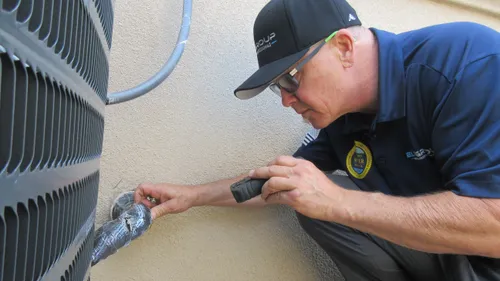
Elite Group Inspection Professionals
9480 Utica Ave #608, Rancho Cucamonga, CA 91730
Elite Group Inspection Professionals offers comprehensive termite inspection and home inspection services in San Bernardino, CA. Serving the local community and surrounding Southern California areas, they provide detailed evaluations including termite inspections, mold testing, roof certification, and more. Established in 1984, Elite Group has extensive experience conducting thorough inspections with trained technicians. Their capabilities include specialized services such as sewer scope inspections and infrared thermal imaging to detect hidden issues.
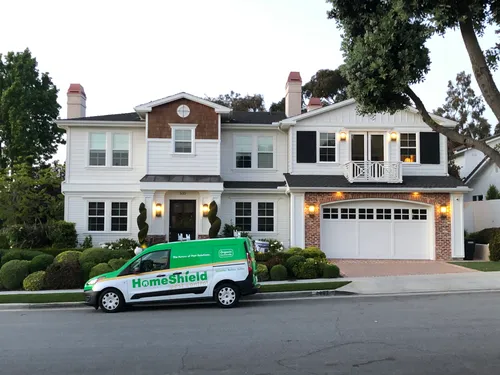
HomeShield Pest Control
850 E Parkridge Ave STE 113, Corona, CA 92879
HomeShield Pest Control offers eco-friendly pest control services in Irvine, CA, focusing on child and pet-safe solutions. They provide a range of services including home and commercial pest control, rodent and termite control, bed bug treatment, and mosquito control. HomeShield uses green pesticide products from EcoSMART, known for their 100% green insecticides. The company serves multiple regions including Orange County and the Inland Empire. They emphasize a professional and ethical approach to pest management and back their work with a 100% satisfaction guarantee and unlimited maintenance calls between scheduled services.
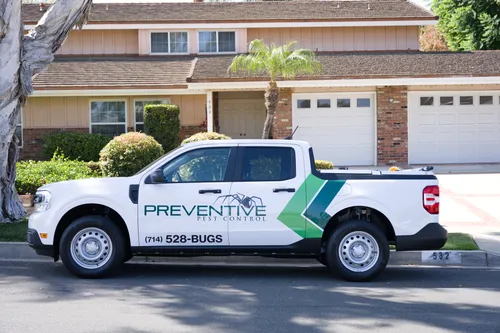
Preventive Pest Control
26060 Acero #204, Mission Viejo, CA 92691
Preventive Pest Control is a pest control company serving Irvine, CA, and nearby communities. With over 20 years of experience, they offer a wide range of services including termite inspection and treatment, ant and spider control, rodent removal, mosquito management, and wasp nest removal. Their team uses safe and effective methods tailored to both residential and commercial properties to manage and prevent pest infestations. Preventive Pest Control is known for thorough termite inspections and customized treatment plans that help protect properties from damage and recurring pest issues.
Allied Pest Control
19751 Katy Way, Corona, CA 92881
Allied Pest Control is a local pest control company serving Irvine, CA, with a focus on year-round protection against common pests such as ants, cockroaches, termites, and rodents. Established in 2001, the company offers customized pest control plans that emphasize prevention, ongoing monitoring, and eco-friendly methods including integrated pest management (IPM). They provide expert fumigation services for severe infestations and prioritize using green products to minimize environmental impact.
HomeTeam Pest Defense
1120 Palmyrita Ave STE 210, Riverside, CA 92507
HomeTeam Pest Defense provides pest control services in Riverside, CA, and surrounding areas including Orange County and San Bernardino. They handle a variety of pests such as ants, roaches, rodents, spiders, and termites. Their service includes thorough home inspections and targeted treatments, including termite control for both existing homes and new construction. The company applies a 6-Point Advantage Service to effectively manage pest issues and offers follow-up visits if problems arise between scheduled treatments.
Why Termite Inspections Are Crucial in Perris
Perris's climate creates a perfect environment for termites to thrive year-round. These pests can cause extensive, costly structural damage that is often hidden from plain sight. A thorough termite inspection, sometimes called a wood-destroying organism (WDO) inspection, is your first line of defense. It identifies not just active colonies but also vulnerabilities in your home that need to be addressed to prevent future problems. For homeowners, it's about proactive protection; for buyers and sellers, it's a standard part of the real estate process that can significantly impact a transaction1.
Common Termite Species in the Perris Area
Understanding your local adversary is key. In Perris, inspectors are on the lookout for three primary types of termites:
- Subterranean Termites: The most common and destructive type in North America. They live in underground colonies and build distinctive mud tubes to travel between their nest and food sources. They require contact with soil moisture.
- Drywood Termites: Prevalent in California, these termites infest dry, sound wood and do not need contact with soil. They are often detected by finding their pellet-like droppings, known as frass.
- Dampwood Termites: As the name suggests, they are attracted to wood with high moisture content, often due to leaks or poor ventilation. They are typically larger than other species2.
What Does a Professional Inspector Look For?
A comprehensive termite evaluation examines both the exterior and interior of your property for clear signs of activity and for "conducive conditions" that invite infestation.
Key Signs of Termite Activity
Inspectors are trained to spot subtle clues that homeowners might miss:
- Mud Tubes: Pencil-sized tunnels made of soil and saliva on foundation walls, piers, or in crawl spaces-a telltale sign of subterranean termites.
- Frass: Small, wood-colored pellets that drywood termites push out of their galleries. Piles of frass near baseboards, window sills, or in attics are a major red flag.
- Discarded Wings: Swarmers (reproductive termites) shed their wings after finding a mate. Piles of tiny, identical wings near windowsills or light sources indicate a nearby colony.
- Wood Damage: Termites eat wood from the inside out. Inspectors will probe wood with a tool to check for hollow sounds or soft spots. Blistered or peeling paint can sometimes indicate moisture from termite activity underneath3.
- Visible Termites: While often hidden, workers or swarmers may be seen during an inspection.
Conducive Conditions (What Attracts Termites)
A responsible inspection report doesn't just stop at active pests; it identifies risks that need correction 4:
- Wood-to-Soil Contact: Any structural wood, like siding or deck posts, touching the soil.
- Excessive Moisture: From plumbing leaks, poor drainage, faulty gutters, or high humidity in crawl spaces and attics.
- Mulch or Debris: Thick layers of mulch or stored wood/firewood against the home's foundation.
- Cracks and Gaps: Unsealed openings in the foundation or exterior walls that provide entry points.
The Inspection Process: Step-by-Step
Knowing what to expect can help you prepare your home. A standard inspection typically takes 45 minutes to 2 hours, depending on the property's size and complexity.
- Exterior Inspection: The inspector walks the perimeter, examining the foundation, soil lines, eaves, vents, and any attached structures like decks or fences for mud tubes, damage, or wood-soil contact5 6.
- Interior Inspection: Inside, the inspector checks baseboards, door and window casings, under sinks, in cabinets, and around plumbing penetrations. They will look for frass, probe for soft wood, and check for moisture 7.
- Attic and Crawl Space Inspection: These critical, often neglected areas are checked for termite activity, damaged wood, and proper ventilation to control moisture8.
- Moisture Assessment: Using a moisture meter, the inspector identifies damp areas in walls, floors, and subfloors that could attract termites9.
- Report Generation: After the inspection, you will receive a detailed report outlining the findings.
Find the perfect termite inspection companies for your needs
Get personalized recommendations and expert advice
Understanding Your Termite Inspection Report
In California, especially for real estate transactions, inspection reports are often formatted using a standard "Section 1, 2, and 3" framework.
- Section 1: This lists active infestations and active damage caused by wood-destroying organisms that require immediate treatment or repair.
- Section 2: This notes conditions that are likely to lead to infestation (conducive conditions), such as earth-to-wood contact or excessive moisture. These items do not require immediate treatment but should be corrected to prevent future problems.
- Section 3: This section may include further inspection recommendations, such as areas that were inaccessible during the initial inspection (e.g., a locked storage room or a covered crawl space access).
A clear understanding of this report is vital, whether you are planning corrective actions or negotiating during a home sale.
Termite Inspection Costs in Perris
The cost of a termite check can vary based on your home's size, foundation type, and the report's complexity.
- Basic Visual Inspection: For a standard single-family home, you can expect to pay between $100 and $200 for a thorough visual inspection.
- Official Report for Lending: If you need a formal report (like a NPMA-33 or California Official Inspection Report) for a mortgage lender or real estate transaction, add approximately $75 to $100 to the base inspection fee10.
- Treatment Costs (If Needed): The inspection may reveal the need for treatment. Costs vary dramatically:
- Localized Treatment: For a minor, contained infestation, spot treatments may range from $250 to $70011.
- Fumigation (Tenting): For widespread drywood termite infestations, whole-structure fumigation is often required, with costs typically ranging from $2,000 to $5,000 or more, depending on home size12.
How to Prepare for an Inspection
To ensure a smooth and effective inspection:
- Clear Access: Move boxes, stored items, and furniture away from perimeter walls, especially in garages, basements, and closets.
- Unlock Areas: Ensure the inspector can access all rooms, the attic hatch, and the crawl space door.
- Trim Landscaping: Trim back shrubs, vines, and tree branches at least 18 inches from the house to allow for a clear view of the foundation.
- Move Firewood: Relocate any firewood or lumber piles away from the structure.
Frequently asked questions
Sources
Footnotes
-
California Home Inspections- What You Need To Know(2024) - https://thebienstockgroup.com/california-home-inspections-2023/ ↩
-
Termite Exterminator in Perris - Lloyd Pest Control - https://www.lloydpest.com/service-areas/termite-exterminator-in-perris-ca ↩
-
Complete Guide to Termite Inspection for Home Purchase - https://bettertermite.com/termite-inspection-for-home-purchase/ ↩
-
What to Expect From a Termite Inspection - Official Pest Prevention - https://www.officialpestprevention.com/what-expect-from-termite-inspection/ ↩
-
What You Should Know About A Termite Inspection - AG Pest Control - https://www.agpest.com/what-you-should-know-about-a-termite-inspection/ ↩
-
Termite Inspections: What To Expect And How To Prepare - Petri Pest Control Services - https://www.petrispestcontrol.com/termite-control/termite-inspections-what-to-expect/ ↩
-
Termites and real estate inspections - https://www.clarkpest.com/residential-service-blog-old/termites-and-real-estate-inspections ↩
-
Professional Termite & WDO Inspections in Orange County CA - https://www.tridentinspectiongroup.com/termite-inspections/ ↩
-
Complete Guide to Termite Inspection in Los Angeles - https://www.termikepestcontrol.com/post/termitei-nspection-los-angeles ↩
-
California Termite Inspection: Sections 1-3 Explained - https://www.usrealtytraining.com/blogs/termite-inspection-real-estate ↩
-
How Much Does a Termite Inspection Cost? - https://patriotinspect.com/how-much-does-a-termite-inspection-cost/ ↩
-
Termite Inspection Cost [2026 Data] - Angie's List - https://www.angi.com/articles/how-much-does-termite-inspection-cost.htm ↩