Find the Best Termite Inspection Companies for Your Business
No obligation • Fast responses • Nationwide coverage

Why you can trust Pest Crews
Pest Crews is a leading U.S. resource for finding and evaluating residential and commercial pest control services. Our team researches providers, reviews treatment approaches, and organizes unbiased information to help you make informed decisions. Companies cannot pay to change our editorial content or influence how they appear.
Search providers near you
Top Termite Inspection Companies in Rocklin, California Ranked
A termite inspection is a critical evaluation of your property to detect active infestations, past damage, and conditions that could attract these destructive pests. In Rocklin, where several termite species thrive, this service is essential for protecting your largest investment-your home. This guide will help you understand what a professional termite inspector looks for, the process involved, and how to find qualified local experts to assess your property.
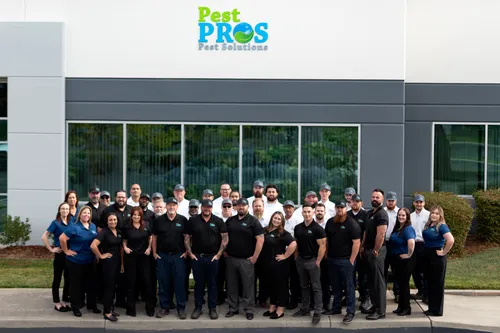
PEST PROS PEST SOLUTIONS
1016 N Market Blvd #40, Sacramento, CA 95834
PEST PROS PEST SOLUTIONS is a family owned pest control company based in Sacramento, CA, serving the Sacramento Valley and the San Francisco Bay Area. They provide a wide range of pest management services including bed bug treatment, termite inspections, rodent control, mosquito control, and commercial pest control solutions tailored to local environmental challenges. The company uses eco-friendly products and integrated pest management strategies to effectively address pest issues while minimizing environmental impact. Their expertise includes handling pests common to Northern California such as carpenter ants, termites, rodents, and mosquitoes. Pest Pros Pest Solutions emphasizes education on pest prevention and offers customized plans for both residential and commercial clients. They also provide same-day service when contacted early in the day. The company is committed to community support and environmental responsibility. Their service area covers multiple Northern California counties, ensuring broad access to their pest control expertise. Pest Pros Pest Solutions combines local knowledge with professional-grade products and techniques to manage pest problems safely and effectively.
Pest Control Center Inc.
3845 Madison Ave, North Highlands, CA 95660
Pest Control Center Inc. is a family-owned pest control company serving Sacramento, CA, and nearby communities. With over 40 years of experience, they provide comprehensive pest prevention services targeting ants, cockroaches, rodents, termites, mosquitoes, and wasps. Their offerings include thorough inspections, customized treatment plans, and eco-friendly options. The company also specializes in termite inspections and treatments, along with mosquito and fly control. Pest Control Center Inc. emphasizes ongoing monitoring and maintenance to prevent future infestations and offers flexible service schedules. They provide a 100% service guarantee and accommodate same-day service in many areas.
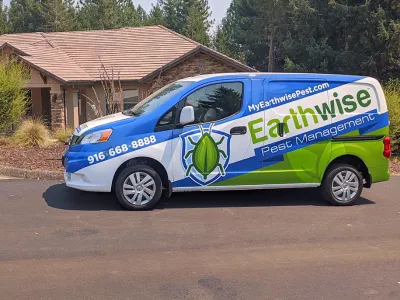
Earthwise Pest Management
4740 Northgate Blvd Ste.125, Sacramento, CA 95834
Earthwise Pest Management is a licensed and insured pest control company serving Sacramento, CA. They provide residential and commercial pest control services, including bed bug treatment, termite inspections, rodent control, and cockroach and ant extermination. The company emphasizes Integrated Pest Management techniques to minimize pesticide use and focuses on long-term pest exclusion to prevent re-infestations. Earthwise Pest Management is known for its pet-friendly and child-safe treatments and has a strong reputation supported by over 500 positive reviews.
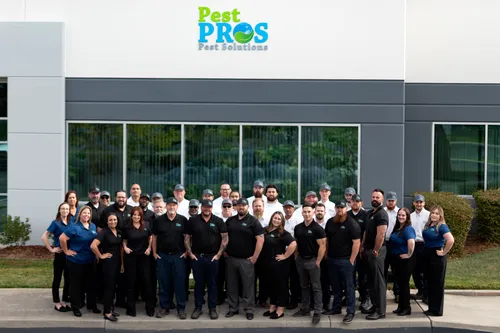
Pest Pros Pest Solutions
1100 Melody Ln STE 105, Roseville, CA 95678
Pest Pros Pest Solutions is a family-owned pest control company serving Sacramento, CA, and the broader Northern California region. They offer a wide range of services including ant, bed bug, termite, rodent, mosquito, bee and wasp, bird, and cockroach control for both residential and commercial properties. The company uses eco-friendly products and integrated pest management strategies to address local pest challenges effectively. Their commercial services are tailored to meet industry-specific needs, ensuring compliance and minimal disruption. Pest Pros Pest Solutions emphasizes education on pest behavior and prevention to provide long-term results. They serve multiple counties across Northern California and provide same-day service when contacted early in the day.

Advanced Integrated Pest Management
205 Kenroy Ln, Roseville, CA 95678
Advanced Integrated Pest Management provides pest control services in Sacramento, CA, and surrounding communities including Rocklin, Antelope, and Auburn. They offer treatments for a wide range of pests such as ants, rodents, cockroaches, bed bugs, termites, mosquitoes, and wildlife. Their services cover both residential and commercial properties, focusing on prevention and effective extermination. Advanced IPM is known for its comprehensive pest management approach in the Roseville area.
Why Termite Inspections Are Crucial in Rocklin
Rocklin's climate and environment are conducive to termite activity, making regular pest inspections a key part of home maintenance. Termites are often called "silent destroyers" because they can cause significant structural damage before homeowners even notice signs of an infestation 1. For residents and prospective buyers, a professional termite evaluation provides peace of mind and can prevent costly repairs down the line. Whether you're preparing for a real estate transaction or conducting routine preventative care, understanding the scope of a termite check is the first step in safeguarding your property.
Common Termite Species in the Rocklin Area
Knowing your enemy is half the battle. Rocklin homes can be threatened by three primary types of termites, each with distinct behaviors and signs.
- Western Subterranean Termites: This is the most common and destructive species in the region 2. They live in underground colonies and build distinctive mud tubes to travel between their nest and food sources (the wood in your home) while protecting themselves from dry air 3.
- Drywood Termites: Unlike subterranean termites, drywood termites infest dry, sound wood and do not require contact with soil. They often form smaller colonies within individual pieces of wood, like framing, furniture, or siding. Signs include piles of their pellet-like droppings, called frass, and swarms of winged reproductive termites.
- Dampwood Termites: As the name implies, these termites are attracted to wood with high moisture content 4. They are less common in sound structures but can be a problem in areas with chronic water leaks, wood-soil contact, or decaying wood.
What Does a Termite Inspector Look For?
A certified inspector conducts a meticulous visual examination of your property, both inside and out, searching for evidence of termites and conditions that invite them. Here's a breakdown of what they examine.
Exterior Inspection Points
The inspector will start outside, walking the perimeter of your home and examining all accessible areas.
- Foundation and Slab: Looking for mud tubes, which are pencil-sized tunnels of soil and saliva, running from the ground up foundation walls.
- Siding, Trim, and Exterior Wood: Checking for blistered or damaged wood, hollow-sounding timber when tapped, and cracks where termites could enter.
- Decks, Porches, and Fences: Inspecting where these structures meet the house and their support posts for signs of infestation or decay.
- Roofline and Soffits: Searching for damaged fascia boards or vents that could provide entry points.
- Vegetation and Mulch: Noting any wood-to-soil contact, such as soil piled against siding or mulch too close to the foundation, which creates a direct bridge for termites 5.
Interior Inspection Points
The inspector will then move inside to check common trouble spots.
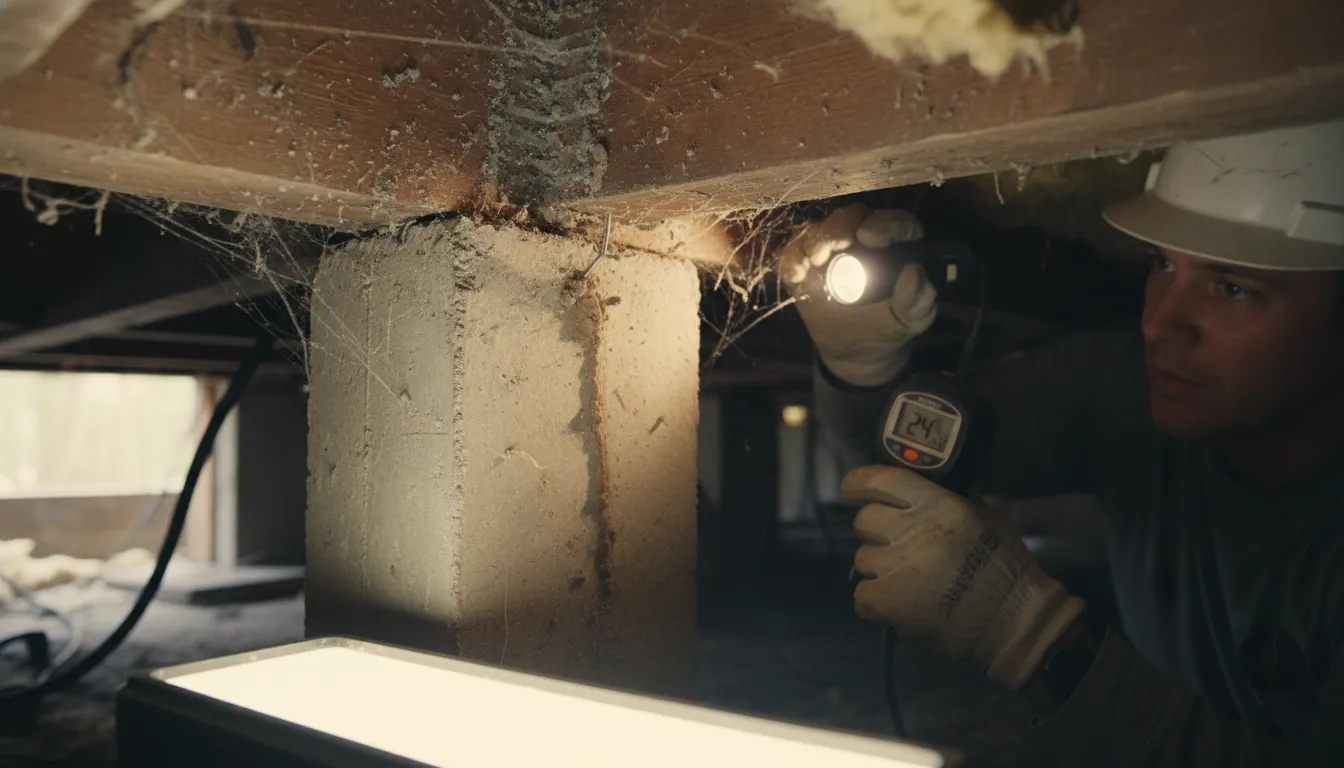
- Attics and Crawl Spaces: These are critical, often hidden areas where inspectors look for mud tubes on foundation piers, damaged wood, termite droppings (frass from drywood termites), and discarded wings from swarmers.
- Basements and Sub-areas: Checking for moisture, wood debris, and signs of subterranean termite activity on joists and subflooring.
- Interior Walls, Floors, and Ceilings: Looking for visible wood damage, pinpoint holes in drywall or wood trim, and areas that sound hollow when probed.
- Windows, Door Frames, and Baseboards: Inspecting for frass, exit holes, or weakened wood.
- Kitchens, Bathrooms, and Utility Rooms: Paying special attention to areas under sinks, around tubs, and near water heaters where moisture issues are common.
Identifying Conducive Conditions
Beyond active infestations, a thorough inspector will identify "conducive conditions"-factors that increase the risk of a future termite problem. This includes excessive moisture from leaking pipes or poor drainage, wood stored in crawl spaces, and earth-to-wood contact around the home's exterior. Addressing these conditions is a vital part of long-term prevention.
The Professional Termite Inspection Process Explained
Understanding the steps of a professional termite assessment can help you know what to expect when the inspector arrives.
- Exterior Survey: The inspector begins with a detailed walk-around your home, garage, and any outbuildings, examining the foundation, siding, and all wood elements for the signs mentioned above 6 7.
- Interior Survey: They will then inspect the interior, focusing on accessible areas like attics, crawl spaces, basements, and living areas. They may use tools like flashlights, moisture meters, and probing instruments to check wood integrity.
- Moisture Assessment: Since termites are attracted to moisture, the inspector will identify areas with high humidity, leaks, or poor ventilation that need correction 8 9.
- Reporting Findings: After the inspection, you will receive a detailed report. In California, this often follows a standardized format that categorizes findings:
- Section 1: Items with active infestation or infection (like fungus rot).
- Section 2: Conditions that are likely to lead to infestation or infection if not corrected (e.g., earth-to-wood contact, excessive moisture).
- The report will outline the findings and typically recommend a course of action, which may include treatment and repairs.
Find the perfect termite inspection companies for your needs
Get personalized recommendations and expert advice
Understanding Termite Inspection Costs in Rocklin
The cost of a termite inspection in Rocklin can vary based on the size of your home and the type of report needed.
- Basic Visual Inspection: For a typical single-family home up to 2,500 square feet, you can expect to pay between $100 and $200 for a standard visual inspection.
- Larger Properties: For bigger homes, ranging from 2,500 to 4,000+ square feet, inspection fees often range from $150 to $280 or more 10 11.
- Escrow or WDO Reports: If you need an official Wood Destroying Organism (WDO) inspection report or a "Section 1 clearance" for a real estate transaction, there is typically an additional fee of $75 to $100 for the formal report and certification letter 12 13.
- Real Estate Context: It's important to note that in most California real estate transactions, the seller is customarily responsible for paying for the termite inspection and providing the report to the buyer.
How to Prepare for a Termite Inspection
A little preparation can help the inspection go smoothly and ensure the inspector has access to all critical areas.
- Clear Access: Move boxes, stored items, and furniture away from perimeter walls, especially in garages, basements, and attics. Ensure the inspector can easily access the attic hatch and crawl space entry 14.
- Trim Vegetation: Cut back shrubs, vines, and tree branches that are touching the house to allow for a clear view of the foundation and siding.
- Address Moisture: Fix any minor leaks you are aware of and ensure downspouts direct water away from the foundation.
- Move Interior Items: Pull furniture slightly away from walls in living areas, and clear out under-sink areas in kitchens and bathrooms.
Frequently asked questions
Sources
Footnotes
-
What Does a Termite Inspector Look For? - Orkin - https://www.orkin.com/pests/termites/what-a-termite-inspector-does ↩
-
Rocklin Termite Control - https://www.rocklinpestcontrol.com/residential-pest-control/termites/ ↩
-
Subterranean and Other Termites / Home and Landscape ... - UC IPM - https://ipm.ucanr.edu/home-and-landscape/subterranean-and-other-termites/ ↩
-
Termite Types in Sacramento - Identification, Risks & Control - https://www.officialpestprevention.com/termite-types-sacramento/ ↩
-
Termite Inspections: What to Expect and How to Prepare - https://www.petrispestcontrol.com/termite-control/termite-inspections-what-to-expect/ ↩
-
Termite inspection: How it works - Western Exterminator - https://www.westernexterminator.com/termite-control/termite-inspection ↩
-
Full Guide to Professional Termite Inspections for Home Inspectors - https://www.homegauge.com/learning/home-inspectors-termites/ ↩
-
What Does A Termite Inspector Look For? - AG Pest Control - https://www.agpest.com/what-does-a-termite-inspector-look-for/ ↩
-
What Do Home Inspectors Look For? - Farmers Insurance - https://www.farmers.com/learn/insurance-questions/what-do-home-inspectors-look-for/ ↩
-
How Much Does a Termite Inspection Cost? - https://patriotinspect.com/how-much-does-a-termite-inspection-cost/ ↩
-
Termite Inspection Cost - https://goodlifeinspections.com/blog/termite-inspection-cost/ ↩
-
California Termite Inspection: Sections 1-3 Explained - https://www.usrealtytraining.com/blogs/termite-inspection-real-estate ↩
-
Is A Termite Inspection Required in California? - https://eliteinspections.com/are-termite-inspections-required-in-california/ ↩
-
How to Prepare Your House for a Termite Inspection? - https://www.hitechtermite.com/articles/how-to-prepare-your-house-for-a-termite-inspection ↩