Find the Best Termite Inspection Companies for Your Business
No obligation • Fast responses • Nationwide coverage

Why you can trust Pest Crews
Pest Crews is a leading U.S. resource for finding and evaluating residential and commercial pest control services. Our team researches providers, reviews treatment approaches, and organizes unbiased information to help you make informed decisions. Companies cannot pay to change our editorial content or influence how they appear.
Search providers near you
Top Termite Inspection Companies in San Jacinto, California Ranked
A termite inspection is a critical evaluation of your property for evidence of wood-destroying organisms, primarily termites. In San Jacinto's climate, these pests pose a significant threat to the structural integrity of homes. This process matters because early detection can prevent extensive, costly damage. You can use the information here to understand what a local inspection entails and how to find qualified professionals to assess your home.
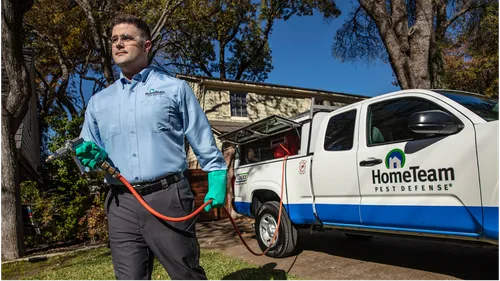
HomeTeam Pest Defense
1120 Palmyrita Ave STE 210, Riverside, CA 92507
HomeTeam Pest Defense provides pest control services in Riverside, CA, and surrounding areas including Orange County and San Bernardino. They handle a variety of pests such as ants, roaches, rodents, spiders, and termites. Their service includes thorough home inspections and targeted treatments, including termite control for both existing homes and new construction. The company applies a 6-Point Advantage Service to effectively manage pest issues and offers follow-up visits if problems arise between scheduled treatments.

Terminix Commercial
1387 Center St, Riverside, CA 92507
Terminix Commercial offers comprehensive pest control services in Los Angeles, CA, specializing in commercial pest management. Their services include treatment and prevention for bed bugs, cockroaches, ants, rodents, termites, bees, wasps, and wildlife removal. The company provides tailored pest control plans such as the PESTFREE365 and termite protection systems to address common and costly pest issues. With a local team familiar with the area's pest challenges and backed by a nationwide network, Terminix Commercial ensures effective pest management solutions for businesses. They also offer termite inspections and continuous protection systems to prevent structural damage. The company serves a wide range of communities around Los Angeles and Riverside, including Ontario and San Bernardino.
Corky's Pest Control
21803 Cactus Ave Suite E - F, Riverside, CA 92518
Corky's Pest Control is a pest control company serving Los Angeles, CA, offering a wide range of services including bed bug treatment, ant and cockroach control, rodent management, termite inspection and fumigation, mosquito treatment, bee and wasp removal, and wildlife relocation. Established in 1967, the company applies detailed inspections and modern methods to address pest issues effectively. They provide specialized capabilities such as termite fumigation and hive relocation for bees, ensuring safety and environmental care. Corky's Pest Control focuses on long-lasting pest management solutions tailored to residential properties.
Lloyd Pest & Termite Control
7167 Old 215 Frontage Rd, Riverside, CA 92507
Lloyd Pest & Termite Control provides comprehensive pest management services in Riverside, CA, addressing common local pests such as ants, roaches, termites, rodents, bees, and wasps. The company serves both residential and commercial clients, tailoring pest control plans to the diverse needs of neighborhoods and business types in the area. Lloyd Pest & Termite Control is fully licensed, bonded, and insured, offering expertise in termite inspections and removal as well as ongoing pest prevention strategies. Their services cover a wide range of property types including homes, restaurants, schools, and industrial buildings.

Outstanding Pest Solutions
12631 Foxdale Dr, Moreno Valley, CA 92553
Outstanding Pest Solutions is a pest and termite control company serving Riverside, CA, and surrounding counties. They provide services for both residential and commercial properties, including homes, apartments, hotels, warehouses, schools, and more. Their offerings include general pest control, termite inspection and treatment, bed bug chemical and heat treatments, cockroach control, rodent control and proofing, attic cleaning and sanitizing, and insulation replacement. The company covers Riverside, San Bernardino, San Diego, Los Angeles, and Orange Counties.
Why Termite Inspections Are Essential in San Jacinto
The warm, dry climate of the Inland Empire is ideal for termites, making regular inspections a key part of home maintenance. Both drywood and subterranean termites are prevalent here, and they can cause severe structural damage that often isn't visible until it's extensive and expensive to repair. A professional termite check provides peace of mind for homeowners and is a standard requirement during real estate transactions. By identifying active infestations or conditions that attract termites, you can address problems proactively and protect your investment.
Common Termite Species in the Area
Local inspectors are trained to look for signs of the two primary species active in Southern California:
- Drywood Termites: These pests are particularly common due to San Jacinto's hot, dry summers. They live entirely within wood and do not require contact with soil. They often enter through attic vents or roof eaves and can establish colonies in framing, furniture, or siding.
- Subterranean Termites: The most destructive species nationwide, these termites build colonies in the soil and create mud tubes to travel to their food source-your home's wood. They require moisture and are often found in areas with poor drainage or wood-to-soil contact.
What a Professional Inspector Looks For
A thorough termite inspection in San Jacinto is a systematic search for evidence and conducive conditions. Inspectors examine all accessible areas of your home, both inside and out.
Exterior Signs:
- Mud Tubes: pencil-sized tunnels on foundations, piers, or crawlspace walls.
- Wood-to-Soil Contact: Where siding, decks, or framing touches the ground.
- Damaged Wood: Blistered or hollow-sounding wood on siding, trim, or eaves.
- Cracks in Foundation: Potential entry points for subterranean termites.
- Discarded Wings: Piles of tiny wings near windowsills or doors, especially after a swarm.
Interior & Hidden Area Signs:
- Frass: Drywood termite droppings that resemble fine sawdust or coffee grounds, often found beneath kick-out holes.
- Damaged Structural Wood: Soft, hollow-sounding wood in baseboards, window frames, door jambs, and beams.
- Moisture Issues: Leaky pipes, poor ventilation in crawlspaces, and water damage that attracts termites.
- Evidence in Crawlspaces and Attics: These dark, often undisturbed areas are prime locations for colonies.
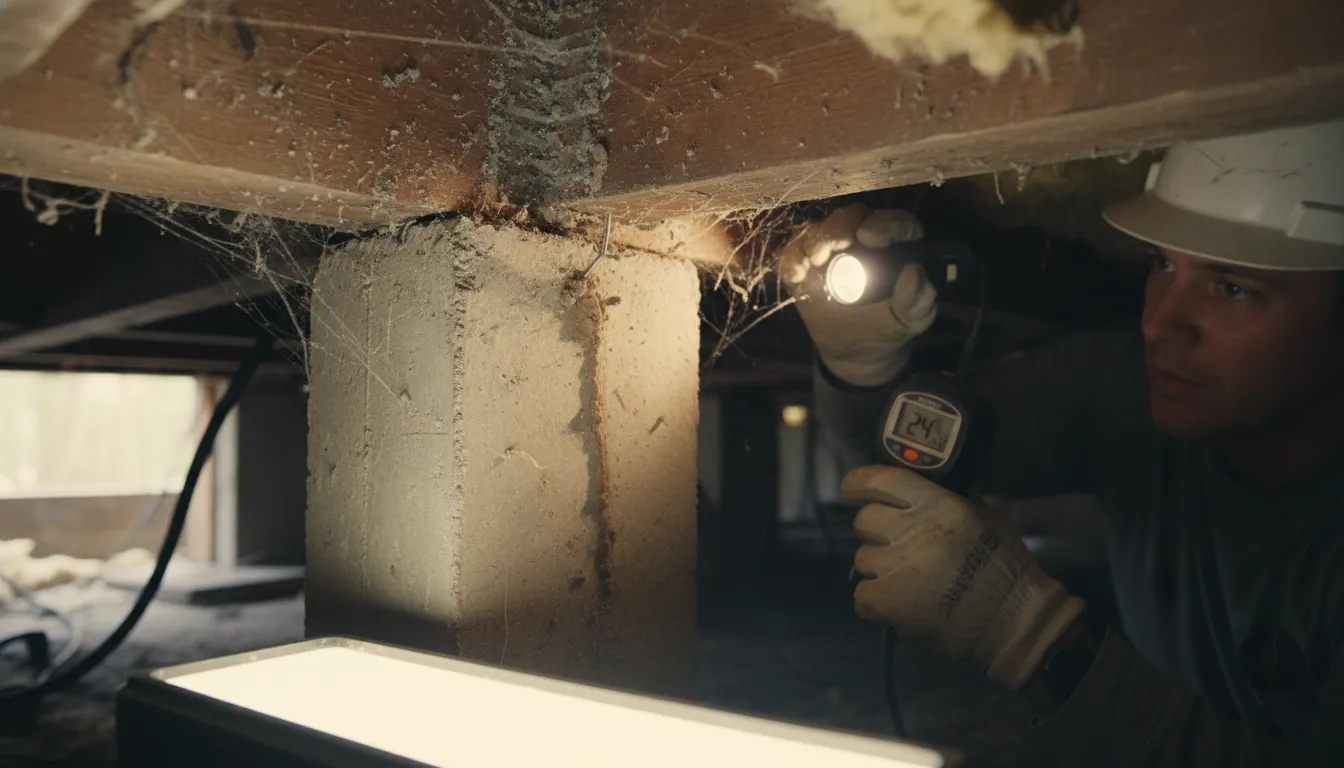
Inspectors use tools like flashlights, moisture meters, probes, and sometimes infrared cameras to detect hidden moisture and activity within walls 1.
The Step-by-Step Inspection Process
Understanding the process can help you know what to expect when a professional arrives at your San Jacinto home.
- Visual & Systematic Examination: The inspector will conduct a detailed walk-through of your property's exterior perimeter, interior rooms, closets, garage, attic, and crawlspace.
- Evidence Gathering: The inspector documents any live activity, mud tubes, frass, damaged wood, or discarded wings. The species and extent of the infestation are noted.
- Condition Assessment: Beyond active termites, the inspector identifies "conducive conditions" that could lead to future problems. This includes excessive moisture, wood debris near the foundation, and faulty grade levels 2.
- Reporting: You will receive a detailed written report. For real estate transactions, this is often a formal Wood Destroying Organism (WDO) report. It typically includes a diagram of the property marking infested areas (Section 1 items) and areas with conducive conditions (Section 2 items), along with treatment and repair recommendations 3 4 5.
Find the perfect termite inspection companies for your needs
Get personalized recommendations and expert advice
Understanding Inspection Costs and Reports
The cost for a termite inspection in San Jacinto can vary based on your home's size and the report's purpose.
- Basic Inspection: For a typical home under 2,500 square feet, a standard visual inspection often ranges from $100 to $150.
- Official WDO/Real Estate Report: If you need a formal report for a loan or escrow, expect to pay an additional $75 to $100 or more for the official documentation and letter.
- Treatment & Repair Costs: If an infestation is found, treatment costs vary dramatically based on the termite type, colony size, and treatment method (e.g., local spot treatment vs. whole-structure fumigation), ranging from $200 to over $2,500 6. Repair costs for damaged wood are separate and can be significant.
The key takeaway is to expect a thorough check for both drywood and subterranean termites, with a focus on moisture and wood damage, for an initial cost typically between $100 and $200 in the local area 7 8 9 10.
How to Prepare for an Inspection
To ensure the inspection is as effective as possible:
- Clear Access: Move boxes, stored items, and furniture away from perimeter walls, in closets, and in the garage. Ensure the inspector can access the attic hatch and crawlspace entry.
- Trim Landscaping: Cut back shrubs, vines, and tree branches that touch the house to allow for a clear view of the foundation and siding.
- Address Moisture: Fix leaky faucets, downspouts, and ensure the ground slopes away from your foundation to reduce conducive conditions.
Prevention Tips for San Jacinto Homeowners
After an inspection, prevention is crucial.
- Eliminate Wood-to-Soil Contact: Keep firewood, lumber, and mulch away from your home's foundation.
- Manage Moisture: Repair leaks promptly, use dehumidifiers in crawlspaces, and ensure your HVAC drip lines drain away from the house.
- Seal Entry Points: Caulk cracks in the foundation and around utility lines.
- Ventilate: Ensure attics and crawlspaces are properly ventilated to reduce humidity.
- Schedule Regular Inspections: Consider an annual or bi-annual check, especially if your property has had issues before.
Frequently asked questions
Sources
Footnotes
-
What Does A Termite Inspector Look For? - AG Pest Control - https://www.agpest.com/what-does-a-termite-inspector-look-for/ ↩
-
The Complete Guide to Termite Inspection in San Diego - https://www.agpest.com/the-complete-guide-to-termite-inspection-in-san-diego/ ↩
-
The Value of Termite Inspections - Clark Pest Control - https://www.clarkpest.com/residential-service-blog-old/the-value-of-termite-inspections ↩
-
Termite Inspection - https://www.specialtyteam.com/?page_id=301 ↩
-
Termites and real estate inspections - https://www.clarkpest.com/residential-service-blog-old/termites-and-real-estate-inspections ↩
-
Termite Inspections for Homebuyers: Requirements & Costs - https://www.freedommortgage.com/learning-center/articles/termite-inspection-home-purchase ↩
-
Termite Control in California - Western Exterminator - https://www.westernexterminator.com/local-branches/california/termites ↩
-
What You Should Know About A Termite Inspection - AG Pest Control - https://www.agpest.com/what-you-should-know-about-a-termite-inspection/ ↩
-
California Termite Inspection: Sections 1-3 Explained - https://www.usrealtytraining.com/blogs/termite-inspection-real-estate ↩
-
Termites - San Jacinto Pest Control Xperts - https://sanjacintopestcontrolxperts.com/termites/ ↩