Find the Best Termite Inspection Companies for Your Business
No obligation • Fast responses • Nationwide coverage

Why you can trust Pest Crews
Pest Crews is a leading U.S. resource for finding and evaluating residential and commercial pest control services. Our team researches providers, reviews treatment approaches, and organizes unbiased information to help you make informed decisions. Companies cannot pay to change our editorial content or influence how they appear.
Search providers near you
Top Termite Inspection Companies in Santee, California Ranked
A termite inspection is a critical evaluation of your property to detect the presence of wood-destroying organisms, primarily termites. In a region like Santee, where these pests are a constant threat, a professional assessment is essential for protecting your home's structural integrity and value. This guide explains what a termite inspection entails, what inspectors look for, and how you can connect with qualified local professionals to schedule your evaluation.
HomeShield Pest Control
9434 Chesapeake Dr #1208, San Diego, CA 92123
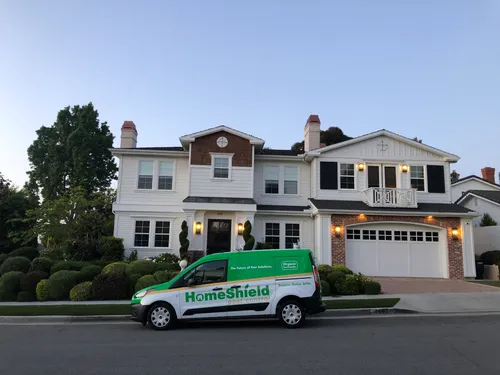
HomeShield Pest Control is a locally owned company based in San Diego, CA, offering eco-friendly pest control services for homes and businesses. They specialize in managing a variety of pests including bed bugs, cockroaches, ants, rodents, termites, and mosquitoes. The company uses green pesticide solutions from EcoSMART, focusing on child and pet safety while addressing local pest challenges. HomeShield provides commercial and residential pest control with a 100% service guarantee and unlimited maintenance calls between scheduled visits. They serve multiple regions including Sacramento, the Bay Area, Orange County, Los Angeles, the Inland Empire, and South Florida.
Neighbors Pest Solutions
San Diego, CA
Neighbors Pest Solutions offers pest control services in San Diego, CA, addressing common household pests such as ants, spiders, roaches, rodents, bed bugs, and termites. They provide customized treatments using safe and environmentally friendly methods to protect homes year-round. The company serves residential customers throughout San Diego County, including nearby communities like La Jolla and Mira Mesa. Their approach includes guaranteed re-treatment if pests return after the initial service.
Pest Patrol, Inc.
9920 Scripps Lake Dr Suite 107, San Diego, CA 92131
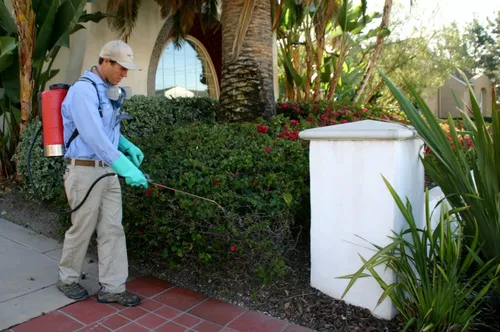
Pest Patrol, Inc. is a family-owned pest control company serving San Diego, CA, since 1982. They provide a wide range of pest management services including rodent control, termite inspections, bee and wasp removal, and commercial pest control. Their technicians specialize in attic restoration and decontamination, offering detailed inspections with photo documentation for transparency. Pest Patrol covers all of San Diego County and supports real estate escrow clearances as part of their termite inspection services.
HomeShield Pest Control - Carlsbad
San Diego, CA
HomeShield Pest Control - Carlsbad offers eco-friendly pest control services in San Diego, CA. They specialize in home and commercial pest management, including rodent control, termite inspections, bed bug treatments, and mosquito control. The company uses green pesticide solutions from EcoSMART, focusing on child and pet safety. HomeShield serves a broad area across California and South Florida, providing local expertise on pest pressures. They emphasize a professional and ethical approach to pest control with a 100% service satisfaction guarantee.
EcoGuard Pest Management
120 N Pacific St, San Marcos, CA 92069
EcoGuard Pest Management is a family-owned pest control company based in San Diego, CA. They provide a range of services including cockroach, ant, rodent, and termite control, using eco-friendly products that are safe for children, pets, and clients. Their approach includes a comprehensive five-point inspection and treatment program to address general and specialty pests such as subterranean termites. EcoGuard also offers rodent services involving inspection, trapping, sanitation, and sealing of entry points, as well as termite inspection, pre-treatment, treatment, and fumigation.
Why Termite Inspections Are Crucial in Santee
Santee's climate is ideal for termites, making regular inspections a non-negotiable part of home maintenance. Termites work silently, often causing extensive damage before homeowners notice any signs. A professional termite check can identify early evidence of activity, allowing for targeted treatment that can save thousands of dollars in potential repair costs. For those buying or selling a home, a formal Wood-Destroying Organism (WDO) inspection report is frequently a mandatory step in the real estate transaction process.
Common Termite Species in Santee
Understanding your local adversary is key. In Santee and throughout Southern California, two primary types of termites pose a threat:
- Drywood Termites: These pests are very common in the region. They live inside the wood they consume and do not require contact with soil to survive. Colonies are typically smaller than subterranean ones, but they can infest multiple areas of a structure, including attics, walls, and furniture.
- Subterranean Termites: Known for causing the most structural damage, subterranean termites work faster and in larger colonies. They require contact with moisture and build distinctive mud tubes to travel between their underground nests and their food source-your home's wood1 2 3.
What a Professional Inspector Looks For
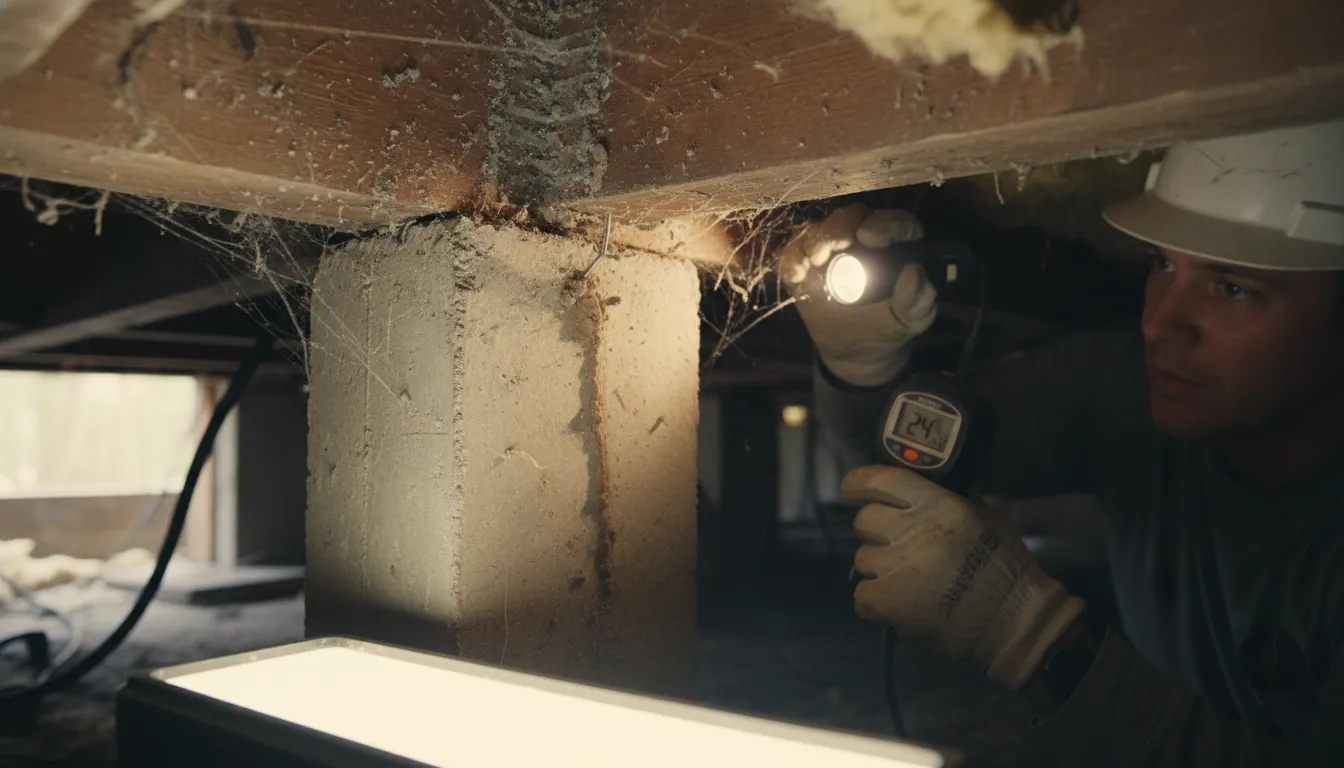
A thorough termite assessment is a systematic process. A certified inspector will conduct a detailed visual examination of both the interior and exterior of your property, searching for telltale signs of infestation and conditions conducive to termite activity.
Key Signs of Infestation:
- Mud Tubes: These pencil-sized tunnels on foundation walls, piers, sill plates, and floor joists are the hallmark of subterranean termites.
- Frass: Drywood termites produce tiny, wood-colored, pellet-shaped droppings. Piles of this sawdust-like material near baseboards, window sills, or in attics are a clear indicator.
- Damaged Wood: Inspectors will probe wood with a tool, listening for a hollow sound and looking for wood that appears blistered, dark, or has a honeycomb interior texture 4.
- Discarded Wings: After swarmers (reproductive termites) take flight, they shed their wings. Finding small, identical wings near windowsills, doors, or spider webs is a common sign of a nearby colony 5.
- Visible Termites: While often hidden, workers or swarmers may be spotted during an inspection.
Common Inspection Areas: The inspection is comprehensive, covering all accessible areas:
- Exterior: Foundation perimeter, siding, door and window frames, eaves, vents, landscaping ties, tree stumps, and fences.
- Interior: Basements, crawl spaces, attics, garages, and all rooms, paying special attention to areas under sinks, around tubs, and where plumbing penetrates walls.
- Structural Elements: Floor joists, support posts, sill plates, and roof sheathing.
The Tools of the Trade
To aid their visual inspection, professionals use specialized equipment:
- Moisture Meters: Since termites are attracted to moisture, these devices help locate areas with high humidity in walls and wood, which are prime targets for infestation 6.
- Probes and Pick Tools: These are used to tap on wood and probe into areas that may be damaged to assess its soundness7.
- Infrared Cameras: Thermal imaging can sometimes detect temperature differences caused by moisture or termite activity within walls, helping to pinpoint problem areas that are not visible to the naked eye8.
Find the perfect termite inspection companies for your needs
Get personalized recommendations and expert advice
Understanding Inspection Costs in Santee
The cost of a termite evaluation in Santee depends on the size of your home and the type of report needed. Based on local market data, you can expect the following general price ranges 9:
- Basic Inspection: For a typical single-family home under 2,500 square feet, a standard visual inspection typically costs between $100 and $150. This provides a verbal or simple written summary of findings.
- Larger Properties: For homes over 2,500 square feet or multi-unit buildings, the price generally ranges from $150 to $225 due to the increased time and scope.
- Official WDO Report (Section 1): If you need a formal report for a real estate transaction (often called a Section 1 report), you should budget an additional $75 to $100 or more on top of the inspection fee for the official documentation10.
How to Prepare for Your Inspection
To ensure the inspector can perform a thorough and efficient evaluation, a little preparation is helpful11 12:
- Clear Access: Remove stored items, boxes, and debris from your attic, garage, basement, and crawl space access points.
- Move Interior Items: Pull furniture and stored goods away from perimeter walls by at least two feet, especially in closets and utility rooms.
- Exterior Perimeter: Trim back shrubs, vines, and tree branches touching the house. Move firewood, mulch, or lumber away from the foundation.
- Provide Access: Ensure all rooms, closets, and access panels (including those for attics and crawl spaces) are unlocked and accessible.
The Inspection Report: Understanding Your Findings
After the evaluation, you will receive a report detailing the findings. In formal reports, issues are often categorized:
- Section 1: This lists active infestations or visible damage from wood-destroying organisms that require correction.
- Section 2: This notes conditions that are conducive to future infestation (e.g., earth-to-wood contact, excessive moisture) and recommends repairs to prevent problems. Understanding this report is crucial for deciding on any necessary treatment or preventative measures.
Frequently asked questions
Sources
Footnotes
-
Termites and Southern California - https://ecolatermite.com/termites-and-southern-california/ ↩
-
Species of Termites Found in California - https://www.mightymitetermite.com/blog/species-of-termites-found-in-california/ ↩
-
Termite Inspections - https://www.georgia.brickkicker.com/termite-inspections/ ↩
-
Termite Information : How to Check for Termites - https://www.youtube.com/watch?v=PLBXpFB-qAo ↩
-
What Does A Termite Inspector Look For? - AG Pest Control - https://www.agpest.com/what-does-a-termite-inspector-look-for/ ↩
-
Full Guide to Professional Termite Inspections for Home Inspectors - https://www.homegauge.com/learning/home-inspectors-termites/ ↩
-
What Does a Termite Inspector Look For? - Orkin - https://www.orkin.com/pests/termites/what-a-termite-inspector-does ↩
-
The Complete Guide to Termite Inspection in San Diego - https://www.agpest.com/the-complete-guide-to-termite-inspection-in-san-diego/ ↩
-
How Much Does a Termite Inspection Cost? - https://patriotinspect.com/how-much-does-a-termite-inspection-cost/ ↩
-
California Termite Inspection: Sections 1-3 Explained - https://www.usrealtytraining.com/blogs/termite-inspection-real-estate ↩
-
How to Prepare Your House for a Termite Inspection? - https://www.hitechtermite.com/articles/how-to-prepare-your-house-for-a-termite-inspection ↩
-
Spring Termite Inspection: Your 5 Step Prep - https://ecolatermite.com/spring-termite-inspection-your-5-step-prep/ ↩