Find the Best Termite Inspection Companies for Your Business
No obligation • Fast responses • Nationwide coverage
Why you can trust Pest Crews
Pest Crews is a leading U.S. resource for finding and evaluating residential and commercial pest control services. Our team researches providers, reviews treatment approaches, and organizes unbiased information to help you make informed decisions. Companies cannot pay to change our editorial content or influence how they appear.
Search providers near you
Top Termite Inspection Companies in Vallejo, California Ranked
A termite inspection is a critical evaluation of your property to identify active infestations, past damage, and conditions that could attract wood-destroying organisms. In Vallejo, where several destructive termite species thrive, these assessments are essential for protecting your investment and ensuring a safe home. This guide will help you understand the process, what inspectors look for, and how to find qualified local professionals to conduct a thorough examination.
HomeShield Pest Control
2065 N Broadway # 202, Walnut Creek, CA 94596
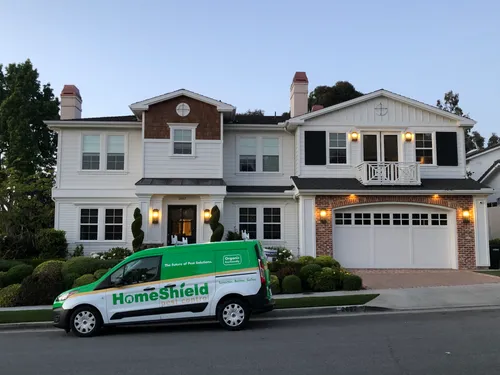
HomeShield Pest Control offers eco-friendly pest control services in Oakland, CA, focusing on child and pet-safe solutions. They provide a range of services including termite control, rodent management, bed bug treatment, mosquito control, and commercial pest control. HomeShield uses green insecticides from EcoSMART and guarantees satisfaction with unlimited maintenance calls between scheduled visits. The company serves multiple regions including the Sacramento and Bay Areas, Orange County, Los Angeles, San Diego, the Inland Empire, and South Florida.
Pest Pros Pest Solutions
2520 Stanwell Dr Suite 102, Concord, CA 94520
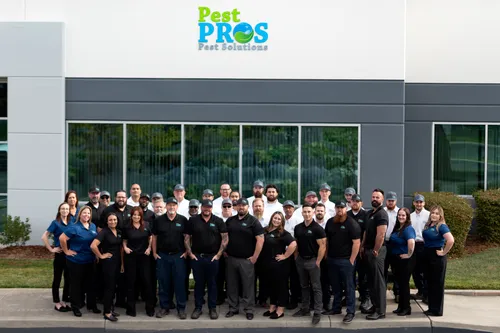
Pest Pros Pest Solutions is a family-owned pest control company serving Oakland, CA, and the broader Northern California region. They provide a wide range of pest management services including bed bug treatment, termite inspections, rodent control, mosquito control, and commercial pest solutions. The company uses eco-friendly products and integrated pest management strategies tailored to local pest challenges, such as seasonal infestations and structural threats like termites. Pest Pros Pest Solutions emphasizes education on pest prevention and offers customized plans for both residential and commercial clients. Their service area covers multiple counties around the Sacramento Valley and San Francisco Bay Area.
HomeShield Pest Control
999 Sutter St #202, San Francisco, CA 94109
HomeShield Pest Control offers eco-friendly pest control services in San Jose, CA, specializing in residential and commercial pest management. Their services include treatment for bed bugs, cockroaches, ants, rodents, termites, and mosquitoes, using green products from EcoSMART. HomeShield is locally owned and focuses on safe, child- and pet-friendly solutions. They serve a broad area including the Bay Area and Southern California. The company emphasizes a professional and ethical approach to pest control and provides a 100% service satisfaction guarantee with unlimited maintenance calls between scheduled visits.

Bay Area Home Inspections
551 25th Ave, San Francisco, CA 94121
Bay Area Home Inspections is a licensed termite inspection company serving San Francisco, CA. They provide thorough termite inspections as part of their comprehensive home and commercial property inspection services. Utilizing modern technology such as thermal imaging and drones, their licensed inspectors identify wood-destroying pests and other issues that may affect property value and safety. Established in 2008, the company combines extensive experience with advanced tools to deliver detailed digital reports. Their inspectors are certified and trained to meet industry standards, ensuring accurate and reliable inspections.
Crown & Shield Pest Solutions
4230 Petaluma Blvd N, Petaluma, CA 94952
Crown & Shield Pest Solutions is a pest control company serving Santa Rosa, CA, and the surrounding areas. They offer comprehensive pest management services including treatment for ants, roaches, termites, rodents, bed bugs, mosquitoes, and more. With over 27 years of experience since 1999, they use environmentally responsible products and advanced techniques to protect homes safely and effectively. Their termite control includes specialized treatments like Termidor applications and chemical-free heat treatments. They also provide rodent control with inspection, trapping, and exclusion backed by a one-year guarantee. Recurring pest control plans and no-contract options are available to suit different needs.
Why Termite Inspections Are Crucial in Vallejo
Vallejo's climate and geography create an ideal environment for termites. The most common types found in the area are subterranean, drywood, and dampwood termites 1. Each species behaves differently and causes unique damage, making a professional pest inspection your first line of defense. Subterranean termites, which build mud tubes from the soil to wood, are responsible for the vast majority of structural damage nationwide 2 3. Drywood termites infest dry wood above ground, leaving behind telltale piles of fecal pellets (frass), while dampwood termites target wood with high moisture content 4 5. An inspection can catch an infestation early, potentially saving you thousands in repair costs and preserving the structural integrity of your home.
What a Professional Inspector Examines
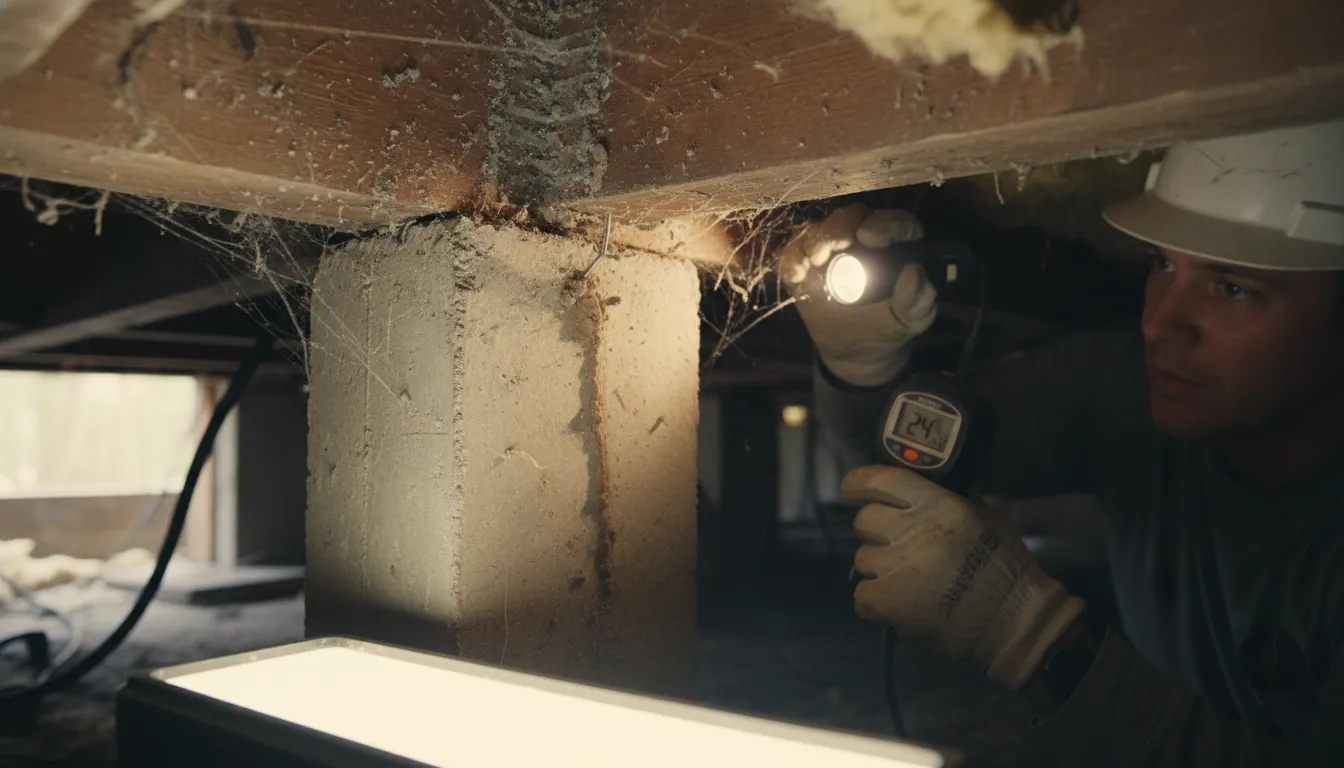
A licensed termite inspector conducts a meticulous visual examination of both the interior and exterior of your property, focusing on accessible areas where termites are likely to thrive 6.
Exterior Inspection Points
The inspector will walk the perimeter of your home, looking for:
- Mud Tubes: These pencil-sized tunnels on foundations, walls, or piers are a classic sign of subterranean termite activity.
- Damaged or Hollow-Sounding Wood: Probing exposed wood, especially where it contacts the soil.
- Cracks in the Foundation: Potential entry points for pests.
- Vegetation and Debris: Wood piles, mulch, or overgrown plants near the foundation that retain moisture and provide shelter.
- Trees and Stumps: Checking for infestations in nearby wood that could spread to the structure.
Interior & Sub-Area Inspection Points
Inside, the inspector will examine:
- Attics, Crawlspaces, and Basements: These dark, often humid areas are prime targets for all termite species 7.
- Window Frames, Door Frames, and Baseboards: Looking for blistering, darkening, or maze-like patterns in the wood.
- Evidence of Frass: Small, pellet-like droppings from drywood termites, often found on windowsills or under infested wood.
- Moisture-Prone Areas: Under sinks, around plumbing leaks, in bathrooms, and laundry rooms where dampwood termites or conducive conditions may exist 8.
Find the perfect termite inspection companies for your needs
Get personalized recommendations and expert advice
Understanding the California Pest Inspection Report
In California, the findings of a wood-destroying pest inspection are formally documented in a standardized report. Understanding this report is key to knowing the status of your property.
- Section 1 Items: This section lists active infestations and visible damage caused by termites or other wood-destroying organisms. These items must be cleared (treated and repaired) for most real estate transactions to proceed.
- Section 2 Items: This section notes conducive conditions that are not currently causing damage but could lead to future infestations. Examples include earth-to-wood contact, excessive moisture, or fungal decay. Addressing these issues is recommended to prevent future problems 9.
- The Inspection Report: A comprehensive report includes detailed descriptions, diagrams marking findings, and photographs of all Section 1 and Section 2 items 10 11. It should also provide an estimate for any recommended treatment or repair work.
- Escrow Clearance Letter: If you are buying or selling a home, a lender will typically require a "clearance" confirming that all Section 1 items have been addressed. Obtaining this official letter is a separate step after treatment is completed.
What to Expect: Cost and Process
The cost of a termite inspection in Vallejo is generally straightforward and is influenced by the size of your home and the type of report needed.
- Basic Inspection: For a typical single-family home (under 2,500 sq. ft.), you can expect to pay between $100 and $150 for a complete visual inspection and report.
- Larger Properties: For larger homes, multi-unit buildings, or properties with complex layouts, inspection fees may range from $150 to $225.
- Additional Fees: If you need a Section 1 clearance letter for a real estate transaction, there is usually an additional fee of $75 to $100 to issue the formal documentation.
The inspection process itself usually takes 45 minutes to a few hours. To prepare, ensure the inspector has clear access to attics, crawlspaces, garage interiors, and the perimeter of your home by moving stored items away from walls 12. A reputable inspector will walk you through their findings and explain the report in detail.
Treatment Options Following an Inspection
If the inspection reveals an active infestation (a Section 1 item), the inspector will discuss treatment options. The right solution depends on the termite species and the extent of the infestation.
- Localized or Spot Treatment: For small, isolated drywood termite colonies, a direct wood treatment may be sufficient, with costs typically starting around $250 to $700 or more depending on the scope 13.
- Whole-Structure Treatments: For widespread drywood infestations, fumigation (tenting) may be necessary. For subterranean termites, soil treatments or baiting systems around the home's perimeter are common solutions. The inspection report should include a clear estimate for any recommended treatment, allowing you to make an informed decision to protect your property.
Frequently asked questions
Sources
Footnotes
-
Controlling Common Types of Termites in Bay Area, CA - https://www.mightymitetermite.com/termites/common-termites/ ↩
-
Types of Termites Found in California - https://www.fennpest.com/blog/types-of-termites-ca ↩
-
Subterranean and Other Termites / Home and Landscape ... - UC IPM - https://ipm.ucanr.edu/home-and-landscape/subterranean-and-other-termites/ ↩
-
Termites and Southern California - https://ecolatermite.com/termites-and-southern-california/ ↩
-
Types of Termites Found in California - https://www.fennpest.com/blog/types-of-termites-ca ↩
-
Termite inspection: How it works - Western Exterminator - https://www.westernexterminator.com/termite-control/termite-inspection ↩
-
Full Guide to Professional Termite Inspections for Home Inspectors - https://www.homegauge.com/learning/home-inspectors-termites/ ↩
-
What Does A Termite Inspector Look For? - AG Pest Control - https://www.agpest.com/what-does-a-termite-inspector-look-for/ ↩
-
California Pest Inspection Report: Section 1 vs. Section 2 - https://www.tuscanaproperties.com/blog/section-1-vs-section-2-disclosures-on-a-pest-inspection-report/ ↩
-
Termite Control in California - Western Exterminator - https://www.westernexterminator.com/local-branches/california/termites ↩
-
Bay Area Termite Inspections Northern California - HomeGuard - https://homeguard.com/services/termite-inspections/ ↩
-
How to Prepare Your House for a Termite Inspection? - https://www.hitechtermite.com/articles/how-to-prepare-your-house-for-a-termite-inspection ↩
-
California Termite Inspection: Sections 1-3 Explained - https://www.usrealtytraining.com/blogs/termite-inspection-real-estate ↩