Find the Best Termite Inspection Companies for Your Business
No obligation • Fast responses • Nationwide coverage

Why you can trust Pest Crews
Pest Crews is a leading U.S. resource for finding and evaluating residential and commercial pest control services. Our team researches providers, reviews treatment approaches, and organizes unbiased information to help you make informed decisions. Companies cannot pay to change our editorial content or influence how they appear.
Search providers near you
Top Termite Inspection Companies in Orlando, Florida Ranked
A termite inspection is a specialized assessment of a property to detect the presence, evidence, or conducive conditions for wood-destroying organisms. In Orlando, this service is critical due to the region's warm, humid climate, which creates an ideal environment for several destructive termite species. This guide will help you understand the process, what inspectors look for, and how to find qualified professionals in the Orlando area to protect your investment.

Custom Pest Solutions Inc
2200 N Forsyth Rd K-09, Orlando, FL 32807
Custom Pest Solutions Inc is a pest control and wildlife removal company based in Orlando, FL. They provide customized pest and animal control services tailored to the unique environments of homes and businesses in Central Florida. Their approach emphasizes green pest control methods that are environmentally responsible and safe for families, pets, and employees. The company uses integrated pest management strategies, including preventative measures and habitat modification, to manage pests sustainably while protecting the comfort and security of their clients' properties.

RH Miller Pest Services, Inc
137 Concord Dr STE 1101, Casselberry, FL 32707
RH Miller Pest Services, Inc is a pest control company based in Orlando, FL, serving both residential and commercial clients. They provide a range of services including rodent control, termite inspections, wildlife removal, and lawn application treatments. The company offers Integrated Pest Management (IPM) and rodent exclusion as part of their capabilities. Appointments are typically available Monday through Friday during regular business hours.
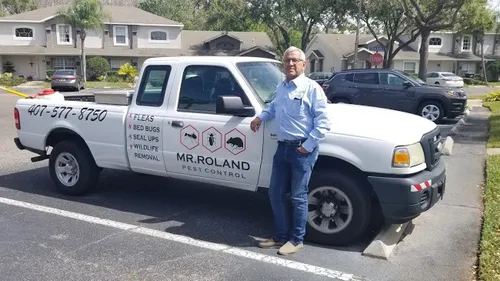
Mr Roland Pest Control, LLC
1830 Island Walk Dr, Orlando, FL 32824
Mr Roland Pest Control, LLC is a family-owned pest control company based in Orlando, FL, serving residential and commercial properties in the area and surrounding Central Florida. With over six years of experience, they provide licensed and certified pest control services including rodent removal, bed bug treatment, mosquito reduction, termite services, and wildlife relocation. Their approach includes not only extermination but also decontamination of affected areas to ensure thorough pest management.
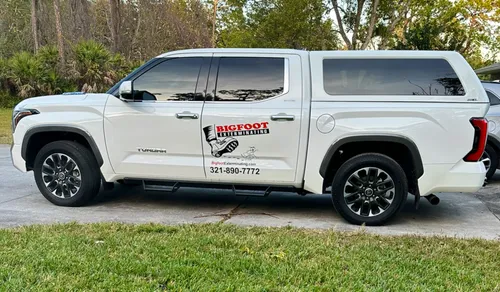
Bigfoot Exterminating
7225 Turkey Point Dr, Titusville, FL 32780
Bigfoot Exterminating is a pest control company serving Orlando, FL, and surrounding areas including Mims, Titusville, and Cocoa. They provide a range of pest control services for homes and businesses, including treatment for ants, cockroaches, bed bugs, rodents, mosquitoes, wasps, and termites. The company offers eco-friendly and all-natural mosquito reduction options and conducts thorough inspections to identify pest sources before treatment. They also provide flexible scheduling and emergency after-hours assistance.
Rowland Pest Management, Inc.
2609 Wells Ave, Casselberry, FL 32730
Rowland Pest Management, Inc. is a family-owned pest control company serving Orlando, FL, and surrounding Central Florida communities. They provide pest control services for homes and small businesses, including treatment for ants, cockroaches, bed bugs, rodents, termites, mosquitoes, and wasps. Their approach includes thorough pest inspections and eco-friendly, pet- and family-safe products. The company offers same-day and Saturday appointments to address infestations quickly. Since 2015, Rowland Pest Management has specialized in targeted termite treatments with ongoing monitoring and monthly mosquito control to reduce disease-carrying insects.
Why Termite Inspections Are Essential in Orlando
Florida's climate is a paradise not just for people, but for termites. The state's high humidity and frequent rainfall provide the moisture these pests need to thrive. For Orlando homeowners and prospective buyers, a wood-destroying organism (WDO) inspection is more than a precaution-it's a vital step in property due diligence. Florida law requires sellers to disclose known termite issues, making a professional evaluation crucial for understanding potential risks and liabilities before a transaction is finalized. An inspection can reveal hidden damage that could compromise the structural integrity of your home, leading to costly repairs if left unchecked.
Common Termite Species in Orlando
Knowing your enemy is the first step in defense. Orlando is home to several types of termites, each with distinct behaviors and signs.
- Eastern Subterranean Termite: This is the most common and widespread species in Florida. They live in underground colonies and build distinctive mud tubes to travel between their nest and food sources (your home's wood). They are responsible for the majority of significant structural damage in the region.
- Formosan Subterranean Termite: Often called "super termites," this aggressive species is also subterranean but can form massive colonies and consume wood much faster than native species. Their presence requires immediate and aggressive treatment.
- Drywood Termites: Unlike subterranean types, drywood termites infest dry, sound wood and do not require contact with soil. They are often introduced into homes via infested furniture or firewood. A key sign of their activity is the presence of hard, sand-like fecal pellets known as frass 1 2.
- Florida Dampwood Termite: As the name implies, these termites are attracted to wood with high moisture content, typically in decaying logs, stumps, or areas with chronic leaks. They are less common in sound structural wood but indicate serious moisture problems 3 4.
The Professional Termite Inspection Process
A thorough termite evaluation is a systematic examination of both the interior and exterior of a property. Here's what you can expect from a qualified Orlando inspector.
Preparation for the Inspection
To ensure a comprehensive assessment, homeowners should prepare by clearing access to key areas. This includes moving items away from foundation walls, clearing clutter in crawlspaces and attics, and ensuring access to areas under sinks, around tubs, and behind appliances. Good access allows the inspector to examine every potential hotspot.
Exterior Inspection
The inspector will start outside, walking the perimeter of the home and examining outbuildings. Key exterior targets include:
- Foundation Walls: Scrutinizing for the pencil-sized mud tubes that subterranean termites use as highways.
- Wood-to-Soil Contact: Checking for fence posts, deck supports, stair stringers, or siding that directly contacts the soil, which provides termites easy access.
- Landscaping: Noting mulch, wood piles, or dense vegetation pressed against the home's siding, as these retain moisture and can harbor termites.
- Eaves, Soffits, and Roof Lines: Looking for damaged wood, exit holes, or frass from drywood termites.
Interior Inspection
Inside the home, the inspector will examine all accessible wood elements.
- Visual Checks: Looking along baseboards, window and door frames, and in cabinets for signs of damage, mud tubes, or frass.
- Sound Testing: Tapping on wood with a tool or knuckle to listen for a hollow sound, which indicates internal damage 5.
- Probing: Using a sharp tool to probe wood that appears damaged to see if it is solid or has been hollowed out.
Inspection of Attics and Crawlspaces
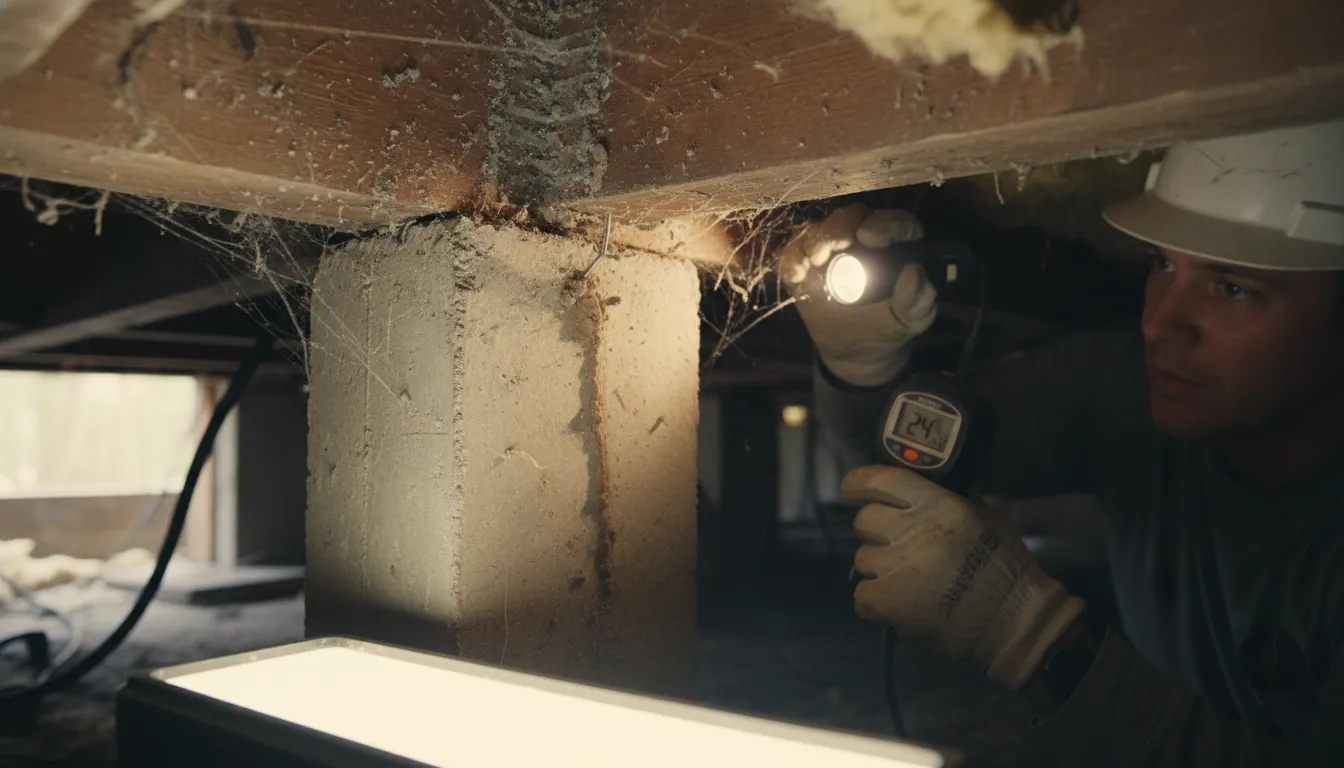
These often-overlooked spaces are critical in a WDO inspection. In the attic, the inspector will examine roof sheathing, rafters, and insulation for signs of moisture, frass, or damaged wood. In crawlspaces, they look for mud tubes on piers and girders, check vapor barriers, and assess overall moisture levels-a primary attractant for pests.
Tools of the Trade
Beyond flashlights and probing tools, modern inspectors may use advanced technology:
- Infrared Cameras: These can detect temperature differences behind walls, potentially revealing moisture from leaks or the metabolic heat of a large termite colony.
- Acoustic Emission Devices: Sensitive microphones can sometimes pick up the sound of termites chewing inside wood.
- Moisture Meters: Used to identify areas of elevated wood moisture, a key risk factor for termites and decay fungi.
The Inspection Report
After the assessment, you will receive a detailed written report, often following the NPMA-33 WDO inspection form. This report should clearly state whether there is evidence of active infestation, past damage, or conducive conditions (like excessive moisture or wood-soil contact). This document is essential for real estate transactions and for planning any necessary corrective actions or treatments.
Find the perfect termite inspection companies for your needs
Get personalized recommendations and expert advice
What Do Inspectors Look For? Key Signs of Termites
Understanding the telltale indicators can help you monitor your own property between professional inspections.
- Mud Tubes: The classic sign of subterranean termites. These shelter tubes are about the width of a pencil and are typically found on foundation walls, in crawlspaces, or running along pipes.
- Damaged Wood: Wood that sounds hollow when tapped, appears crushed or layered (like a honeycomb), or is visibly crumbling. Paint that is bubbling or cracking can also indicate moisture and termite activity behind it.
- Frass: This term refers to drywood termite droppings. They are tiny, hard, six-sided pellets that are often found in small piles below "kick-out" holes in infested wood 6 7.
- Discarded Wings: After a termite swarm, reproductive termites (alates) shed their wings. Piles of small, identical wings near windowsills, doors, or light fixtures are a strong sign of a recent swarm nearby 8.
- Live Swarmers or Workers: Seeing winged "swarmers" indoors is a clear red flag. You might also rarely see pale, soft-bodied worker termites if you break open an active mud tube or damaged wood.
- Conducive Conditions: Inspectors note factors that invite termites, such as faulty grading that pools water near the foundation, leaking gutters or pipes, and excessive indoor humidity 9.
Understanding Termite Inspection Costs in Orlando
The cost of a termite inspection in Orlando can vary based on the size of the home, the level of detail required, and the technologies used. It's important to view this as an investment in protecting your property's value.
- Basic Visual Inspection: Typically ranges from $50 to $150. This covers a standard visual assessment of readily accessible areas of the home and is common for routine check-ups or basic real estate due diligence.
- Detailed/Comprehensive Inspection: Can range from $200 to $325 or more. This more thorough service includes examination of crawlspaces, attics, and detached structures like garages or sheds. It often incorporates advanced tools like moisture meters or infrared cameras and is recommended for older homes, homes with a history of pests, or for buyers seeking the highest level of assurance 10 11.
Always ensure you receive a detailed written report for the fee paid. Be wary of "free" inspections, as they may be a sales tactic for treatment services without providing an unbiased, thorough report.
Frequently asked questions
Sources
Footnotes
-
What Termites are in Florida? | Common Termites in Orlando FL - https://www.myheronhome.com/pest/termites/identification/what-termites-are-in-my-area/ ↩
-
Termite Control in California - https://www.westernexterminator.com/local-branches/california/termites ↩
-
Types of Termites in Florida: Termite Identification & Control Guide - https://www.barrybugs.com/post/types-of-termites-in-florida-termite-identification-and-control-guide ↩
-
Types of Termites in Florida: Common Species - https://www.flapest.com/termites/identification/what-termites-are-in-my-area/ ↩
-
How to Prepare Your House for a Termite Inspection? - https://www.hitechtermite.com/articles/how-to-prepare-your-house-for-a-termite-inspection ↩
-
What Does a Termite Inspector Look For? - Orkin - https://www.orkin.com/pests/termites/what-a-termite-inspector-does ↩
-
Termite Inspections In Florida - Reynolds Pest Control - https://www.reynoldspest.com/termite-inspections-in-florida ↩
-
Orlando Area Termite (WDO) Inspections | CFBI - https://cfbinspect.com/termite-wdo-inspections/ ↩
-
Why Termite Inspections Matter for Florida Homeowners - https://www.hopehomeinspections.com/inspection-information/termites/ ↩
-
Protecting Homes From Termite Damage - https://orlandohomeinspection.com/blog/termite-inspection/termite-damage-prevention/ ↩
-
How Much Does a Termite Inspection Cost in Florida? - https://www.hofferpest.com/blog/2025/may/how-much-does-a-termite-inspection-cost-in-flori/ ↩