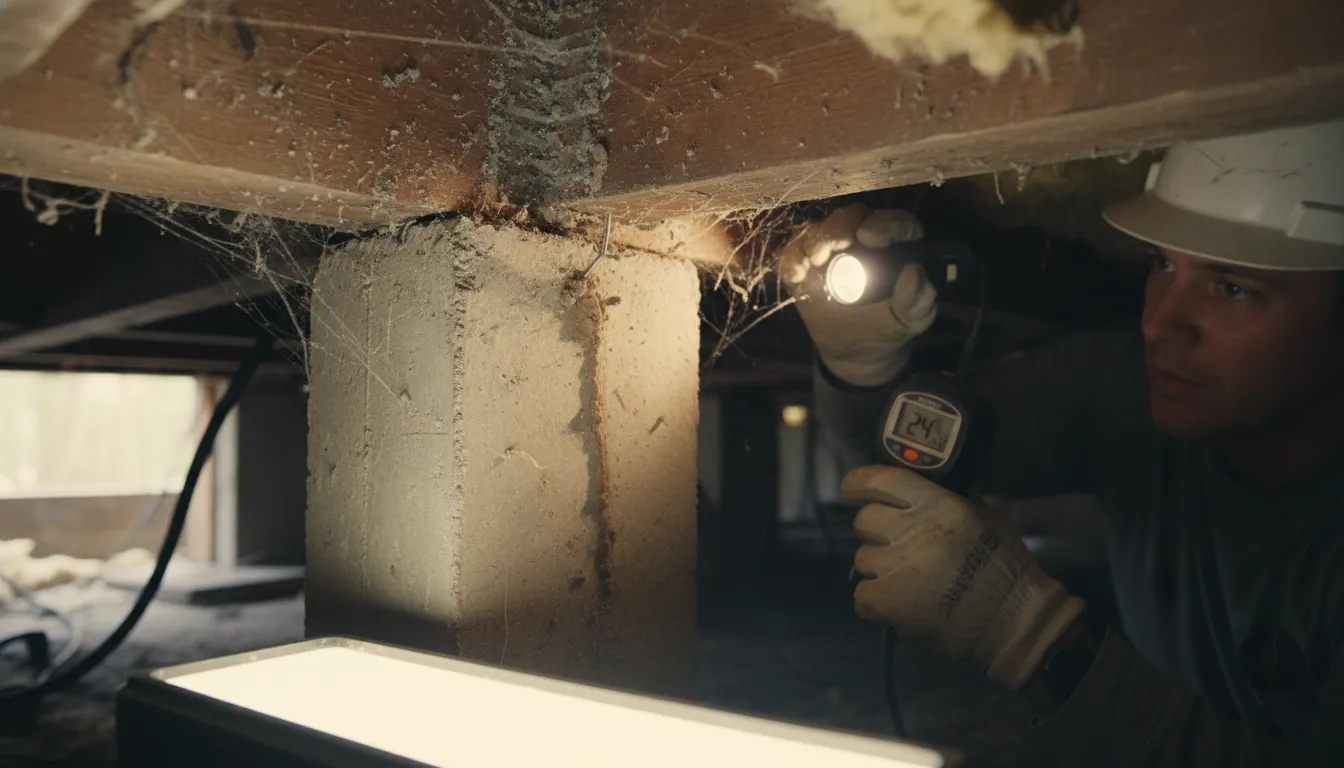
Find the Best Termite Inspection Companies for Your Business
No obligation • Fast responses • Nationwide coverage

Why you can trust Pest Crews
Pest Crews is a leading U.S. resource for finding and evaluating residential and commercial pest control services. Our team researches providers, reviews treatment approaches, and organizes unbiased information to help you make informed decisions. Companies cannot pay to change our editorial content or influence how they appear.
Search providers near you
Top Termite Inspection Companies in Port St Lucie, Florida Ranked
A termite inspection is a specialized evaluation of your property to detect the presence or risk of wood-destroying organisms. In Port St. Lucie, this service is critical due to our warm, humid climate, which creates an ideal environment for destructive termite colonies. This guide explains what a termite check involves, why it's essential for local homeowners, and how you can use this information to connect with qualified professionals in your area for a thorough assessment.
Ben's Pest Control, llc
1592 SE Village Green Dr C, Port St. Lucie, FL 34952
Ben's Pest Control, LLC is a family-owned pest control company based in Port St Lucie, FL. They provide full-service pest and termite control for homeowners in Port St Lucie and surrounding areas including Stuart, Fort Pierce, Vero Beach, and Jensen Beach. Their services include cockroach and rodent control as well as termite inspections and treatments. The company focuses on protecting homes from pest damage and contamination.
JCM Building Services
117 NE Naranja Ave, Port St. Lucie, FL 34983
JCM Building Services is a termite inspection company based in Port St Lucie, FL. They provide a range of inspection services including termite inspections, home inspections, wind mitigation, roof inspections, and moisture intrusion inspections. The company uses infrared thermal imaging as a standard part of their home inspections to detect hidden issues. JCM Building Services also offers commercial property inspections and insurance-related inspections. Their services help homeowners and commercial clients understand the condition of their properties and identify potential problems such as moisture intrusion and termite damage.
Nozzle Nolen Pest Solutions
513 NW Enterprise Dr, Port St. Lucie, FL 34986
Nozzle Nolen Pest Solutions is a pest control company serving Port St Lucie, FL, with expertise in rodent control, termite inspections, mosquito control, and commercial pest management. They offer year-round pest and rodent control plans, including environmentally sensitive Integrated Pest Management (IPM) and customizable service bundles. Established in 1951, Nozzle Nolen has a long-standing reputation in South Florida and uses eco-friendly methods to protect properties while maintaining a commitment to ethical business practices.
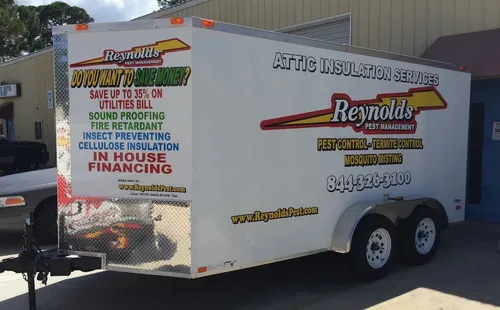
Reynolds Pest Management, Inc.
1572 SE South Niemeyer Cir, Port St. Lucie, FL 34952
Reynolds Pest Management, Inc. is a family-owned pest control company serving Port St Lucie, FL, and surrounding areas including Jupiter and South Florida. Established in 1991, they provide a range of pest management services such as bed bug treatment, termite inspections, rodent control, mosquito control, and wildlife removal. With over 25 years of experience, Reynolds Pest Management offers comprehensive solutions for both residential and commercial properties.
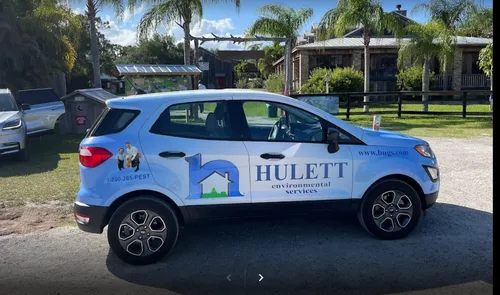
Hulett Environmental Services
2820 Reynolds Dr, Fort Pierce, FL 34945
Hulett Environmental Services provides comprehensive pest control and termite treatment in Port St Lucie, FL. Serving the surrounding South Florida area, they offer services for residential and commercial properties, including bed bug treatment, rodent control, termite inspections, mosquito control, and bird and bee removal. With over 50 years of experience, Hulett Environmental Services uses proactive and eco-friendly methods such as no-tent termite treatments and targeted larvicidal mosquito control to manage infestations effectively.
Why Termite Inspections Are Non-Negotiable in Port St. Lucie
Florida's subtropical environment makes it a national hotspot for termite activity, and Port St. Lucie is no exception. The consistent warmth and moisture allow termite colonies to thrive and feed year-round, often without immediate detection. A professional termite evaluation is your first and best defense against these silent destroyers. Left unchecked, termites can compromise the structural integrity of your home, leading to repairs that can cost tens of thousands of dollars. Regular inspections are a proactive measure to protect your largest investment.
The Two Primary Culprits: Subterranean and Drywood Termites
Understanding your enemy is key. In our region, inspectors are primarily looking for evidence of two distinct types of termites, each with different behaviors and signs.
- Subterranean Termites: These are the most common and destructive species in Florida. They live in underground colonies and build distinctive mud tubes to travel between their nest and food sources (your home's wood) while protecting themselves from open air. An inspection will meticulously search for these pencil-sized tubes on foundations, crawl space walls, and support piers.
- Drywood Termites: Unlike their subterranean cousins, drywood termites infest dry wood directly and do not require contact with soil. They are often introduced into homes through infested furniture or firewood. Their telltale signs are small, hard, wood-colored fecal pellets (called frass) that they push out of "kick-out" holes in the wood, and piles of discarded swarmer wings near windowsills or light fixtures 1 2 3.
What Does a Professional Inspector Look For?
A comprehensive termite assessment is a detailed visual investigation. The inspector acts as a detective, searching for both active infestations and conditions that could lead to one. Here's what the process entails:
Primary Evidence of Infestation:
- Mud Tubes: Earth-colored tunnels on concrete foundations, inside crawl spaces, or along walls.
- Damaged Wood: Wood that sounds hollow when tapped, appears blistered or dark, or shows visible maze-like patterns (galleries) beneath the surface 4.
- Termite Droppings (Frass): Accumulations of tiny, granular pellets, often found beneath kick-out holes in window frames, door frames, or attic beams.
- Swarmer Wings: Piles of discarded, equal-length wings left behind by reproductive termites (alates) after they swarm, typically found near light sources.
Conducive Conditions: Beyond active signs, inspectors identify factors that attract termites. These include:
- Wood-to-Soil Contact: Where fence posts, deck supports, or siding touch the ground.
- Excess Moisture: From leaky pipes, poor drainage, faulty gutters, or improper ventilation in crawl spaces.
- Cellulose Debris: Stacks of firewood, lumber, or tree stumps stored against the home's foundation 5.
The Inspection Process: Step-by-Step
A thorough termite inspection in Port St. Lucie is methodical and covers both the interior and exterior of your property.
- Exterior Examination: The inspector walks the perimeter of your home, examining the foundation, exterior walls, window and door frames, roof eaves, and any attached structures like decks or garages. They look for mud tubes, damaged wood, and conducive conditions.
- Interior Investigation: Inside, the inspector will check areas prone to moisture and wood contact. This includes:
- Attics and Crawl Spaces: Key areas for spotting drywood termite frass, damaged rafters, and mud tubes on foundation walls.
- Basements and Garages: Especially along sill plates and where concrete meets wood.
- Living Areas: Focusing on baseboards, under sinks, around windows, and in closets.
- Use of Tools: While primarily visual, inspectors may use tools like moisture meters to detect hidden water sources in walls and flooring, and infrared cameras to identify temperature anomalies that could indicate hidden termite activity 6.
- The Report: After the evaluation, you should receive a detailed written report outlining all findings, noting any evidence of active or previous infestation, listing conducive conditions, and recommending any necessary treatment or corrective actions 7.
Find the perfect termite inspection companies for your needs
Get personalized recommendations and expert advice
How to Prepare for Your Termite Inspection
To ensure the inspector can perform a complete and accurate assessment, a little preparation on your part is highly recommended 8.
- Clear Access: Remove stored items, boxes, and clutter from your attic, garage, and crawl space access points. Move items away from basement walls and foundation interiors.
- Create Space: In utility rooms, under sinks, and in closets, clear a path so the inspector can see the walls and floors.
- Trim the Exterior: Move firewood, lumber, and dense vegetation at least 18 inches away from your home's foundation. Ensure the inspector can easily walk around the entire house.
- Move Furniture: If possible, pull furniture a few inches away from walls in key rooms to allow for a better view of baseboards.
Understanding Termite Inspection Costs in Port St. Lucie
The price of a termite inspection can vary based on the size of your home, the scope of the inspection, and the company you choose. Here's a general breakdown of what you might expect:
- Basic or Initial Inspection: Many reputable companies offer a free initial inspection as a way to assess your property and discuss their services 9.
- Standard Visual Inspection: For a formal, detailed visual inspection, homeowners can typically expect to pay between $50 and $150. This fee is sometimes waived if you proceed with a treatment plan.
- Detailed Inspection with Advanced Tools: More comprehensive inspections that include moisture meters, infrared imaging, or are required for real estate transactions may range from $200 to $325 10 11.
Remember, the cost of an inspection is minimal compared to the potential cost of undetected termite damage. It's a valuable investment in your peace of mind and your home's longevity.
Beyond the Inspection: Next Steps
What happens after the inspector completes their report?
- No Activity Found: If the report is clear, the inspector will likely note any conducive conditions you should address (e.g., fixing a leak, removing wood debris) to keep your home protected. They may recommend a schedule for future inspections, often annually.
- Evidence of Infestation: If active termites or significant damage is found, the inspector will provide a detailed treatment plan and quote. This is the time to ask questions about the proposed methods (e.g., liquid soil treatments, bait systems, wood treatments for drywood termites), warranties, and what the treatment process entails.
Frequently asked questions
Sources
Footnotes
-
Types of Termites in Florida: Termite Identification & Control Guide - https://www.barrybugs.com/post/types-of-termites-in-florida-termite-identification-and-control-guide ↩
-
South Florida Termite Identification Guide for Homeowners - https://nozzlenolen.com/blog/south-florida-termite-identification-guide-for-homeowners-nn/ ↩
-
What You Need To Know About Termite Inspections - https://thedailypest.vikingpest.com/termite-inspection ↩
-
Termite Inspections In Florida - Reynolds Pest Control - https://www.reynoldspest.com/termite-inspections-in-florida ↩
-
Take Advantage of Conducive Conditions for Termites - https://pestcontrol.basf.us/multimedia/takeadvantagetermitescondition.html ↩
-
What Does A Termite Inspector Look For? - AG Pest Control - https://www.agpest.com/what-does-a-termite-inspector-look-for/ ↩
-
Termite Inspections St. Lucie County - https://www.guardianangelinspections.com/termite-inspection-port-st-lucie-county ↩
-
Spring Termite Inspection: Your 5 Step Prep - https://ecolatermite.com/spring-termite-inspection-your-5-step-prep/ ↩
-
Pest Control & Termite Treatment: Local Exterminators - https://www.terminix.com/ ↩
-
How Much Does a Termite Inspection Cost in Florida? - https://www.hofferpest.com/blog/2025/may/how-much-does-a-termite-inspection-cost-in-flori/ ↩
-
Termite Inspection in Port Saint Lucie, FL - Costs 01 / 2026 - Homeyou - https://www.homeyou.com/fl/termite-inspection-port-saint-lucie-costs ↩