Find the Best Termite Inspection Companies for Your Business
No obligation • Fast responses • Nationwide coverage

Why you can trust Pest Crews
Pest Crews is a leading U.S. resource for finding and evaluating residential and commercial pest control services. Our team researches providers, reviews treatment approaches, and organizes unbiased information to help you make informed decisions. Companies cannot pay to change our editorial content or influence how they appear.
Search providers near you
Top Termite Inspection Companies in Winter Garden, Florida Ranked
A termite inspection is a specialized evaluation of your property to detect the presence or evidence of destructive wood-destroying organisms. In Florida's warm, humid climate, these inspections are not just a formality-they are a critical defense against costly structural damage. This guide explains what a termite inspection entails in Winter Garden, why it's essential for homeowners and buyers, and how you can use this information to connect with qualified local professionals for your property's protection.

Custom Pest Solutions Inc
2200 N Forsyth Rd K-09, Orlando, FL 32807
Custom Pest Solutions Inc is a pest control and wildlife removal company based in Orlando, FL. They provide customized pest and animal control services tailored to the unique environments of homes and businesses in Central Florida. Their approach emphasizes green pest control methods that are environmentally responsible and safe for families, pets, and employees. The company uses integrated pest management strategies, including preventative measures and habitat modification, to manage pests sustainably while protecting the comfort and security of their clients' properties.

RH Miller Pest Services, Inc
137 Concord Dr STE 1101, Casselberry, FL 32707
RH Miller Pest Services, Inc is a pest control company based in Orlando, FL, serving both residential and commercial clients. They provide a range of services including rodent control, termite inspections, wildlife removal, and lawn application treatments. The company offers Integrated Pest Management (IPM) and rodent exclusion as part of their capabilities. Appointments are typically available Monday through Friday during regular business hours.
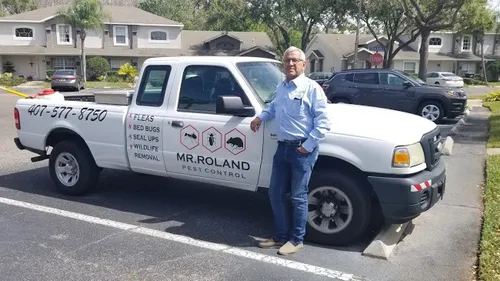
Mr Roland Pest Control, LLC
1830 Island Walk Dr, Orlando, FL 32824
Mr Roland Pest Control, LLC is a family-owned pest control company based in Orlando, FL, serving residential and commercial properties in the area and surrounding Central Florida. With over six years of experience, they provide licensed and certified pest control services including rodent removal, bed bug treatment, mosquito reduction, termite services, and wildlife relocation. Their approach includes not only extermination but also decontamination of affected areas to ensure thorough pest management.
Rowland Pest Management, Inc.
2609 Wells Ave, Casselberry, FL 32730
Rowland Pest Management, Inc. is a family-owned pest control company serving Orlando, FL, and surrounding Central Florida communities. They provide pest control services for homes and small businesses, including treatment for ants, cockroaches, bed bugs, rodents, termites, mosquitoes, and wasps. Their approach includes thorough pest inspections and eco-friendly, pet- and family-safe products. The company offers same-day and Saturday appointments to address infestations quickly. Since 2015, Rowland Pest Management has specialized in targeted termite treatments with ongoing monitoring and monthly mosquito control to reduce disease-carrying insects.
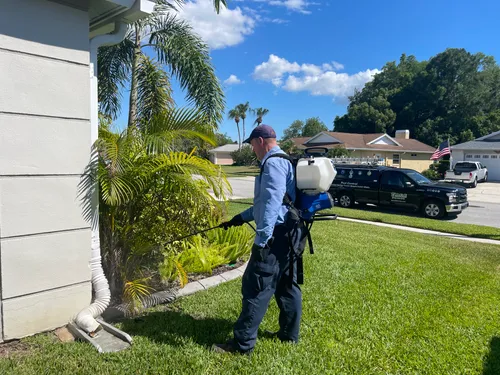
McCall Pest & Wildlife - Orlando
5892 S Semoran Blvd Building B, Orlando, FL 32822
McCall Pest & Wildlife - Orlando provides pest control services in Orlando, FL, addressing common pests such as cockroaches, ants, rodents, termites, mosquitoes, and wildlife. With over 80 years of experience, the company offers both residential and commercial pest management solutions, including termite inspections and mosquito control. Their QualityPro-certified technicians use Integrated Pest Management plans tailored to each client's needs to manage and prevent pest issues effectively.
Why Termite Inspections Are Non-Negotiable in Winter Garden
Florida's subtropical environment is a paradise not just for residents, but for termites. The consistent warmth and moisture create ideal conditions for colonies to thrive year-round. For a Winter Garden homeowner, skipping regular termite checks is a significant financial risk. These pests work silently, often causing extensive damage to load-bearing beams, floor joists, and wall studs long before any visible signs appear. A professional wood-destroying organism (WDO) inspection is your first and best line of defense, identifying problems early when they are most manageable and affordable to address.
The Two Main Culprits: Subterranean and Drywood Termites
Understanding your enemy is key. In Winter Garden, inspectors are primarily on the lookout for two types of termites, each with distinct behaviors and telltale signs.
- Subterranean Termites: The most common and destructive type in Florida. They live in underground colonies and must maintain contact with soil moisture. To travel between their nest and food source (your home's wood), they construct distinctive mud tubes-pencil-sized tunnels of soil and saliva on foundation walls, piers, and sill plates.
- Drywood Termites: These pests infest dry, sound wood and do not require contact with the soil. They often enter through attic vents or under roof shingles. Their signature evidence is frass-tiny, pellet-like droppings that they push out of their galleries. This frass often accumulates in small piles below infested wood, like window sills or door frames 1 2.
What Does a Professional Inspector Look For?
A comprehensive termite evaluation in Winter Garden is a meticulous process. A certified inspector will conduct a visual examination of all accessible areas of your home, both inside and out, searching for direct evidence and conditions that attract termites.
Direct Evidence of Infestation:
- Mud Tubes: The clearest sign of subterranean activity. Inspectors will break them open to check for live termites inside 3.
- Frass: The wood-colored, granular droppings from drywood termites.
- Damaged Wood: Wood that sounds hollow when tapped, appears blistered or dark, or can be easily pierced with a screwdriver.
- Exit Holes & Discarded Wings: Tiny holes in wood with discarded wings nearby often indicate a swarm from a mature colony.
Conducive Conditions: Often, the inspector's most valuable role is identifying factors that make your home vulnerable 4 5:
- Wood-to-Ground Contact: Fence posts, deck supports, or siding in direct contact with soil.
- Excessive Moisture: Leaky pipes, poor drainage, clogged gutters, or improper grading that keeps soil damp near the foundation.
- Landscaping Issues: Mulch piled high against the house, dense vegetation, or stored firewood near the structure.
- Cracks in the Foundation: Even hairline cracks can serve as entry points for subterranean termites.
The Inspection Process: Step-by-Step
Knowing what to expect can help you prepare your home for a thorough inspection. The process typically follows a logical path from the exterior to the interior's most vulnerable spaces 6 7.
1. Exterior Inspection The inspector begins outside, walking the entire perimeter of your home. They examine the foundation for mud tubes, check soil lines, inspect siding, probe any wood in contact with the ground, and look at the condition of door and window frames. Roof eaves, soffits, and attic vents are also checked for potential drywood termite entry points.
2. Interior Inspection Inside, the inspector will methodically check baseboards, window sills, door frames, and wooden trim. They will tap on wood surfaces listening for a hollow sound and use a flashlight to peer into cracks and crevices. Closets, cabinets, and pantries are also examined, especially in areas where plumbing enters the home.
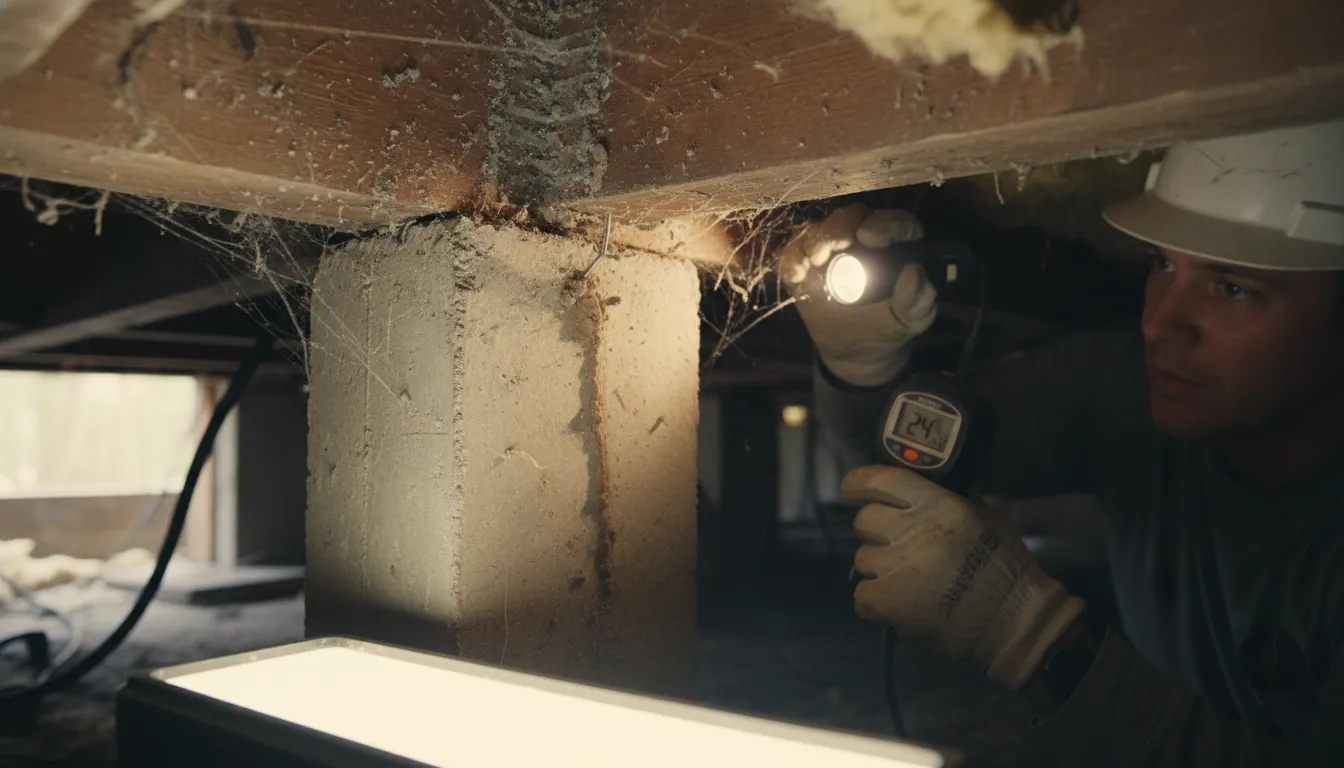
3. Attic and Crawlspace Examination These often-overlooked areas are critical. In the attic, the inspector examines exposed beams, rafters, and sheathing for signs of damage, frass, or live termites. In crawlspaces, they look for mud tubes on piers and foundation walls, check for proper ventilation, and use a moisture meter to identify damp wood-a major attractant for subterranean termites 8.
4. Reporting and Recommendations After the inspection, you should receive a detailed written report, often including photographs. This report will outline any findings, rate the level of risk or activity, and provide clear recommendations for treatment (if needed) and corrective actions to reduce conducive conditions.
Find the perfect termite inspection companies for your needs
Get personalized recommendations and expert advice
Understanding Costs: Inspection and Beyond
The cost of a termite inspection in Winter Garden is a small investment compared to the repair bills an infestation can cause. For a standard visual inspection, homeowners can expect to pay between $50 and $325, which is typical for Florida 9. This fee covers the inspector's time, expertise, and the detailed report.
If the inspection reveals an active infestation, treatment costs will vary significantly based on the termite type, the extent of the problem, and the size and construction of your home.
- Localized Treatments: For small, accessible subterranean colonies, treatments like termite baiting systems or localized chemical barriers may range from $200 to $900.
- Whole-Structure Fumigation (Tenting): Required for widespread drywood infestations, this is a major undertaking with costs typically between $1,500 and $8,000 10 11.
- Preventive Maintenance: Many homeowners opt for annual protection plans, which often include periodic re-inspections and treatment guarantees, costing roughly $200 to $400 per year 12 13.
Special Considerations for Home Buyers
In Florida, a Wood-Destroying Organism (WDO) Inspection Report is a standard part of most real estate transactions. While not always legally required by the state, most mortgage lenders will insist on it. This inspection is more formal and follows a specific state-mandated report form (NPMA-33 or equivalent). It protects the buyer by identifying any existing damage or infestation before the sale is finalized 14. As a buyer, you should always review this report carefully and understand who (buyer or seller) is responsible for addressing any issues found.
Preparing Your Home for an Inspection
To ensure your inspector can do a thorough job, you can take a few simple steps:
- Clear clutter from your basement, crawlspace access, and attic.
- Move stored items away from foundation walls in your garage and basement.
- Ensure all rooms and closets are accessible.
- Trim back shrubs and vegetation that are touching the house.
Frequently asked questions
Sources
Footnotes
-
Termite Inspections Before Winter: A Must for New Tampa ... - https://consolidatedpestcontrol.com/termite-inspections-before-winter-a-must-for-new-tampa-homeowners/ ↩
-
Termite Guide: Identification, Prevention, and Elimination - https://mintpest.com/pest-library/termites/ ↩
-
Termite Inspections: Identifying And Preventing Costly Damage - https://maxhomeinspections.com/blog/termite-inspection/termite-inspections-costly-damage/ ↩
-
Complete Guide to Termite Inspection for Home Purchase - https://bettertermite.com/termite-inspection-for-home-purchase/ ↩
-
Termite Inspections | Acu System Home Inspectors - https://www.goacusystem.com/termite-pest-inspections/ ↩
-
Orlando Area Termite (WDO) Inspections | CFBI - https://cfbinspect.com/termite-wdo-inspections/ ↩
-
Termite Inspections: What to Expect and How to Prepare - https://www.petrispestcontrol.com/termite-control/termite-inspections-what-to-expect/ ↩
-
8 Key Areas in Your Home to Check During a Termite Inspection - https://cleardefensepest.com/termite-inspection-checklist/ ↩
-
Guide to Pest Inspections Before Buying House in Florida - https://nozzlenolen.com/blog/comprehensive-pest-control-plan-nn/ ↩
-
How Much Is a Termite Inspection? Complete Cost Overview - https://www.homelight.com/blog/how-much-is-a-termite-inspection/ ↩
-
Termite Inspections for Homebuyers: Requirements & Costs - https://www.freedommortgage.com/learning-center/articles/termite-inspection-home-purchase ↩
-
How Much Does a Termite Inspection Cost in Florida? - https://www.hofferpest.com/blog/2025/may/how-much-does-a-termite-inspection-cost-in-flori/ ↩
-
How Much Does a Termite Inspection Cost? - https://patriotinspect.com/how-much-does-a-termite-inspection-cost/ ↩
-
WDO Vs. Termite Inspections In Florida - https://maxhomeinspections.com/blog/termite-inspection/wdo-vs-termite-inspections-florida/ ↩