Find the Best Termite Inspection Companies for Your Business
No obligation • Fast responses • Nationwide coverage

Why you can trust Pest Crews
Pest Crews is a leading U.S. resource for finding and evaluating residential and commercial pest control services. Our team researches providers, reviews treatment approaches, and organizes unbiased information to help you make informed decisions. Companies cannot pay to change our editorial content or influence how they appear.
Search providers near you
Top Termite Inspection Companies in San Antonio, Texas Ranked
A termite inspection is a specialized assessment of your property to detect evidence of active or past wood-destroying insect infestations and the conditions that attract them. In San Antonio, these evaluations are vital due to the region's high risk for destructive subterranean and drywood termite species. This guide explains what a local termite inspection entails, what inspectors look for, and how you can use this information to connect with qualified professionals in your area to protect your investment.

X Out Pest Services
8611 Honiley St, San Antonio, TX 78254
X Out Pest Services is a pest control company serving San Antonio, TX, specializing in the elimination and prevention of a wide range of pests including bed bugs, cockroaches, ants, rodents, termites, mosquitoes, bees, wasps, and wildlife. They offer customized treatments that target nesting and feeding areas both inside and outside the home, maintaining an exterior pest barrier to provide year-round protection. Established in 2006, the company combines experienced technicians with advanced pest control technology to deliver effective pest management solutions. Their services include termite inspections and mosquito control, with a focus on safety for children, pets, and the environment.

Bryan & Bryan Inspections - San Antonio
1100 Northwest Loop 410 Suite 700, San Antonio, TX 78213
Bryan & Bryan Inspections - San Antonio provides comprehensive home inspection services in San Antonio, TX, including termite and wood-destroying insect inspections. Their licensed inspectors evaluate major home systems such as foundation, roofing, plumbing, HVAC, and electrical to identify potential issues that could affect safety and longevity. With over 25 years of experience and more than 25,000 inspections completed, they use advanced tools and detailed reporting to help clients make informed decisions about their properties. The company also offers specialized inspections like stucco, sewer scope, mold, pools, spas, and well and septic systems, serving San Antonio and surrounding counties.

Urban Texas Pest Control
9450 Brushy Point St, San Antonio, TX 78250
Urban Texas Pest Control is a family-owned pest control company serving San Antonio, TX, and surrounding areas. With over 25 years of experience, they provide residential and commercial pest control services targeting a wide range of pests including ants, cockroaches, rodents, termites, bed bugs, and wasps. The company uses eco-friendly and advanced pest control methods to create safe, healthy environments while addressing local pest challenges. Their expertise includes comprehensive pest inspections and tailored treatments designed to prevent future infestations.
Stride Pest Control
3501 Pin Oak Dr #110, San Antonio, TX 78229
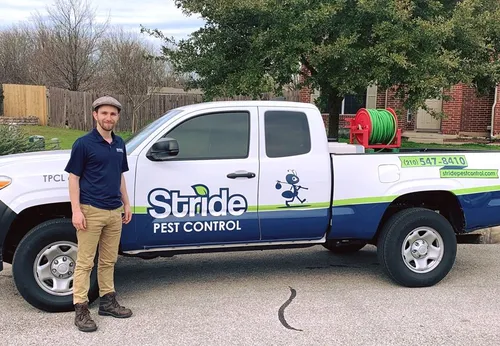
Stride Pest Control offers comprehensive pest control services in San Antonio, TX, addressing common local pests such as termites, bed bugs, fire ants, mosquitoes, scorpions, and ticks. They provide both residential and commercial pest management, including termite inspections and treatments, bed bug eradication, and mosquito control. The company uses EPA-approved pesticides and non-chemical methods like traps and exclusion techniques to ensure safe and effective pest elimination. Stride Pest Control serves San Antonio and surrounding areas, focusing on identifying the pest accurately before treatment to provide targeted solutions.
Anytime Pest Elimination San Antonio
8114 City Base Landing ste 116, San Antonio, TX 78235
Anytime Pest Elimination San Antonio provides comprehensive pest control services in San Antonio, TX. They handle a wide range of pest issues including bed bugs, cockroaches, ants, rodents, termites, mosquitoes, bees, wasps, birds, and wildlife. The company uses advanced pest control techniques and offers flexible one-time treatment options without requiring ongoing contracts. With over 30 years of experience, Anytime Pest Elimination has a strong local presence and deep knowledge of regional pest behavior. They also provide 24/7 availability with a round-the-clock answering service to assist clients day or night.
Why Termite Inspections Are Critical in San Antonio
The warm, often humid climate of South Texas creates an ideal environment for several species of termites, making regular inspections a key part of responsible homeownership. Termites are silent destroyers, often causing significant structural damage long before they are noticed by residents. A professional termite evaluation, or wood-destroying insect (WDI) inspection, provides an expert assessment of your property's vulnerability, identifying not only active infestations but also conditions that could lead to future problems 1. For homeowners, this is a proactive measure for peace of mind; for buyers and sellers, it's often a required step in the real estate transaction process.
Common Termite Species Found in San Antonio
Understanding the local threat helps clarify what inspectors are searching for. San Antonio properties are primarily at risk from two main categories of termites:
Subterranean Termites: These are the most common and destructive group in the area. They live in underground colonies and build mud tubes to travel between their nest and food sources. Local species include the Eastern subterranean termite, the Arid Land subterranean termite, and the highly aggressive Formosan subterranean termite, known for its large colonies and rapid consumption of wood.
Drywood Termites: Unlike their subterranean cousins, drywood termites infest dry, sound wood and do not require contact with soil. The Western drywood termite is a concern in San Antonio. They create small colonies within individual pieces of wood, like furniture, framing, or siding, and are often detected by their pellet-like droppings, called frass 2.
Inspections also typically cover other wood-destroying organisms (WDOs), such as wood-boring beetles and carpenter ants, which can cause similar damage.
What Does a Professional Inspector Look For?
A thorough termite assessment is a detailed investigation of both the interior and exterior of a structure. The inspector is trained to identify direct evidence of infestation and indirect "conducive conditions" that invite pests.
Evidence of Active Infestation:
- Mud Tubes: Pencil-sized tunnels made of soil and saliva on foundation walls, piers, sill plates, or in crawl spaces are a telltale sign of subterranean termites.
- Damaged Wood: Wood that sounds hollow when tapped, appears blistered or dark, or has maze-like patterns inside is likely compromised.
- Swarmers & Wings: The presence of discarded wings from reproductive termites (swarmers) near windowsills, doors, or spider webs is a strong indicator of a nearby colony.
- Frass: Small, pellet-like droppings found beneath kick-out holes are a clear sign of a drywood termite infestation.
Conducive Conditions:
- Moisture Issues: Leaky pipes, poor drainage, faulty gutters, and inadequate ventilation in crawl spaces or attics create the moisture termites need.
- Wood-to-Soil Contact: Any structural wood, such as siding, door frames, or deck posts, in direct contact with soil provides an easy entry point.
- Landscaping & Debris: Excessive mulch against the foundation, stored firewood near the home, and piles of leaves or debris can harbor termites.
The Termite Inspection Process: Step-by-Step
Knowing what to expect can make the process straightforward. A standard inspection conducted by a licensed professional typically follows this pattern:
- Thorough Visual Examination: The inspector will meticulously examine all accessible areas. This includes the home's interior (checking baseboards, cabinets, closets, window frames, and flooring) and exterior (inspecting the foundation, siding, eaves, fences, patios, and outbuildings).
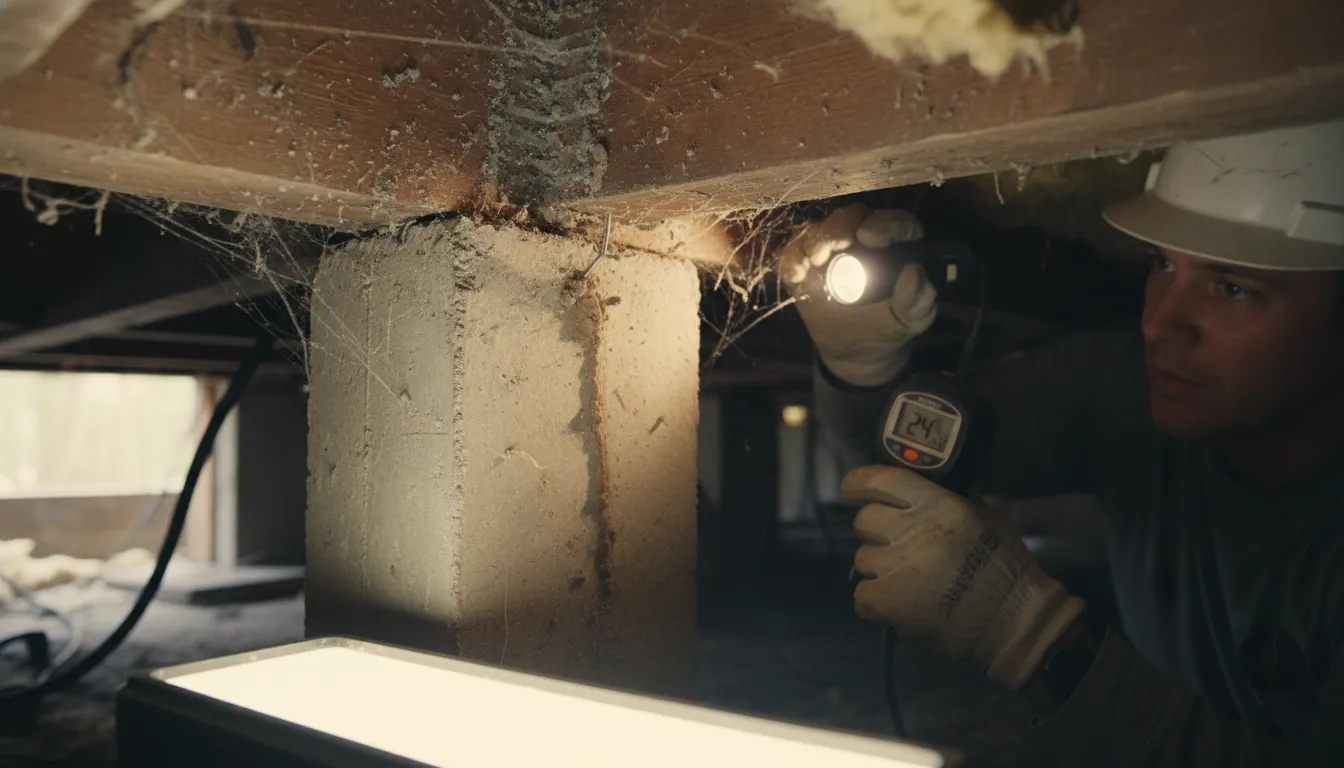
- Use of Specialized Tools: While primarily visual, inspectors may use tools like moisture meters to detect hidden dampness in walls or flooring, which can signal a hidden infestation. Some may also use infrared cameras or sounding tools to probe for damaged wood 3 4.
- Identification & Documentation: If live insects or evidence is found, the inspector may collect a sample for positive identification. All findings, including evidence and conducive conditions, are carefully noted.
- Detailed Reporting: You will receive a comprehensive written report. This document outlines what was found, the location and extent of any issues, and recommendations for treatment or corrective actions. For real estate transactions, this is often provided on the official Texas Wood Destroying Insect Report form 5 6.
Find the perfect termite inspection companies for your needs
Get personalized recommendations and expert advice
Understanding Inspection Costs and Reports
The cost of a termite inspection in San Antonio can vary based on several factors. For a standard inspection of a typical single-family home, homeowners can generally expect a range of $75 to $150. However, prices can be higher for larger homes, properties with complex foundations (like extensive pier-and-beam), or those in areas with a known high risk of Formosan termites.
If you are buying or selling a home, you will likely need an official WDI Report. This formal document, which is often required by lenders, may add an additional $50 to $100 or more to the base inspection cost 7 8. It's important to clarify with your inspector upfront whether the quoted price includes this official report. The value lies in the detailed, professional assessment that can prevent costly surprises and facilitate a smooth real estate transaction.
Key Areas of Focus During an Inspection
To understand the inspector's path, here are the critical zones they will prioritize:
- Foundation & Exterior Perimeter: The first line of defense. Inspectors look for mud tubes, cracks, and any wood in contact with soil along the entire foundation 9 10.
- Attics & Crawl Spaces: These often-overlooked areas can harbor significant activity. Inspectors check for damaged rafters, joists, and insulation, as well as proper ventilation 11.
- Bathrooms, Kitchens & Utility Rooms: Areas with plumbing are hotspots for moisture. Inspectors pay close attention to under sinks, around tubs, and near water heaters 12.
- Decks, Fences & Outbuildings: These wooden structures can be primary infestation sites and serve as a bridge to the main house. They are always included in a full property inspection 13.
After the Inspection: Understanding Your Report and Next Steps
The inspection report is your roadmap. If no active termites or concerning conditions are found, the report serves as a valuable baseline for your records. If issues are identified, the report will categorize them.
Active Infestation: The report will specify the type of termite (e.g., subterranean) and the location. The inspector should provide a clear recommendation for treatment, which may involve liquid soil treatments, bait systems, or localized wood treatments, depending on the species and extent.
Conducive Conditions: The report will list items like earth-to-wood contact or poor drainage. Addressing these conditions is crucial for long-term prevention and may be required before a lender will approve a loan on a property. Corrective actions can be as simple as moving firewood or as involved as re-grading soil around the foundation.
Frequently asked questions
Sources
Footnotes
-
San Antonio WDI & Termite Inspection | Termite Control Service - https://www.bugco.org/san-antonio/wdi-and-termite-inspections/ ↩
-
Which Termite Species Frequently Infest Homes In San Antonio - https://ipestpros.com/which-termite-species-frequently-infest-homes-in-san-antonio/ ↩
-
San Antonio WDI & Termite Inspection - BUGCO Pest Control - https://www.bugco.org/san-antonio/wdi-and-termite-inspections/ ↩
-
Premium Termite Inspection - Lone Star Inspections - https://www.lonestarinspections.com/inspection-services/termite-inspections/ ↩
-
Termite Inspection - https://www.redstarhomeinspection.com/home-inspection-services/termite-inspection/ ↩
-
Termite FAQs - Texas Department of Agriculture - https://texasagriculture.gov/Regulatory-Programs/Pesticides/Structural-Pest-Control-Service/Termite-Fumigation-Applications/Termite-FAQs ↩
-
Getting a Termite Inspection when Buying a Home - https://www.bugco.org/blog/2014/january/getting-a-termite-inspection-when-buying-a-home/ ↩
-
How Much Does a Termite Inspection Cost? - https://patriotinspect.com/how-much-does-a-termite-inspection-cost/ ↩
-
Termite Treatment in San Antonio - Massey Services - https://www.masseyservices.com/san-antonio/termite-treatment/ ↩
-
termite & wdi inspections san antonio - https://redfishinspections.com/san-antonio/termite-inspection/ ↩
-
What to Expect When We Perform a Termite Inspection in Your ... - https://cititurf.com/blog/what-to-expect-when-we-perform-a-termite-inspection-in-your-home/ ↩
-
What to Expect During a Termite Inspection - Massey Services - https://www.masseyservices.com/termite-control/what-to-expect-free-termite-inspection/ ↩
-
San Antonio Termite Inspections - https://npiweb.com/nwsanantonio/services/termite-inspections/ ↩