Find the Best Termite Inspection Companies for Your Business
No obligation • Fast responses • Nationwide coverage

Why you can trust Pest Crews
Pest Crews is a leading U.S. resource for finding and evaluating residential and commercial pest control services. Our team researches providers, reviews treatment approaches, and organizes unbiased information to help you make informed decisions. Companies cannot pay to change our editorial content or influence how they appear.
Search providers near you
Top Termite Inspection Companies in Waco, Texas Ranked
A termite inspection is a critical evaluation of your property to detect the presence or evidence of wood-destroying insects. In Waco, where subterranean termites are a constant threat, this service is essential for protecting your most valuable investment-your home. Whether you're buying a house, selling one, or simply maintaining your property, a professional inspection identifies risks and damage that are easy to miss. This guide will help you understand what a termite inspection entails, what local experts look for, and how to find qualified professionals in the Waco area.

Why Termite Inspections Are Crucial in Central Texas
The warm, often humid climate of Central Texas creates an ideal environment for termites, particularly subterranean species. These pests are responsible for billions of dollars in property damage across the United States each year, and Texas homes are not immune. A termite inspection, sometimes called a WDI (Wood-Destroying Insect) inspection, is your first line of defense. It's not just about finding active infestations; it's about identifying conducive conditions-like wood-to-soil contact or moisture issues-that could invite an infestation in the future. For homeowners, this is proactive maintenance. For buyers and sellers, it's often a non-negotiable part of the real estate transaction, providing peace of mind and fulfilling lender requirements.
The Two Main Termite Threats in Waco
Understanding your enemy is key. In Waco, inspectors are primarily on the lookout for two types of termites:
Subterranean Termites: This is the most common and destructive species in Texas. They live in colonies in the soil and build distinctive mud tubes (shelter tubes) to travel between their nest and their food source-the wood in your home. An inspector will meticulously search for these pencil-sized tubes along your foundation, in crawl spaces, and on support piers 1.
Drywood Termites: Less common than subterranean termites, drywood termites can still be found in Waco. They don't require contact with soil and can infest dry, sound wood directly, such as in attics, window frames, or furniture2 3. Their signs are different, often including small piles of fecal pellets called frass, which resemble sawdust or coffee grounds.
What a Professional Inspector Looks For
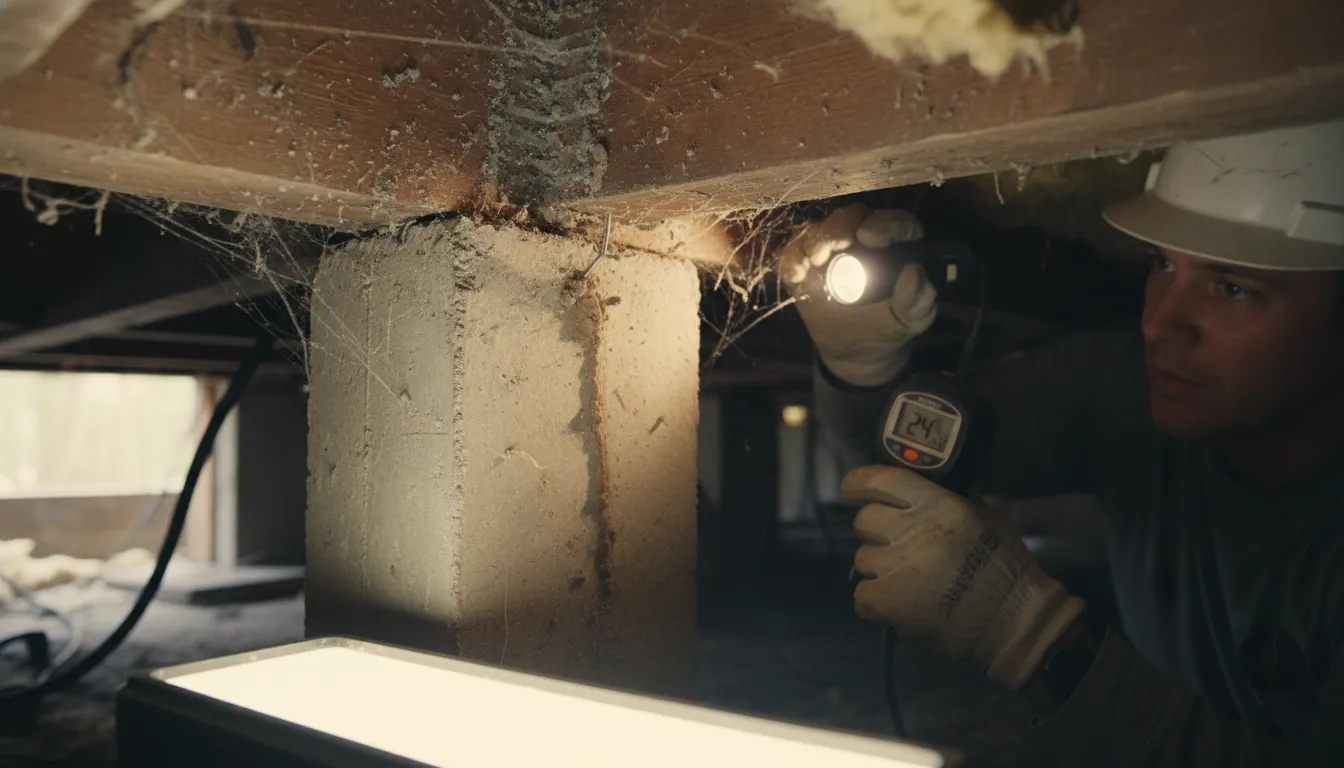
A thorough termite evaluation is a systematic process. A certified inspector will examine both the interior and exterior of your property, knowing exactly where these silent destroyers like to hide.
Exterior Inspection:
- Foundation & Soil: The inspector checks the entire perimeter for mud tubes, cracks, and gaps where termites could enter.
- Wood-to-Soil Contact: This is a major red flag. Any structural wood, like porch steps, deck posts, or siding, touching the soil provides a direct highway for termites.
- Moisture Sources: Poor drainage, leaking downspouts, and air conditioning drip lines create the moisture termites need to thrive4.
- Landscaping & Debris: Mulch piled against the foundation, stored firewood, and tree stumps near the house can harbor termites.
Interior Inspection:
- Attics and Crawl Spaces: These dark, often humid areas are prime inspection zones. The inspector will look for damaged wood, mud tubes on piers, and any signs of moisture5.
- Basements and Garages: Walls, sill plates, and stored items are checked for evidence.
- Living Areas: While less common, inspectors will tap on baseboards, window sills, door frames, and cabinets, listening for the hollow sound of damaged wood6. They look for tiny exit holes, frass (from drywood termites), or discarded swarmer wings.
The Tools and Techniques: Inspectors use powerful flashlights, probing tools, and moisture meters. In some cases, especially for a real estate WDI report, they may need to make small, discreet probe holes in non-visible areas of drywall or trim to confirm suspected damage behind walls 7. This is a standard, minimally invasive part of a detailed inspection.
The All-Important Inspection Report
The final deliverable is the inspection report. For real estate transactions, this is typically a formal WDI Report (Wood Destroying Insect Report), often required by mortgage lenders 8. A good report will clearly state:
- Evidence Found: It will specify if there is evidence of active infestation, past treatment, or damage.
- Conducive Conditions: It should list any issues observed that could lead to future problems, such as earth-to-wood contact or excessive moisture.
- Diagram of the Property: A sketch noting the areas inspected and where any evidence was found.
- Recommendations: This section outlines the next steps, which may range from monitoring and correcting conducive conditions to recommending a treatment protocol by a licensed pest management professional.
Find the perfect termite inspection companies for your needs
Get personalized recommendations and expert advice
Termite Inspection Costs in Waco
The cost for a termite inspection in Waco can vary based on the size of the home, the type of report needed, and the company. It's important to distinguish between a basic inspection and a formal report.
- Standard WDI Inspection Report: For a typical single-family home, you can expect to pay between $75 and $225 for a formal report, especially one required for a real estate sale9 10 11. Larger or more complex properties will be on the higher end of this range.
- Free or Low-Cost Inspections: Many local companies offer free basic inspections as a customer service. However, it's crucial to understand that a "free inspection" usually does not include the official documentation needed for a real estate closing. If you need a written WDI report, there will be a fee12.
- Treatment Costs Are Separate: The inspection fee is solely for the evaluation and report. If treatment is recommended, that will be a separate cost proposal based on the type of termite, the extent of the problem, and the treatment method chosen (e.g., liquid soil treatments, bait systems, fumigation for drywood termites).
When to Schedule a Termite Inspection
Don't wait for signs of trouble. Be proactive with these key timelines:
- Before Buying a Home: Make a termite inspection a standard part of your due diligence. The small cost can save you from enormous, unexpected repair bills after closing13 14.
- When Selling a Home: Having a recent, clear inspection report in hand can make your home more attractive to buyers and smooth the negotiation process.
- Annual Check-Ups: Even if you have a preventive treatment in place, an annual inspection ensures it's working and catches new issues early.
- After Noticing Signs: If you see mud tubes, discarded wings, or damaged wood, schedule an inspection immediately.
- After Significant Weather Events: Heavy rains or flooding can drive termites toward drier wood and create new moisture issues around your foundation.
Choosing a Qualified Inspector in Waco
Not all inspections are equal. When selecting a professional for your termite evaluation, ensure they are:
- Licensed by the Texas Department of Agriculture: This is a non-negotiable requirement for anyone performing structural pest control inspections and treatments in Texas.
- Experienced and Knowledgeable: Look for companies with a strong local reputation and inspectors who take the time to explain their findings.
- Thorough and Detailed: They should provide a comprehensive written report with photos and clear explanations, not just a verbal summary.
- Insured: This protects you in the rare event of an error or accident during the inspection.
Frequently asked questions
Sources
Footnotes
-
Signs Your Home is Infested with Subterranean Termites - https://www.bugs.com/blog/signs-your-home-is-infested-with-subterranean-termites/ ↩
-
Termites in Texas: What You Need to Know | Hawx Pest Control - https://hawxpestcontrol.com/termites-in-texas-what-you-need-to-know/ ↩
-
What to Do if You Have Termites in Your Texas Home | 5 Simple Steps - https://www.anytimepestelimination.com/blog/what-to-do-termites ↩
-
What Happens During a Termite Inspection (And Why You Can't ... - https://www.drakepest.com/what-happens-during-a-termite-inspection-and-why-you-cant-skip-it/ ↩
-
What to Expect When We Perform a Termite Inspection in Your ... - https://cititurf.com/blog/what-to-expect-when-we-perform-a-termite-inspection-in-your-home/ ↩
-
What Happens During a Termite Inspection - Terminix - https://www.terminix.com/termite-control/inspection/ ↩
-
Termite inspection: How it works - Western Exterminator - https://www.westernexterminator.com/termite-control/termite-inspection ↩
-
Are Termite Inspections Required in Texas - TexInspec - https://texinspec.com/are-termite-inspections-required-in-texas/ ↩
-
What Does a Termite Inspector Look For? - Orkin - https://www.orkin.com/pests/termites/what-a-termite-inspector-does ↩
-
What is the Cost of a Termite Inspection? - https://budgetbrotherstermite.com/what-is-the-cost-of-a-termite-inspection/ ↩
-
How Much Is a Termite Inspection? Complete Cost Overview - https://www.homelight.com/blog/how-much-is-a-termite-inspection/ ↩
-
Termite FAQs - Texas Department of Agriculture - https://texasagriculture.gov/Regulatory-Programs/Pesticides/Structural-Pest-Control-Service/Termite-Fumigation-Applications/Termite-FAQs ↩
-
Should I Get a Termite Inspection When Buying a Home in Texas? - https://www.bugco.org/blog/2014/january/getting-a-termite-inspection-when-buying-a-home/ ↩
-
Complete Guide to Termite Inspection for Home Purchase - https://bettertermite.com/termite-inspection-for-home-purchase/ ↩